Worm Composting at Home: Set Up a Bin and Keep It Working
A worm bin fits where a backyard pile cannot, but it is a small living system that needs steady care. Set up the bin and bedding, feed only what disappears and harvest without losing the worms.
By GardenHelmPublished 6-minute readMore in Composting
A household of two or three that throws out about 2 pounds of vegetable and fruit scraps a week can run a worm bin measuring 1 foot by 1 foot by 2 feet, according to Oregon State Extension, which sizes bins at 1 cubic foot of space per pound of kitchen waste per week. A household of four to six, at about 6 pounds a week, needs roughly 6 cubic feet. Weigh your scraps for a week before you buy anything. The number tells you whether a worm bin is the right tool, and how big it should be.
EPA lists vermicomposting among the options for composting at home in a small space, indoors under a sink or in a basement, or outdoors in shade. A worm bin does not have to take every scrap you produce, and a local food-scrap collection can handle the surplus.
The bin
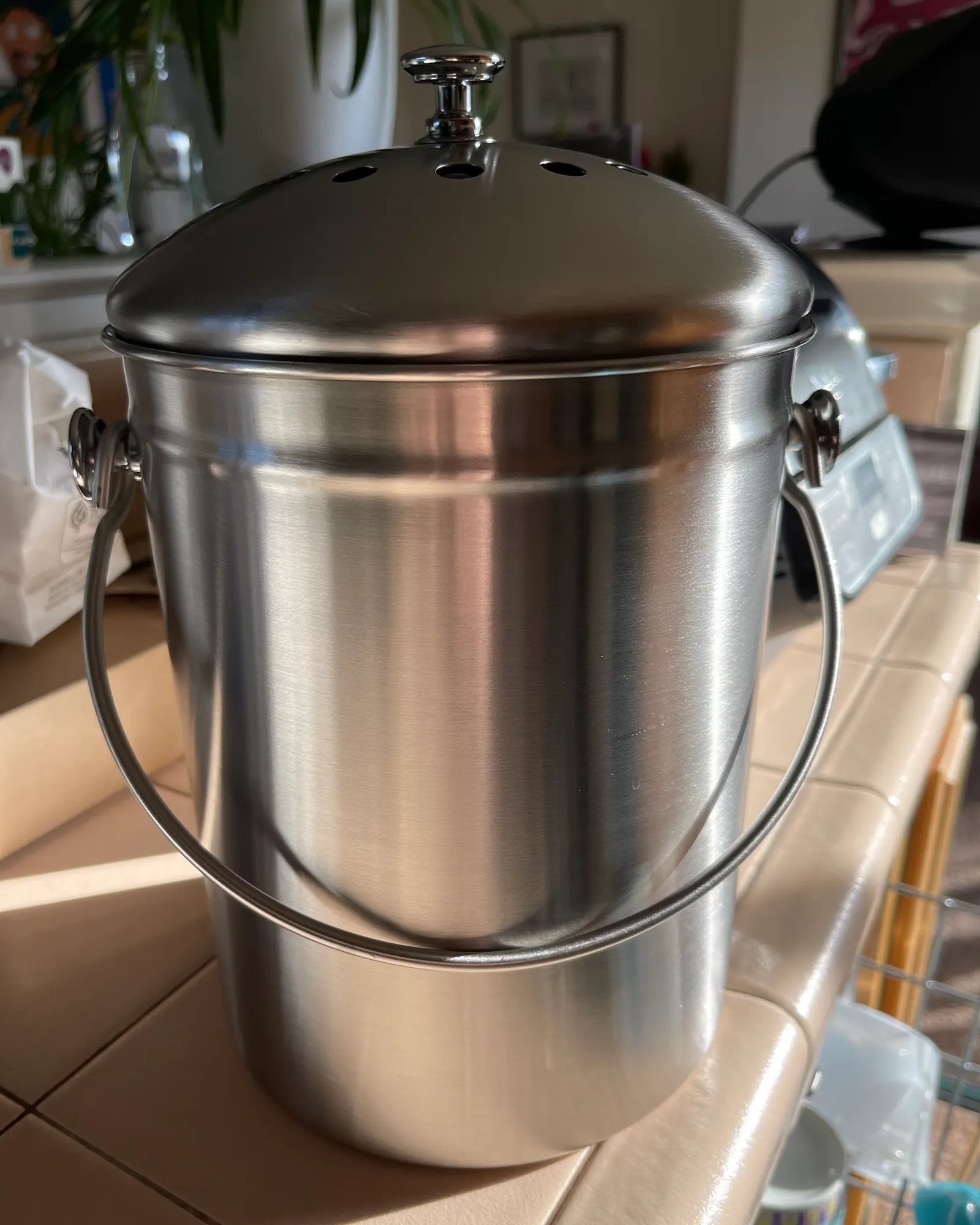
Worms are light-sensitive, so NC State Extension recommends a dark bin with a tight lid, 8 to 20 inches deep, and about 1 square foot of surface per pound of scraps you generate weekly. Oregon State prefers shallow bins no more than 1 foot deep. Both recommendations suit a plastic tote or a purpose-built stacking bin, and both are sized by the weekly food weight.
Ventilation goes in the sides, not the lid. NC State describes three ways to do it: a 3-inch screened soffit vent at each upper narrow end, four 1/2-inch holes along the upper long sides covered with hardware cloth, or many 1/8-inch holes around the upper sides. For drainage it suggests six 1/4-inch holes in the bottom, and a tray below to catch what drips. Holes bigger than 1/4 inch are an invitation to rodents, Oregon State warns, so screen anything larger.
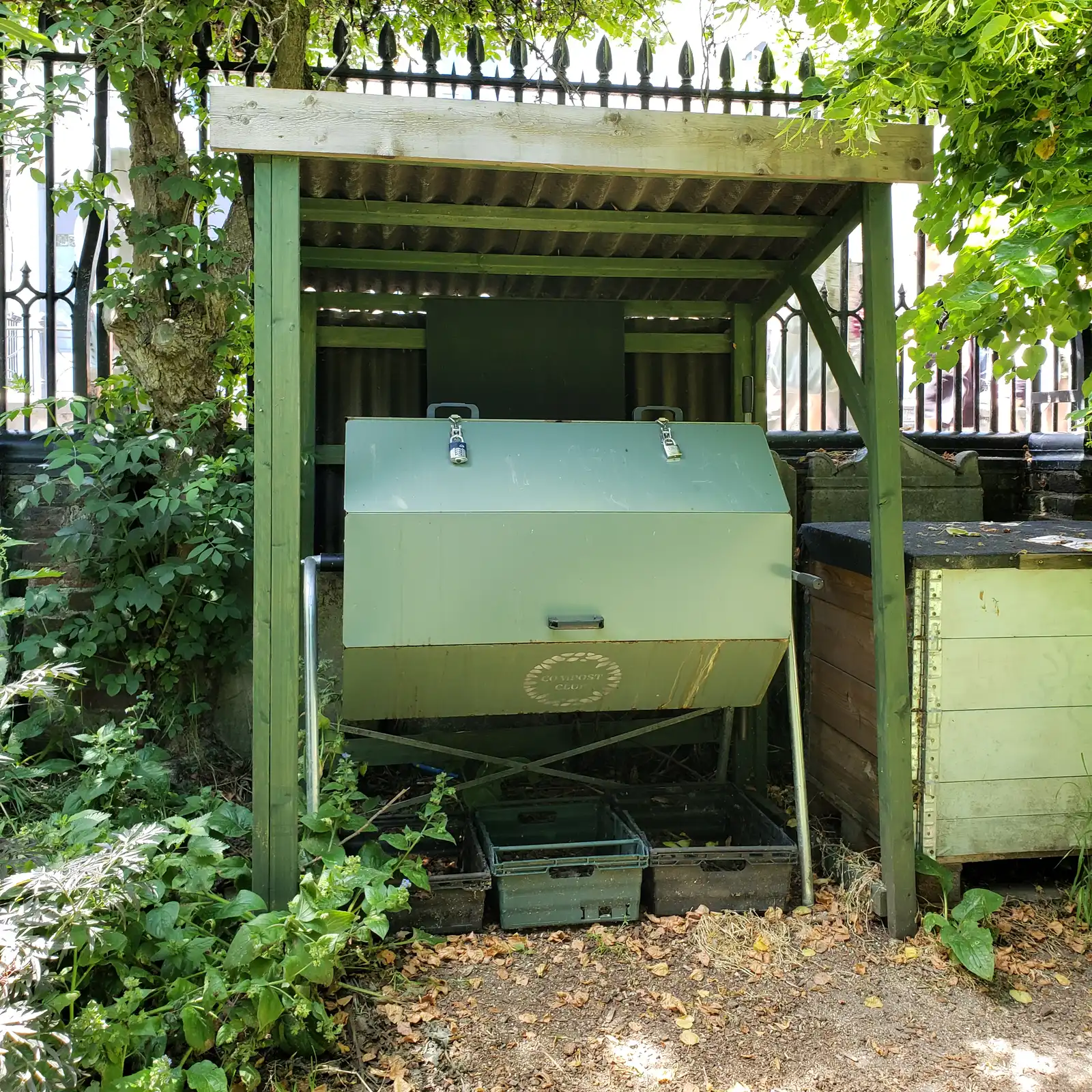
Temperature sets the pace of the whole bin. NC State and EPA both give 59 to 77 degrees Fahrenheit as the working range, with 32 to 95 as the survivable limits, and Oregon State notes that worms eat less below 50 degrees. Keep the bin out of direct sun and away from vibrating appliances, which Oregon State lists among the reasons worms try to leave. An outdoor bin needs constant shade, shelter from rain and wind, and a lid or screen animals cannot open, and it moves under cover in cold months.
Worms and bedding
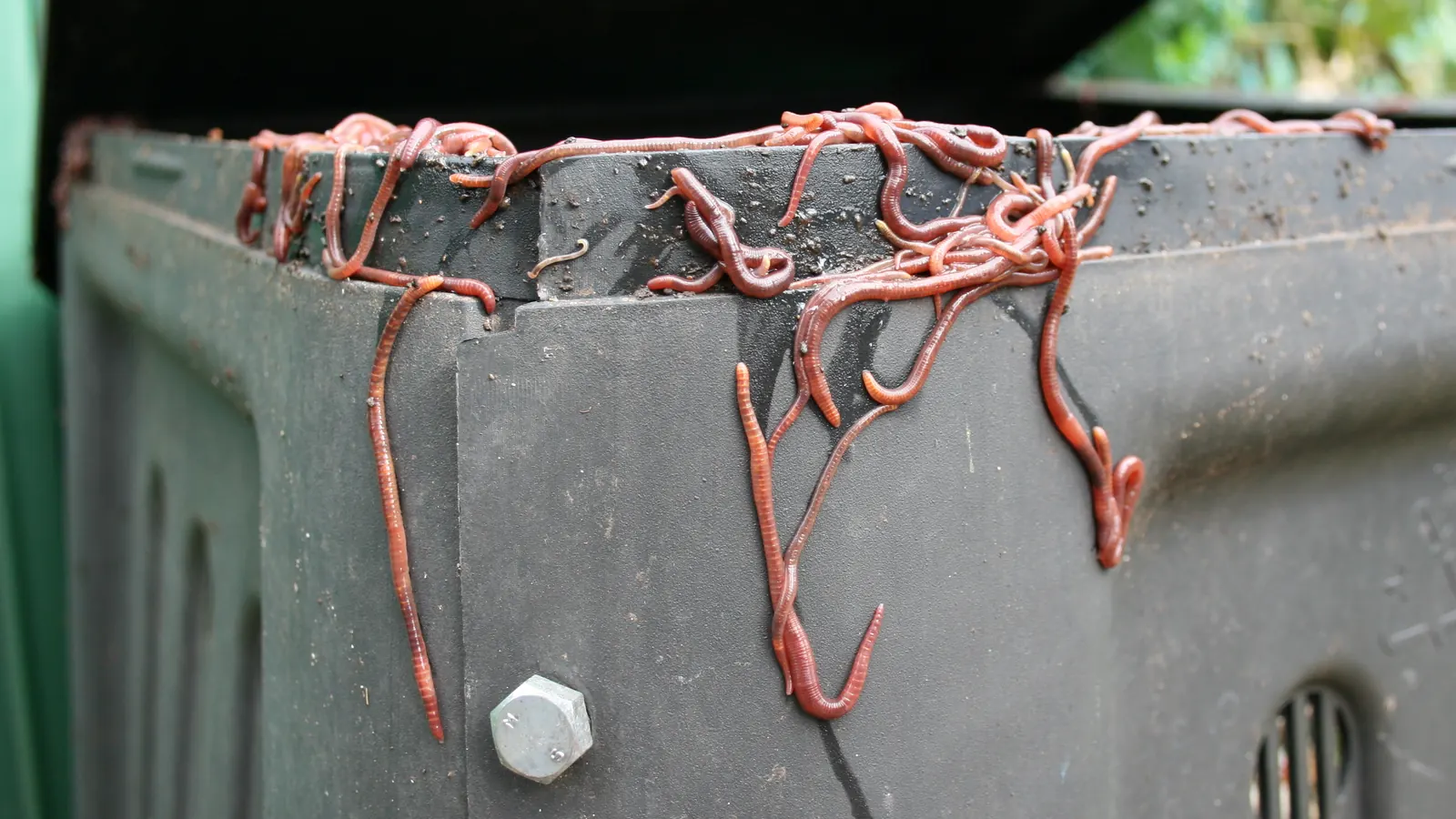
Buy red wigglers, Eisenia fetida, from a worm grower. NC State Extension names them as the standard composting worm and says not to collect worms from the yard or buy bait-shop worms. Order the worms for a day when you can set up the bin the same day. NC State suggests at least 1 pound, about 1,000 worms, per square foot of bin surface. Oregon State sizes the colony from the weekly scraps instead, so the worm order and the bin scale together.
Keep composting worms out of the woods. University of Minnesota Extension warns about invasive jumping worms and advises buyers to identify what they are sold. Never dump unwanted worms in parks, woods or waterways.
For bedding, Oregon State calls for 4 to 6 inches in the bottom, mixed from at least two or three materials such as shredded non-glossy paper, small cardboard pieces, seed-free straw, coir and partly decomposed leaves, and then a 2-inch layer of fresh bedding over the worms and food. NC State soaks shredded paper, leaves or coir for 5 to 10 minutes and wrings it out until only two or three drops come out when squeezed, then fills the bin about halfway and mixes in a handful of healthy garden soil. Moisture should land near that wrung-out sponge feel; Oregon State’s range is 75 to 85 percent. Mist with a plant sprayer when it dries out, and never pour water into the bin. Let the worms settle for a few days before the first feeding.
Feeding
Oregon State recommends starting at 1/4 to 1/2 pound of scraps per pound of worms per week and increasing as the population grows. NC State says a pound of worms can eat up to 2 pounds a week, and that a new feeding should wait until the last one is gone. Chop scraps to an inch or smaller, spread them in a layer no more than about an inch deep, and cover them with 1 to 2 inches of bedding, which also deters fruit flies. Burying scraps in a different spot each time keeps the bin even.
Skip meat, poultry, fish, bones, dairy, oils and greasy food, and pet waste. Both Extension services also list citrus and onions among the foods to leave out; Oregon State adds that worms avoid potato peels and they can push a bin toward anaerobic conditions. Oregon State’s rule of thumb is to leave something out if you are unsure. Compostable packaging and bags need commercial facilities, according to EPA’s backyard-compost guidance, so leave them out of a home bin.
Overfeeding is the first suspect when a bin turns sour. Oregon State says food still untouched after two to three weeks means you fed too much, and to stop feeding for up to two weeks when that happens. Worms can handle gaps: NC State says they go two to three weeks without food, and for a trip it suggests a half-inch scrap layer under two inches of moist shredded paper.
When something goes wrong
Oregon State’s troubleshooting boils down to conditions:
- Rotten smell: too wet, blocked drainage, poor airflow or too much food.
- Fruit flies: exposed scraps or a lot of fruit. Cover the food, freeze fruit peels first, or set out a cup of vinegar or wine.
- Ants: the bedding is too dry.
- Dying or escaping worms: too much food, bedding too wet or too dry, extreme temperatures, or vibration.
Adjust one thing at a time and avoid churning the whole bin. Do not spray insecticide in, and if you cannot identify a visitor, photograph it and ask Extension.
Harvesting
Finished vermicompost builds up in roughly three to six months by Oregon State’s account, and NC State says after about four months. Oregon State describes good compost as crumbly and earthy-smelling like chocolate cake, and recommends harvesting at least twice a year. Three methods keep the worms:
- Dump and sort: spread the contents on a tarp in sunlight in small cone-shaped piles, and brush off compost as the worms move to the center.
- Side feeding: feed only one side of a bin larger than 2 cubic feet, so worms drift to it and you can take the other side. NC State describes the same idea.
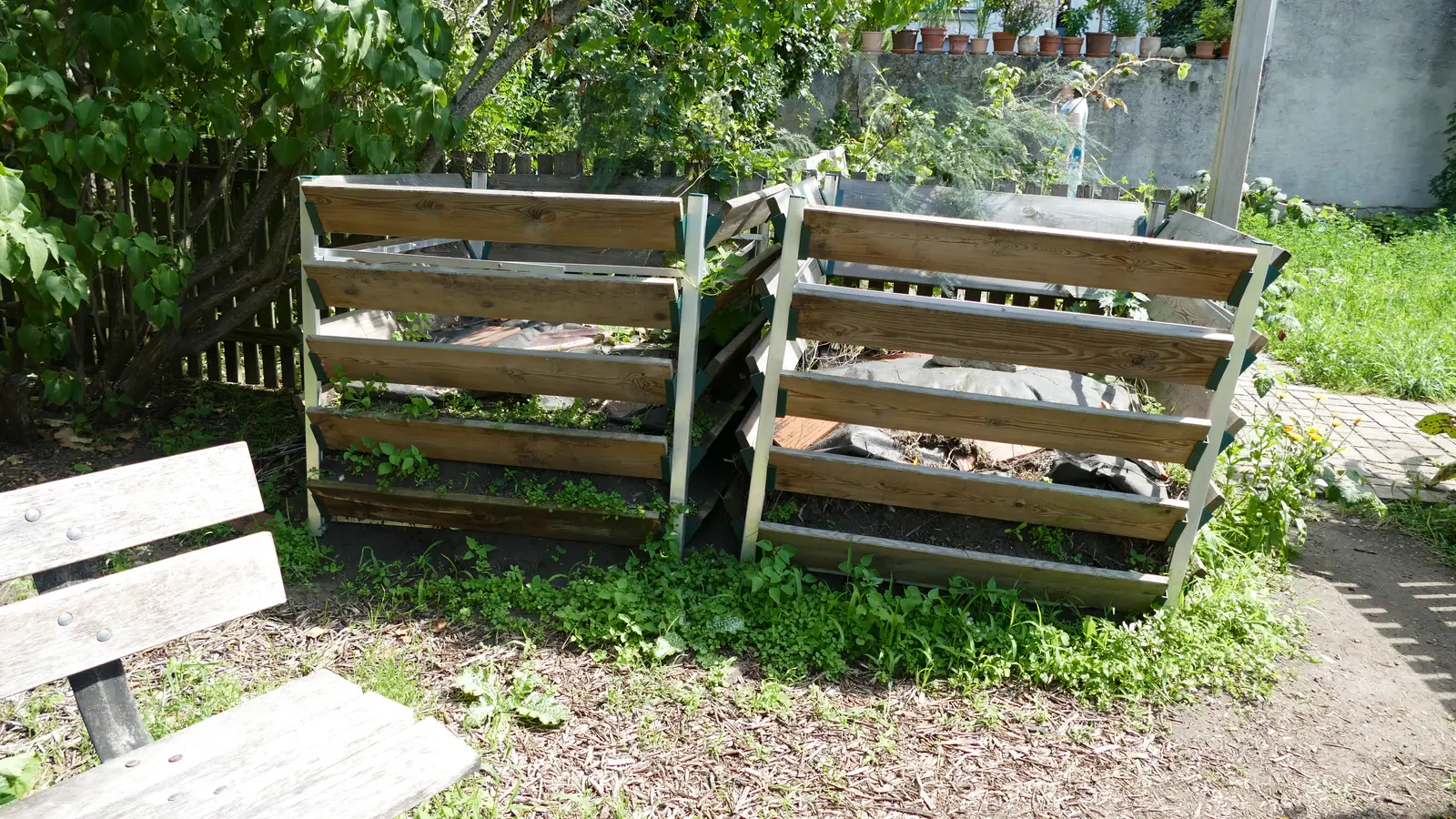
- Scoop and return: take off the top third, which holds mostly unprocessed material, and return it mixed with fresh bedding. In a stacking bin, worms climb to the newer tray and leave finished compost below.
Liquid that drains from the bin is different from finished compost, so keep it off leaves you intend to eat. Use finished vermicompost the way you would any other compost. Oregon State offers two alternatives for winter outdoors: place worms in the middle of a regular compost pile, where they eat at about half the summer rate, or bury the bottom half of the bin and insulate it with straw or leaves. Either one risks die-off in an unusually cold or wet winter.
Written from manufacturer and retailer information and general garden practice. GardenHelm has not physically tested the products discussed here. How we choose products