Compost Tumbler Guide: Rotation, Loading and Batch Space
Ignore promised finishing times and follow one batch through the drum. Compare rotation, loading and unloading space, and whether one chamber or two suits how you add scraps.
By GardenHelmPublished 4-minute readMore in Composting
In this guide
One sure way to stall a compost tumbler is to keep feeding it. Every handful of fresh peelings restarts the clock on the whole drum, so the batch never finishes. Tumblers work as batch composters: fill a chamber, stop adding, keep turning until it is done. That is why the real buying decision is less about drum size than about where tomorrow’s scraps go while today’s batch finishes, and whether you can comfortably turn, open and empty the thing in the spot you have. Our composting hub covers the open bins and other systems if a tumbler turns out to be the wrong fit.
One chamber or two
The District of Columbia’s home composting guide puts it plainly: tumbler composting needs to happen in batches so the material has time to finish, and a dual-chamber model lets you keep adding to one side while the other cures. DC home composting guide
So walk through a month before you buy. Where do scraps go while chamber A is finishing? If the honest answer is “into chamber A anyway,” you need a second chamber, a second container or a kitchen caddy that empties somewhere else. A single drum suits a household that produces a big load at once, such as a weekend of garden cleanup, more than a steady daily trickle of coffee grounds.
Two compartments also change what a capacity number means. Two nominal 40-gallon halves add up to 80 gallons on paper, but you load them as two separate 40-gallon batches through two smaller doors.
How it should be run
Tumblers do not change the basic recipe. The DC guide suggests starting at about two parts browns (dry leaves, shredded cardboard, straw) to one part greens (fruit and vegetable scraps, coffee grounds, fresh clippings) by volume, and leaning toward more browns if you are new. It keeps meat, bones, fat, dairy and pet waste out entirely. Contents should feel like a wrung-out sponge, and it recommends turning a tumbler every three to four days.
Its troubleshooting notes are short and useful. An ammonia smell points to too many greens. A rotten-egg smell means the mix is too wet or short of air: turn it and add dry browns. A sealed drum with wet kitchen scraps can also weep dark liquid, which is why Oregon State Extension suggests starting a load with dry leaves or straw to soak it up. Keep a bag of shredded leaves or cardboard beside the tumbler so the fix is always within reach.
Expect speed to vary with weather. The DC guide gives one to eight months for home compost depending on temperature and warns that everything slows in winter. Oregon State Extension adds that the smaller two-chamber tumblers lack the mass to insulate themselves through a cold winter unless the drum is double-walled. Oregon State Extension on tumblers Treat any “compost in weeks” promise on a box as a best case in warm weather with a well-balanced load.
How the drum turns
A full drum of damp material is heavy, and the mechanism decides how hard it is to rotate. Two documented designs show the range.
Mantis’s CT02001 Compact ComposTumbler turns with a geared handle, so you crank instead of pushing the drum around by hand. Its assembly drawings show the drive gear, support and handle as separate parts, and the door is removable, held with hooks and latches. That gearing helps, but no document can tell you how a loaded drum will feel for you. Mantis CT02001 assembly instructions, pages 11 and 15
Lifetime’s 60058 takes a different approach: a drum you rotate directly, with a spring-loaded pin that locks rotation and a removable lid. Lifetime lists it at 80 gallons nominal capacity. Lifetime 60058 original product Follow that unit’s own instructions for the lock and for how full to load it, since an overfilled drum turns poorly and mixes badly.
Capacity is the size of the container, not a yield. A drum filled to its physical limit has no room to tumble, and finished compost is much smaller in volume than what went in.
Site it for the whole job
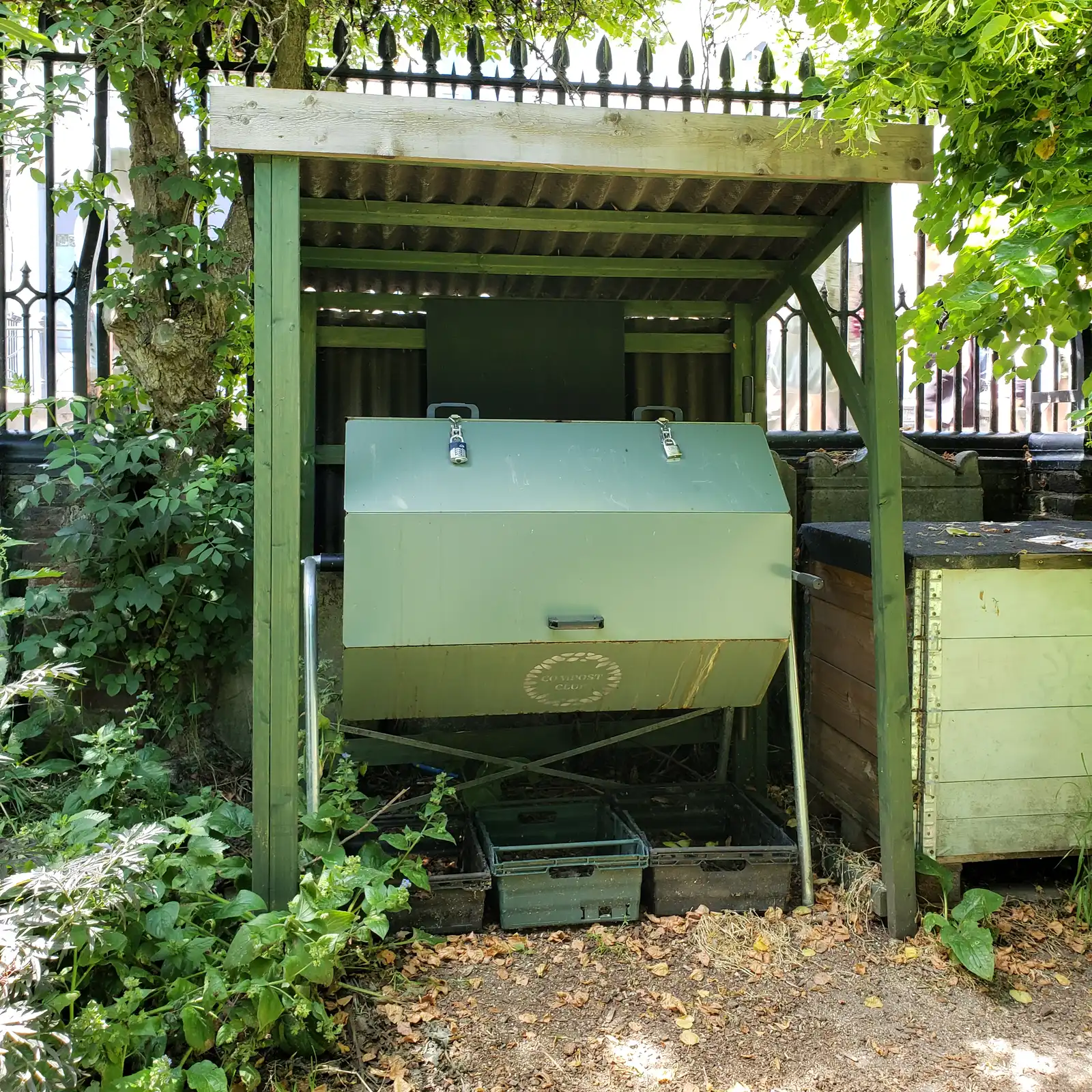
Picture four moments: carrying a full bucket to the drum, opening the door, turning it and emptying it. A footprint that fits a sketch can be awkward once the door is open or a wheelbarrow needs to sit underneath. Measure the clearance below a raised drum against the tray or barrow you will actually use, check that a hinged door can swing clear of the fence, and decide where a removable door will rest while you work.
Pick a spot you will visit in bad weather. The DC guide suggests a semi-shaded, convenient site at least three feet from structures and heavy brush to discourage critters.
Assemble it where it will live. Mantis warns that the assembled unit may not fit through some doorways and advises building it with access to its final location. Mantis assembly location note, page 4 The same booklet points to a separate operating manual for the first batch, so get both documents, especially on a secondhand unit.
Buying used
Latches, doors, handles and gear parts are model-specific, and similar-looking drums often use different hardware. On a used tumbler, check that the door closes and locks, that the drum turns without binding and that you can still get replacement parts for that exact model. A broken latch on a heavy, rotating drum is a real problem, so do not improvise one from whatever fits.
Written from manufacturer and retailer information and general garden practice. GardenHelm has not physically tested the products discussed here. How we choose products