Countertop Composter Guide: Scrap Caddies, Electric Processors and Output
A countertop caddy collects scraps; an electric unit processes them and creates a second job. Decide where the contents will go before choosing either.
By GardenHelmPublished 4-minute readMore in Composting
In this guide
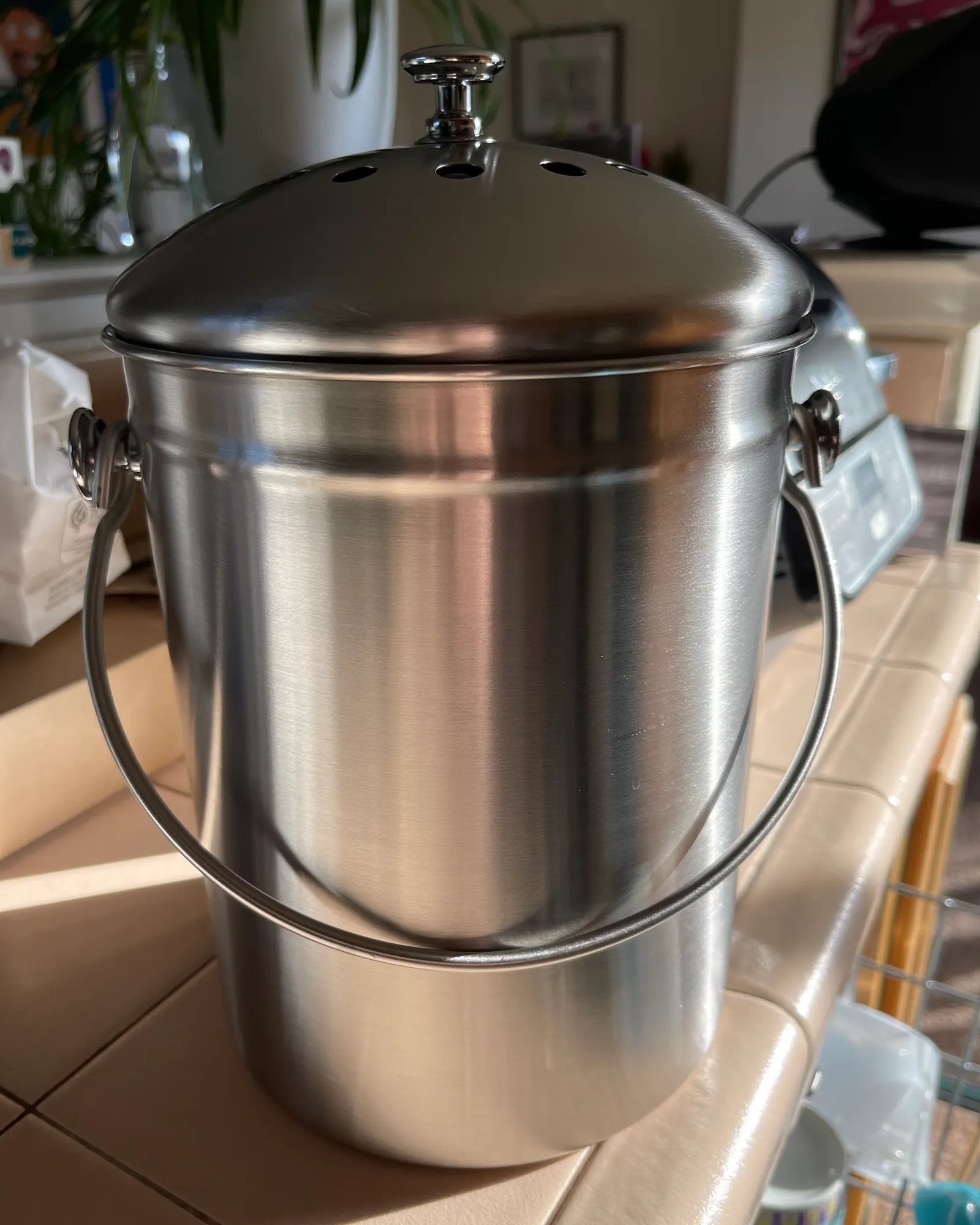
“Countertop composter” covers two very different machines. One is a lidded bucket that holds peelings until you carry them out. The other is an electric appliance that dries and grinds scraps into a crumbly, much smaller residue. Neither makes finished compost on your counter. If your town collects food scraps or you already keep a garden bin, a simple caddy is probably all you need. An electric unit makes sense only when you value shrinking the scraps and already know where the output can go. Our composting hub covers the outdoor systems that do the actual composting.
| Kitchen caddy | Electric processor | |
|---|---|---|
| What it does | Holds scraps between trips | Dries and grinds scraps in a cycle |
| What comes out | The same scraps | A dry residue that still needs somewhere to go |
| Ongoing needs | Washing, maybe liners | Power, cleaning, filters or other consumables |
| Best for | Anyone with a scraps destination | Households short on collection options or bothered by volume |
What the electric output really is
The US Composting Council cautions against assuming that food-scrap dehydrators produce stabilized compost in a short appliance cycle. It suggests checking whether the output needs further stabilization or belongs in a compost pile, and whether any uses are excluded. US Composting Council on food-scrap dehydrators
The original Vitamix FoodCycler FC50 manual is a good illustration of how specific those rules get. It describes drying, grinding and cooling stages, gives separate cleaning instructions for the removable bucket and the electrical base, and restricts how output containing animal protein may be used compared with its garden-use directions. Vitamix FC50 original manual, pages 9 and 16 We cite the FC50 as a documentation example, not as the current model to buy.
For any processor, read the manual for three answers: what can go in, what comes out and what must happen next. A product page that covers only the first two leaves you holding a bucket of residue with no plan. Your local collection program decides separately whether it takes that residue, so ask it before buying on that assumption.
When a caddy is the whole answer
A good caddy is easy to fill while you cook, easy to carry and easy to wash. Opening, handle and lid matter more than another quart of capacity: a big bin that is awkward to tip out, or that hogs your prep space, gets used less.
OXO’s 1.75-gallon Easy-Clean Compost Bin shows what to look for. OXO describes a lid that stays open while you scrape a cutting board, a folding handle and a design that can hide a liner bag. Its care notes separate a dishwasher-safe body from parts that should be hand-washed. OXO original product and care information
Liners are where people get caught out. A “compostable” bag is welcome only if your receiver accepts it. Not every collection program or home system takes them, so ask before you buy a box. If the scraps go into your own bin, follow that system’s rules: the DC home composting guide, for example, keeps meat, bones, fat, dairy and compostable plastics out of a home bin. DC home composting guide
Before paying for a premium caddy, run a week with a container you already own. Where does it sit while you chop? Can you open it one-handed? Where does it go when you need the counter? Those answers tell you which features you will actually use.
Space and cleaning
An appliance needs more room than its closed dimensions suggest. Allow for the clearance its manual specifies, the movement needed to lift out the bucket and a reachable outlet. Fitting in a cupboard with the lid shut does not mean it can run there. A caddy can live under the sink as easily as on the counter, provided the opening clears the plumbing.
Cleaning differs too. A caddy goes in the sink or dishwasher. An appliance has an electrical base and parts that get hot or move, so follow its own unplugging, cooling and cleaning steps instead of hosing it like a bucket. Note the model number of any replaceable filter and check its current price and availability, because that is part of the real cost.
Claims such as “odor-free” or “pest-proof” are marketing language unless the maker explains how they were tested. Judge a caddy by its seal and how easily it cleans.
Matching the setup to your situation
You already have curbside collection or a garden bin. Start and probably stop with a caddy.
You have a garden but no composting routine yet. Settle how scraps will be composted and finished outdoors before buying an appliance on the promise of soil benefits. Its output still needs a next step.
You rent an apartment with no known drop-off. Find out what local collection or drop-off sites accept, then weigh that route against the cost and upkeep of an indoor processor. Buy the machine only once you know where its contents can go.
Written from manufacturer and retailer information and general garden practice. GardenHelm has not physically tested the products discussed here. How we choose products