Weed Eater Buying Guide: Choose a Handheld String Trimmer
A string trimmer handles grass along fences, around obstacles and at edges the mower misses. Choose it by your trimming route and how the loaded tool feels in your hands.
By GardenHelmPublished 6-minute readMore in Pruning & Cutting
In this guide
A string trimmer throws whatever the line hits, in any direction, and ECHO’s operator’s manual for its SRM-225 tells the user to keep spectators, helpers, children and animals at least 15 meters (50 feet) away while the machine runs. That one line frames the whole purchase. You are choosing a tool that needs protective gear, a clear work area and a guard that stays on, and then asking which power source and head fit the edges of your yard.
This guide covers handheld line trimmers, the machines sold as weed eaters or weed wackers. Wheeled trimmers and brush-cutter attachments have their own operating requirements.
Gear and ground rules first
The ECHO manual asks for eye protection that meets ANSI Z87.1 or CE requirements at all times, with a full face shield over glasses or goggles when branches or flying debris are a concern. It recommends hearing protection whenever the unit runs, sturdy gloves that also reduce vibration at the hands, and snug, durable clothing with long pants and long sleeves. The manual also warns about hand and arm vibration injury: keep hands warm, take breaks, and limit hours of use.
Three more rules appear in the manuals cited here, and each is worth treating as fixed.
- The shield stays on. ECHO says not to operate a line-head unit without its debris shield.
- Stop before you clear. For gas, ECHO says to stop the engine, disconnect the spark plug and wait for all moving parts to stop before removing an obstruction. EGO’s manual calls for removing the battery before assembly, adjustment or cleaning, and the BLACK+DECKER corded BESTA510 manual says to unplug before changing line or cleaning.
- Line is line. Do not swap in wire, a homemade cutter or heavier line because it will push through the head. ECHO’s manual allows a blade only on a specific brush-cutter configuration with the specified shield, barrier bar, U-handle and harness; fitting one to a plain trimmer is not covered.
If you buy a used machine, treat a missing guard, an illegible model label or an unidentifiable head as a reason to walk away. Ask for the dealer demonstration with the machine off, so you can handle the controls, the guard and the head release before any fuel or battery goes in.
Overhead wires matter too. ECHO’s manual warns that its unit is not insulated against electricity and that touching overhead conductors can cause serious injury or death, so keep the shaft well clear when trimming under service lines and tree branches near them.
Gas, battery or corded
Your route and your tolerance for upkeep settle this better than any power figure.
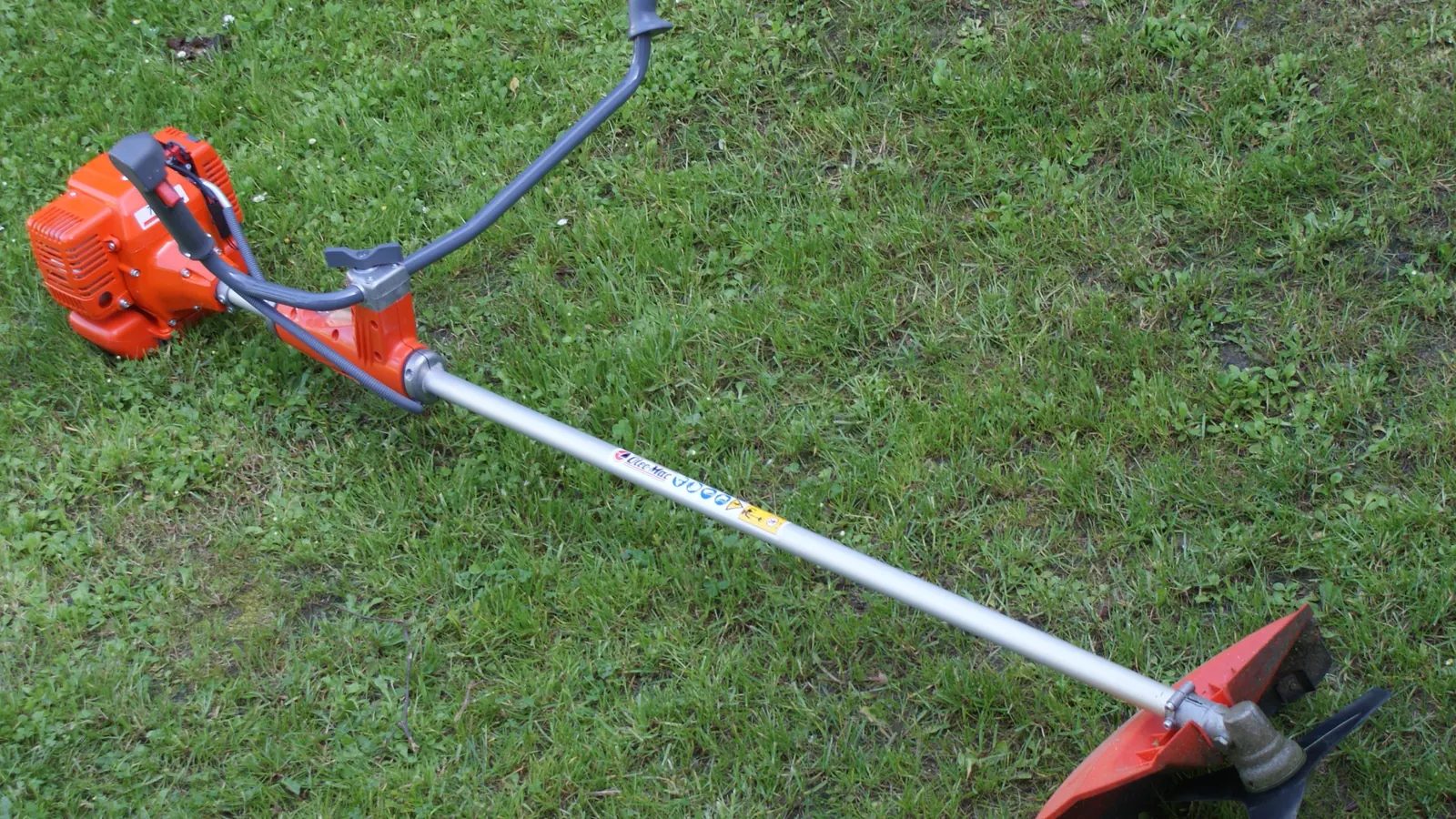
Gas suits long runs without a charging point, if you are happy to mix and store fuel. ECHO’s SRM-225 manual specifies mid-grade gasoline of 89 octane or higher, up to 10% ethanol, no methanol, and a 50:1 gasoline-to-oil mix with a two-stroke oil that meets ISO-L-EGD and JASO FD. Those figures describe that engine. The same manual says never to run it indoors or in poorly ventilated areas, calls fuel very flammable, and notes that operation can throw sparks that start fires in dry vegetation, so look up local fire rules for dry season. The SRM-225 has a 21.2 cc engine, a straight shaft, a D-loop front handle and a Speed Feed 400 nylon-line head, and ECHO’s support specifications list a dry weight of 10.4 pounds without the cutter head. Husqvarna’s 130L listing shows a 28 cc engine, an 18-inch cutting width and a RapidReplace head, with 12.2 pounds again excluding cutting equipment. Because neither weight includes fuel or the head, they cannot be compared with each other or with a battery tool’s weight.
Battery is the simpler daily routine if you own, or will buy into, a compatible battery platform. EGO’s 15-inch POWERLOAD page sells the ST1520S as a bare tool and the ST1521S and ST1523S as kits with a 2.5 Ah and a 4.0 Ah battery, each with a standard charger. A bare tool is a bargain only when you already own the batteries. If your edging takes longer than one pack, price a second pack from the start, and treat a runtime claim as usable only when it names the battery size and the cutting conditions behind it.
Corded electric trimmers remove charging from the picture and add a cord to the job. BLACK+DECKER’s BESTA510 manual requires an outdoor-rated extension cord sized for the tool and the length, tells you to keep the cord away from the rotating line, and prohibits use in rain or wet locations. If the outlet is far from the fence line, factor in the cord, or look at battery.
We have not tested any of these machines; the models named here are documented examples.
What it weighs in your hands
Weight claims need their fine print. A dry weight, a shipping weight and a ready-to-work weight with fuel or a battery and a fitted head are three different numbers, so see which one a listing gives. Hold the machine in the working posture, with the head at the height you need and the guard and battery or fuel in place. Reach, balance and control access are personal. A front-heavy tool that you keep lifting against the handle will tire you faster than a lighter one that sits level. If a harness is part of the plan, use only the one the maker approves for that model, since an improvised strap changes how the machine hangs and how you can drop it in an emergency.
For the EGO family, the manual’s operating drawing shows both hands on the handles with the head held parallel to the ground. Whatever the model, the grips and posture drawn in its manual are the ones the guard and balance were designed around.
Heads and line
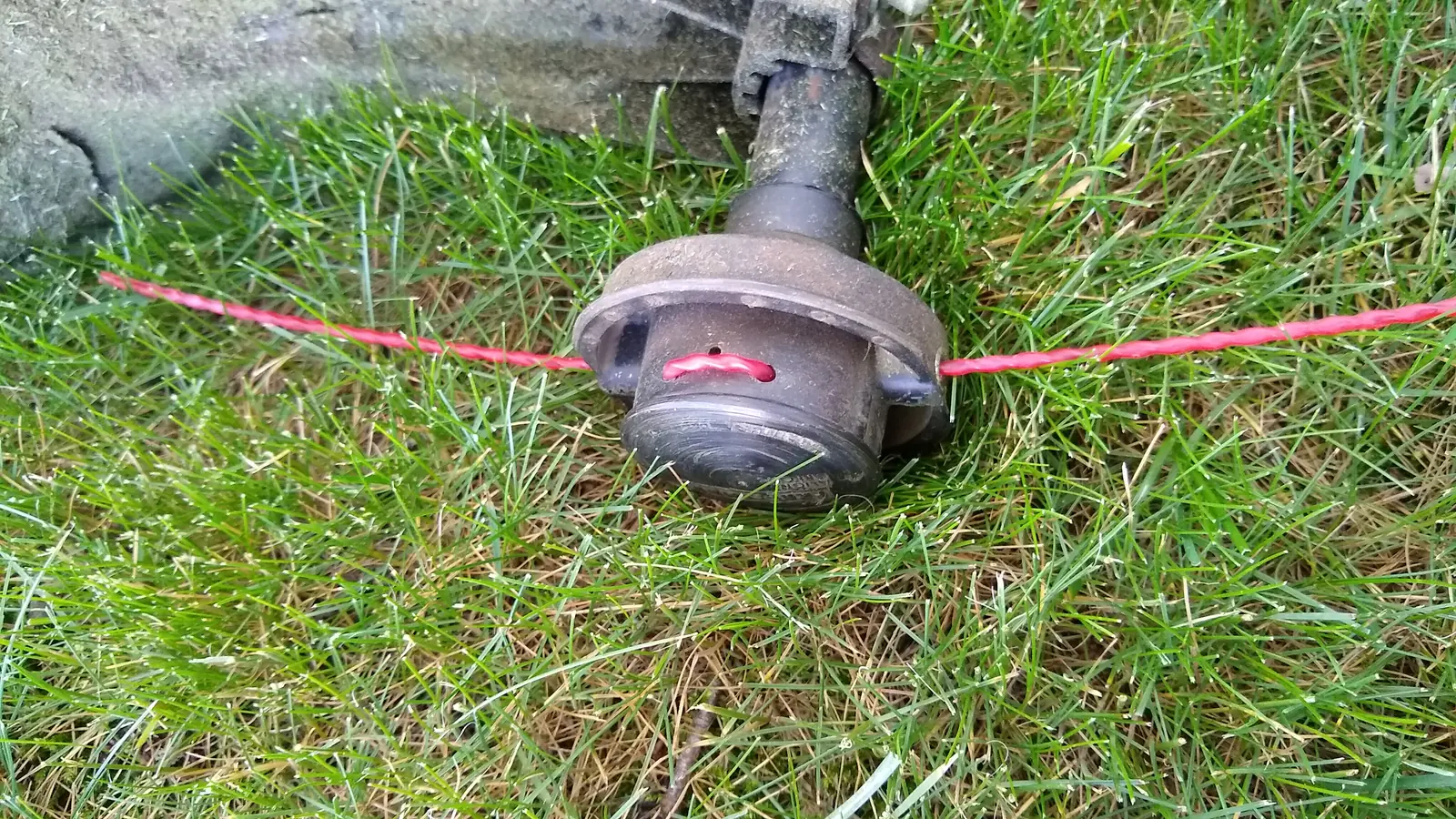
Trimmer heads load three broad ways. A fixed-line head takes separate pieces of cutting line that you replace when worn. A bump-feed head advances stored line when you tap it. Powered winding, as on the EGO tool, uses the motor to load fresh line onto the spool. The EGO ST1520 family manual specifies 0.095-inch twist line and labels the winding button separately from the bump head, so winding loads replacement line and does not advance the working line for you.
Before buying, find the exact head on the model and look up its line. You want a line the maker specifies, available locally, and a reload you can do in a minute with gloves on. A head that needs a part you cannot identify is a nuisance every season.
Edges, banks and the places a mower leaves
Walk the places the mower leaves behind. Fence lines, trunks and raised-bed edges favor a lighter, well-balanced tool. A sloping bank favors a model whose weight you can manage while standing on an angle. If a crisp pavement edge is the main job, a dedicated edger or a trimmer that its maker permits to be turned on its side will do it better than a general-purpose head.
If you have one overgrown corner to clear, hiring that out once can cost less than buying a machine sized for it. If trimming is a weekly chore, buy for the weekly chore.
Written from manufacturer and retailer information and general garden practice. GardenHelm has not physically tested the products discussed here. How we choose products