Riding Mower vs. Zero-Turn: Compare the Whole Yard Routine
A zero-turn is also a riding mower; the real comparison is lawn tractor versus zero-turn. Compare two specific machines by mowing pattern, controls, collection and attachments.
By GardenHelmPublished 5-minute readMore in Lawn Mowers
In this guide
Count the turns in one lap of your lawn. If you spend most of the time on long straight passes across open, flat grass, a lawn tractor does the job and also pulls a cart. If you are constantly swinging around trees, beds and corners, a zero-turn can shorten the session. If part of the property is steep, the manual for the machine you are considering decides, whichever type you prefer. A zero-turn is itself a riding mower, so this is really a comparison of two layouts.
How the three layouts differ
Toro’s overview of riding-mower types gives the clearest side-by-side. It lists zero-turns with dual-lever steering, decks from 42 to 60 inches or more, and calls them ideal for properties with landscaping, tight turns or irregular layouts. Lawn tractors have a wide turning radius, decks from 42 to 54 inches, and suit homeowners who mostly mow open, flat lawns. Rear-engine riders have a moderate turning radius and 30 to 42-inch decks, and it lists them for small to medium yards with simple layouts and tighter spaces. Those are one maker’s figures, and other brands vary. Power source is a separate choice, since an electric rider can have either layout.
Compare two specific machines in a sensible size range and write down the model, deck and included equipment of each. A low price often reflects a smaller deck or missing accessories.
When a zero-turn earns its place
Sketch your main mowing areas and mark every spot where you must reverse or interrupt a pass. A dense cluster of marks around trees and beds favors a zero-turn. A broad rectangle with a few marks favors comfort and cut quality over turning ability. Tight turning also leaves the machine’s outline unchanged, so the deck, rear body and any attachment still have to clear a trunk or fence corner. Ask the dealer for a demonstration on terrain like yours. An empty parking lot will not show you how it handles a bed edge.
Controls
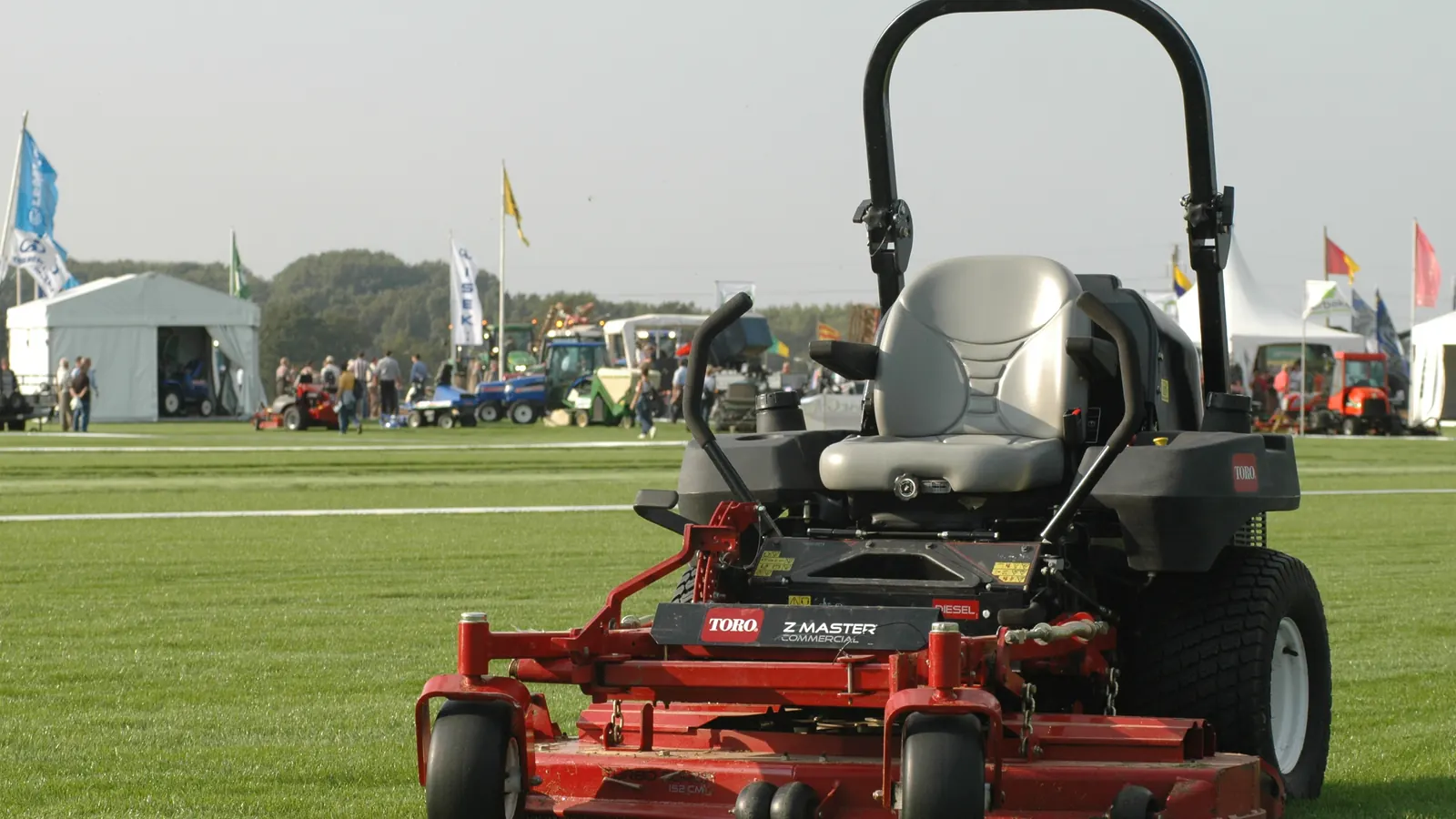
The Cub Cadet XT1 LT42 IntelliPOWER listing shows a 42-inch deck and foot-controlled hydrostatic transmission, and its operator manual shows separate forward, reverse and brake pedals alongside a steering wheel. The Toro TimeCutter Max/MyRIDE manual shows paired motion-control levers for travel, reversing and turning. Steering-wheel zero-turns exist too, and for some buyers that removes the biggest hurdle. Our lawn mower guides cover those specialized choices.
Sit on the stationary machine and confirm you can reach every control, understand what each does and see the area around the deck. If several adults will mow, each needs a demonstration and should read the manual.
Towing and attachments
Tractors often win here, but only within limits. The Toro TimeCutter manual says not to use the machine as a towing vehicle unless a hitch is installed, to attach towed equipment only at the hitch point, never to exceed the maximum gross towing weight, and to use only accessories the maker approves. It also says to reduce towed weight and slow down on slopes, since towed loads can cost traction and raise rollover risk. The XT1 manual likewise gives towing its own restrictions apart from mowing.
Write down the job you need done, such as a particular cart, leaf collection or a compatible implement, and ask each maker’s literature whether that machine can do it with approved equipment. Someone who hauls a cart every week values a confirmed hitch setup far more than someone who only mows.
Collection
If you collect clippings or leaves, compare complete collection systems. A bag or chute sold separately may be a replacement part, and the same deck width on two machines gives no guarantee the collector fits. Look at how the container empties, where parts are stored when you change modes and how far you travel to unload.
Slopes and rollover
Each machine’s manual sets its own slope limit and direction of travel, so there is no single rule by type. The Toro TimeCutter manual says never to operate on slopes greater than 15 degrees, and its slope decal says to operate across slopes under 15 degrees. It adds that wet grass, going across a slope or going downhill can cause a loss of traction, that you should avoid starting, stopping or turning on a slope, and that the deck should stay lowered to the ground if possible. The MTD steering-wheel zero-turn manual covered in our steering-wheel guide allows 20 degrees. MTD’s lawn tractor manuals say to drive up and down a slope and never across it. Walk-behind mowers go across the slope, the reverse of the tractor rule. Direction of travel varies by machine, so read the slope section for yours before the first pass.
Rollover protection belongs next to price in the comparison. Toro’s guidance for its folding roll bars says to keep the bar fully raised and locked and wear the seat belt, lowering the bar only when absolutely necessary, and not to wear the belt with the bar down. A lowered bar gives no rollover protection. A NIOSH FACE investigation of a worker killed when a mower overturned on a 30-degree slope, on a machine bought without rollover protection, recommended ROPS and seat belts on riding mowers. A structure cannot stop a rollover, but it can keep the machine from crushing the operator.
Do not test a machine’s traction beside a ditch, pond or retaining wall. Mark the areas the manual rules out and handle them another way. Show the steepest part of the property to the dealer before discussing convenience. A maximum slope rating is a ceiling for good conditions, and wet grass, soft ground, edges and a full collector all shrink the margin.
Time, service and storage
Time your present routine from preparation to cleanup and label estimates as estimates. If turning and repositioning fill the session, maneuvering is the place to look first, and if most of it is unloading, look at the collection system. A faster pass that leaves a poor finish saves nothing, and a maximum travel speed multiplied by deck width does not predict your finish time.
Find out where routine service happens, how a machine that will not start gets moved and whether wear parts are easy to obtain, since a local service relationship can outweigh a minor feature. Test the storage fit with the collector and other equipment included, without removing required guards. For a used machine, identify the exact model before relying on any manual and consider a qualified condition assessment.
Here is our decision rule. Open, flat and cart-heavy points to a lawn tractor. Cluttered and obstacle-heavy points to a zero-turn. Small yard and tight shed points to a rear-engine rider. Anything steeper than the manual allows needs a different tool, such as a walk-behind or a trimmer.
Written from manufacturer and retailer information and general garden practice. GardenHelm has not physically tested the products discussed here. How we choose products