How to Clean a Lawn Mower: Deck, Catcher and Filter Decisions
What you may wash, and how to make the mower safe first, depends on your exact model. Clean the deck, the catcher and the air filter as separate jobs, then reassemble and check.
By GardenHelmPublished 6-minute readMore in Lawn Mowers
In this guide
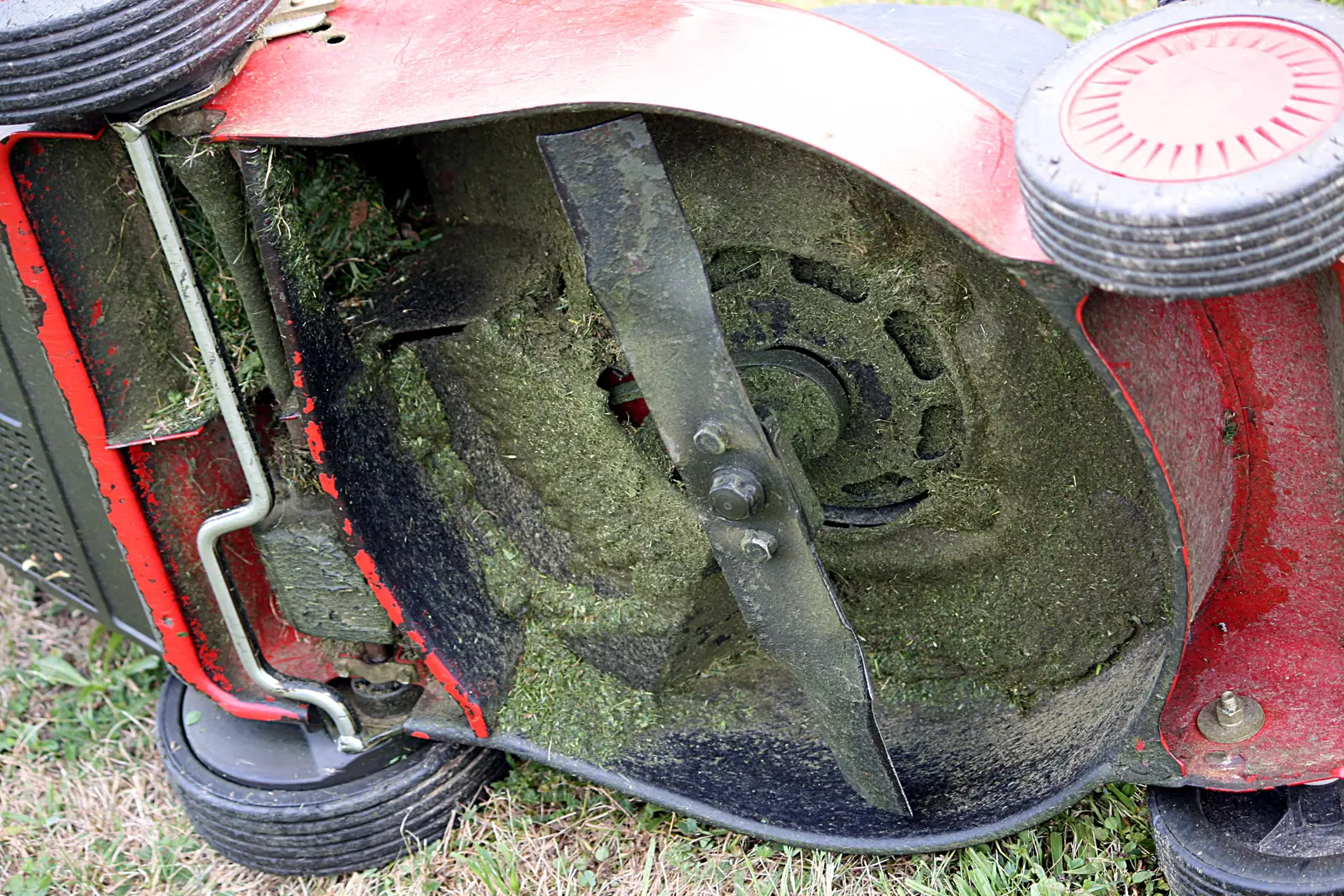
Wet clippings packed under a mower deck set like felt, hold moisture against the steel and choke the airflow that lifts grass into the blade. The fix is quick if you work in the right order: make the mower unable to start, let a gas engine cool, tip it the way its maker specifies, scrape the deck, then deal with the bag and the air filter as separate jobs. The step people get wrong is the tipping, and it is the one that can leave you with a smoking engine.
Gas, battery and corded machines are cleaned differently, and two mowers with the same kind of engine can still have different instructions. Keep your owner’s manual open for the model you have; the examples below show what good instructions look like.
Make it safe before your hands go near the deck
Stop the engine or motor and wait for the blade to stop completely. Then take away its ability to start:
- Gas mower: pull the boot off the spark plug and tuck it away from the plug. Illinois Extension’s mower-maintenance guide gives the same first step before cleaning.
- Battery mower: remove the battery pack, and the safety key if your model has one.
- Corded mower: unplug it at the mower end, not just at the wall.
Wear heavy gloves. Honda tells owners of its HRN216VYA to wear heavy gloves and disconnect the spark plug cap whenever they clean the deck or handle the blades (HRN216VYA owner’s manual). A blade edge you cannot see under a crust of grass still cuts.
Let a gas engine cool before washing anything. Honda’s manual warns that water on a hot engine can damage it, and a hot muffler burns skin.
Tip it the right way up
Tilting a four-stroke engine the wrong way lets oil run into places it should not reach. Briggs & Stratton lists oil leaking into the muffler after the mower was tilted as a common cause of smoke at the next start (Briggs & Stratton troubleshooting tips). Oil or fuel can also soak the air filter.
The usual direction is carburetor and air-filter side up, but the manual decides. Two Honda examples show why:
- The HRN216VYA manual says to tilt the mower so the carburetor side is up when clearing a clogged deck, and to rest it on its right side, fuel-cap side up, for deck cleaning, with the fuel valve turned off first.
- Honda’s HRC216HDAH/HDPH manual, 00X31VK6K031, page 17, likewise specifies engine off, fuel valve closed and the right side down, fuel-cap side up, for deck washing.
If your manual shows no tipping position, clean what you can reach from above and have a shop show you the correct position. Put a piece of cardboard under the deck edge; Honda suggests this to avoid scratching the deck and wheels when tipping for an oil change.
Battery mowers have no oil or carburetor to protect, but the Toro 22276 manual, serial 400000000 and up, still asks you to remove the battery and electric-start button before tipping the machine on its side as illustrated.
Scrape the deck
Use a plastic or wooden scraper, or a putty knife, and push the packed grass off the inside of the deck, around the blade and out of the discharge chute. Illinois Extension suggests a leaf blower or air compressor for loose clippings and a putty knife for the stuck layer. On Toro’s 22276, pay attention to the kickers, the small baffles inside the housing. Honda and Toro both tell owners of the models cited here to clean the underside after each mowing; wet grass builds up fastest, so a quick scrape after a damp mow saves a long one later.
Clear a jammed deck with a stick or scraper, never with your hand, even with the plug wire off. Do not pry against the blade to dislodge a chunk; a bent blade is a repair, not a cleaning issue.
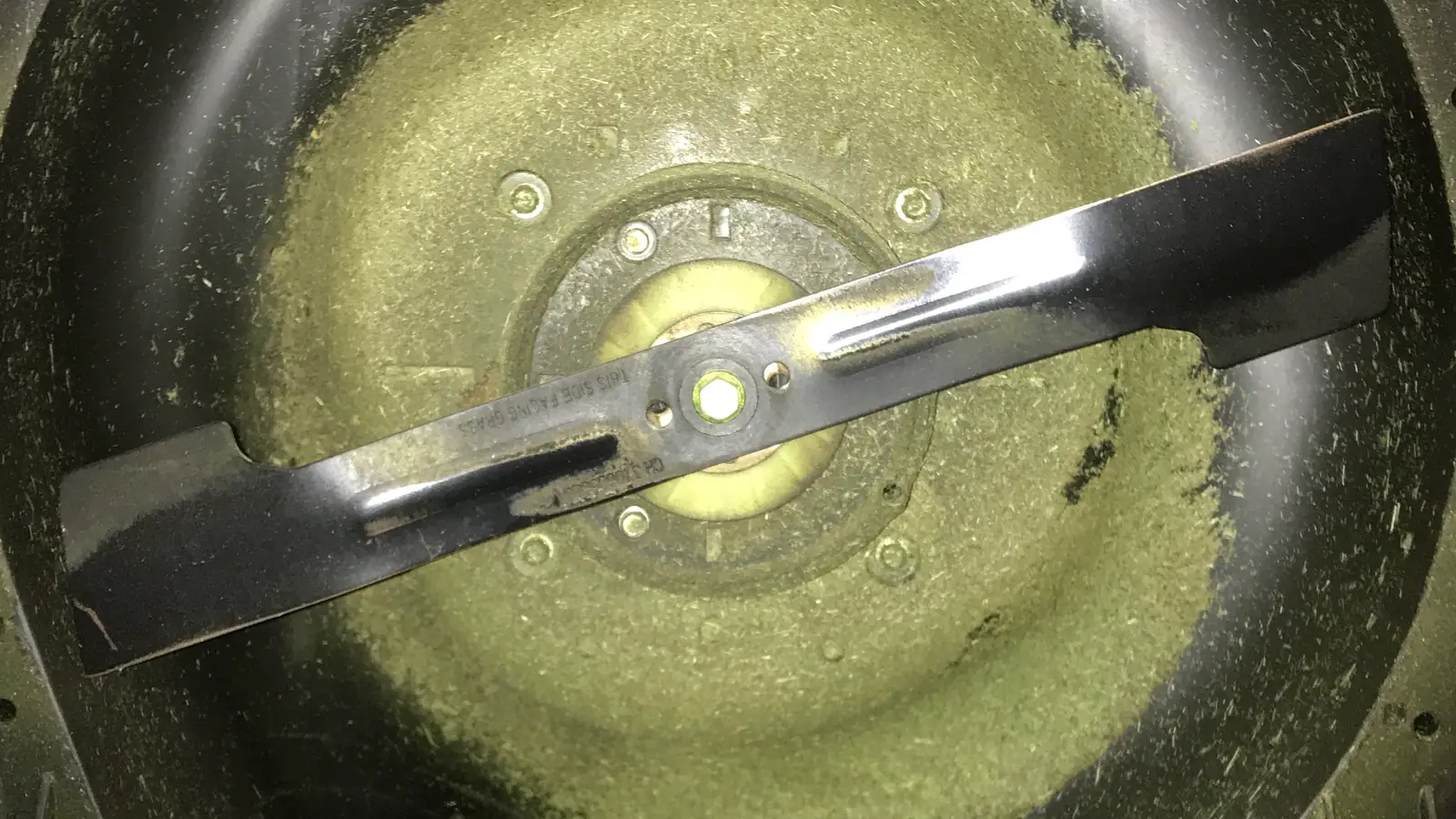
While the underside is visible, look at it. Cracks, a bent blade tip, a loose blade bolt or a deck worn thin are worth finding now. Cleaning will not fix vibration or an uneven cut caused by damage.
Water: when and how much
Some mowers are designed to be washed and some are not. Read the cleaning section before you reach for the hose, because the method changes completely between models.
Honda’s HRN216VYA allows washing the deck underside but tells you to keep water away from controls, cables, the air cleaner and the muffler opening, and to wash the engine itself by hand. It warns that a hose or pressure washer can force water into the air cleaner, soak the paper filter and reach the carburetor or cylinder.
Some mowers have a washout port that takes a garden hose. Toro’s 22276 uses a different running method: deck at its lowest height, mower on a level paved surface, blade running, water sprayed in front of the right rear wheel at handle level, with eye protection, the operator behind the handle and bystanders kept away. That is a documented procedure for that machine only; never run a mower to clean it unless its manual describes exactly that. If washing leaves residue, Toro’s fallback is battery out, machine tipped, then scraping.
Toro also says not to use high-pressure spray on the wheel bearings. Whatever the model, keep a pressure washer away from the engine, electrical parts and bearings.
After washing, wipe accessible surfaces dry. Honda then has owners stand the mower level, run the engine outdoors until it reaches operating temperature to evaporate water, and finish with a light film of oil on areas that may rust. Never run an engine indoors or in a closed garage to speed drying.
The grass bag
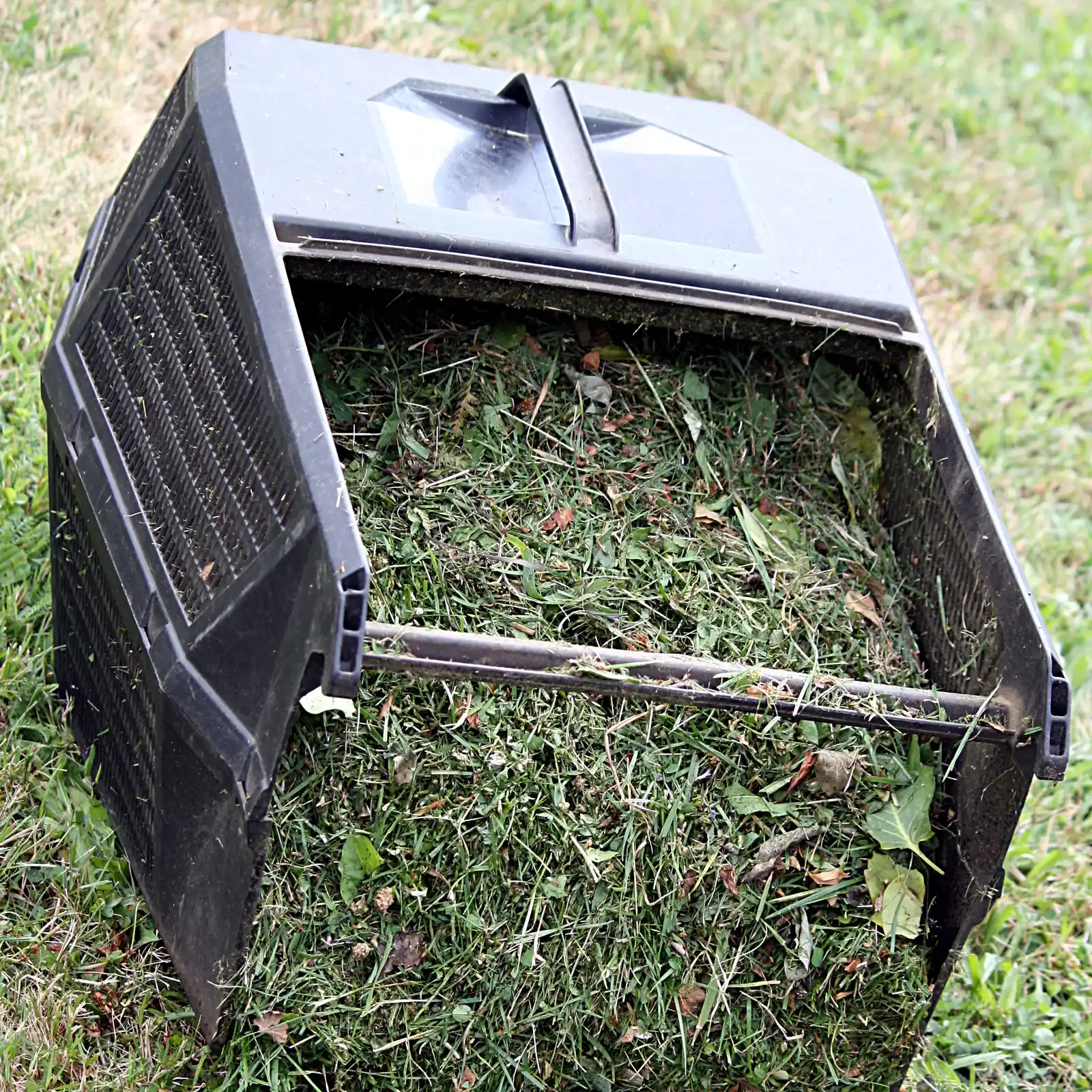
Empty the bag and shake it out after mowing. A clogged bag stops collecting and blows clippings back onto the lawn; Honda’s troubleshooting table lists it as a cause of grass left behind. Honda permits washing its removed bag with a hose and says to let it dry completely before storage. A torn bag or broken frame needs a replacement part, not a wash.
The air filter is a service job
Do not scrub the air filter like part of the deck. Honda’s HRC216 manual, page 14, says not to brush its paper element; a foam element gets washed, dried and oiled. A damaged element is replaced. On the HRN216VYA, Honda schedules filter cleaning every 6 months or 50 hours, more often in dusty conditions, and replacement every 2 years or 150 hours.
Wipe dust off the housing before you open it so dirt does not fall into the intake. Never run the engine without the filter or with the cover loose; Honda notes that doing so lets dirt in and causes rapid engine wear.
Put it back and look it over
Stand the mower level, refit the bag or discharge cover, reconnect the plug boot or battery last, and make sure nothing is left on the deck. If you found damage or the mower still vibrates after a clean deck, note what you saw and where: that description saves a repair shop guesswork.
For the end of the season, Honda advises against storing a mower under sheet plastic, because a nonporous cover traps moisture and promotes rust. A breathable cover, a clean dry deck and the fuel handled as the manual directs will see it through winter.
Written from manufacturer and retailer information and general garden practice. GardenHelm has not physically tested the products discussed here. How we choose products