Pump Sprayers: Choose the Tank, Liquid Compatibility and Controls
A bigger tank says nothing about what liquid it can hold or the dose you apply. Put the exact liquid first, size the tank to the job and keep water output separate from chemical rate.
By GardenHelmPublished 4-minute readMore in Garden Tools
In this guide
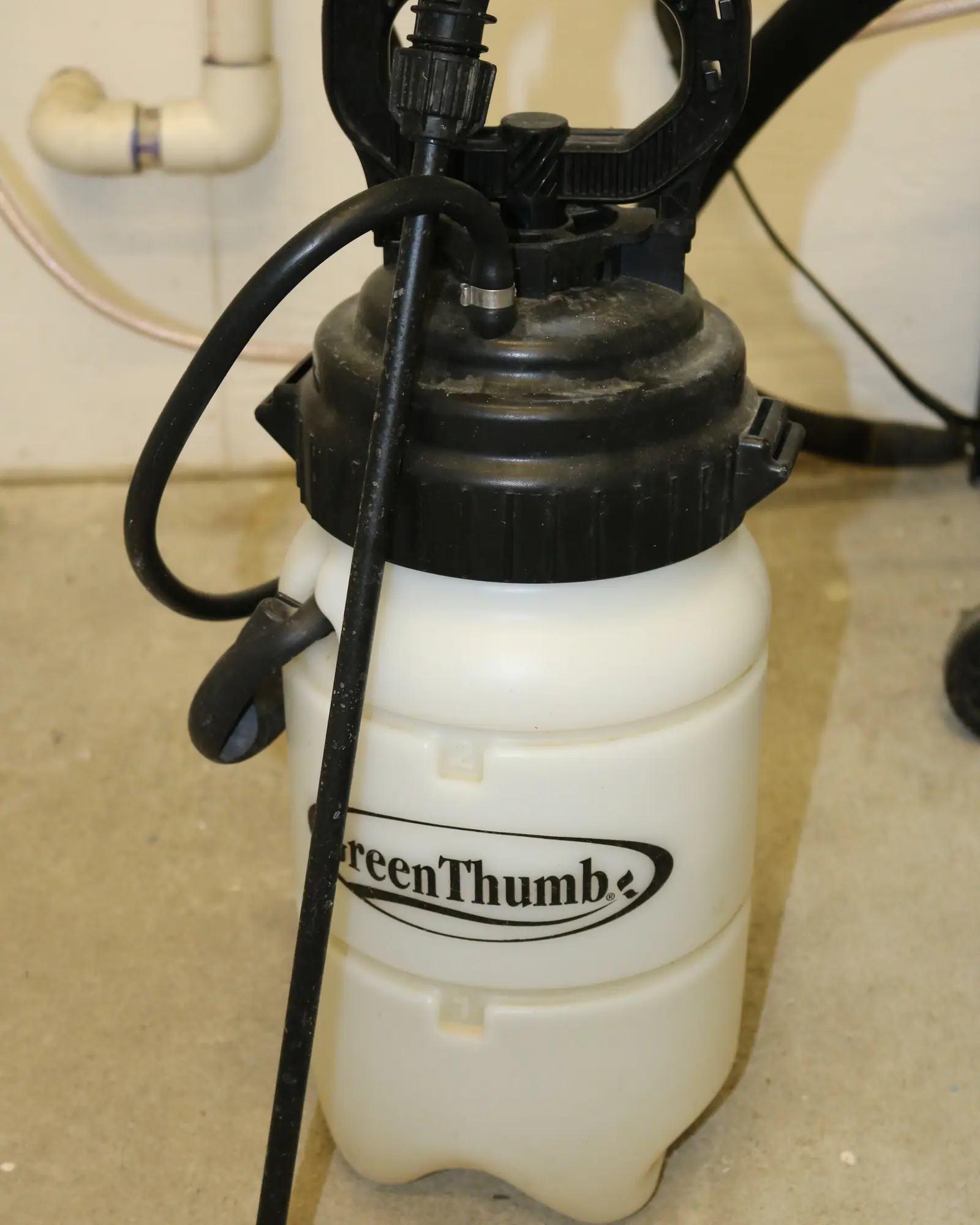
A one- or two-gallon pump sprayer handles most home garden jobs: spot-treating weeds along a fence, applying a dormant oil to a few fruit trees, washing down patio furniture. You pump the handle to pressurize the tank, then squeeze the shutoff to spray. Choose it in this order: first make sure the liquid you plan to use is allowed in that sprayer, then pick a tank size you can comfortably carry when full, and finally check the pump, shutoff and pressure release on the exact model.
Our garden tools hub covers other equipment.
Start with the liquid
Write down what you intend to spray and check both the product label and the sprayer manual. “For garden use” on a sprayer does not cover every liquid. Chapin’s 20000, for example, is a 1-gallon poly tank with nitrile seals and a stream-to-cone nozzle, and its linked manual rules out flammable, caustic, acidic, chlorine, bleach and other corrosive or reactive solutions (Chapin 20000, linked manual). That puts vinegar-based weed sprays and bleach cleaning solutions outside its allowed uses.
If you are unsure, send the maker the exact product name before filling. Never solve a compatibility question with a stronger mix or seals from another sprayer.
Size the tank to the job and your back
Water weighs about 8.3 pounds per gallon, so a full 2-gallon tank weighs over 16 pounds before the sprayer itself. Picture the route: from the faucet or mixing spot, up any steps, through the gate, to the farthest target. For scattered small jobs, a 1-gallon tank refilled once is often easier than carrying a heavy tank around the whole yard. And mix only what the job needs, rather than filling to the top to save a trip.
| Detail | What to look for | Why the tank size alone does not tell you |
|---|---|---|
| Carrying | Handle or shoulder strap | Capacity says nothing about how the weight sits on you |
| Filling | A wide opening and clear level marks | Measuring a batch accurately depends on these |
| Wand | Length and any approved extensions | Reach to the target depends on the wand |
| Parts | Seals, shutoff, hose and nozzle you can buy | Look-alike parts may not be interchangeable |
Pump, shutoff and pressure release
Pumping and spraying are separate controls. If you can, handle the actual model: check how the pump handle locks and releases, how hard it is to pressurize and where the shutoff sits in your hand.
Chapin’s manual distinguishes the pump from the shutoff, explains re-pumping as pressure drops, and calls for inspecting the hose and tank and running a water-only test for leaks and clogs before the first real use (SureSpray manual). Do that test.
One detail needs care. The 20000 product page advertises an EZ Twist relief valve, while the linked generic manual describes a different release sequence. Ask Chapin which applies to your unit before using it, and never unscrew the pump on a pressurized tank.
Calibrate with water
How much a sprayer puts out depends on pressure, nozzle and walking speed, so measure it. University of Georgia’s hand-sprayer calibration method uses a water-only trial over a measured area, keeping pressure and pace steady (UGA pump-up sprayer calibration). The article dates from 2004 and its herbicide examples are not current directions; the method still works.
For example, if your water trial uses 1 quart over 250 square feet, your sprayer applies 4 quarts, or 1 gallon, per 1,000 square feet. The product label then tells you how much product to add for that volume and area. Write the nozzle setting and conditions beside the result, and redo the trial if you change the nozzle or technique.
Cleaning and storage
Follow the sprayer’s cleanup, depressurizing and storage steps, and the product label’s instructions for rinsing and disposing of leftovers. A tank that looks empty can still hold residue.
A common practice is to keep one sprayer only for weed killers and another for everything else, clearly labeled so nobody mixes them up. Keep the model number and part numbers with your records. If a hose is damaged, a seal looks doubtful or the release procedure is unclear, sort that out before the next fill.
Before the first fill, write the allowed liquids and the tank’s full weight on a tag tied to the handle, so nobody has to look them up mid-job.
Written from manufacturer and retailer information and general garden practice. GardenHelm has not physically tested the products discussed here. How we choose products