Leaf Blower Buying Guide: Match Airflow, Controls and Power to the Cleanup
Blowing a patio into one pile and moving leaves across an open lawn are different jobs. Describe your normal cleanup, then compare format, airflow figures, battery packs and controls.
By GardenHelmPublished 5-minute readMore in Garden Tools
In this guide
Where do the leaves go when you are done? That question narrows the blower choice more than any airflow figure. If the answer is “onto the lawn, under the mower,” a light battery handheld is usually plenty. If it is “into bags at the curb,” you need to move leaves a long way and the carrying weight matters. And if the answer is “back where I started,” a rake would have been faster.
Match the machine to the route
Walk the cleanup once and mark the start, the collection point and the places where you would reach for a broom. A patio and short walkway ask for a low-speed setting and a nozzle you can aim between plants. An open lawn with several pile sites asks for a tool you can carry comfortably, with a power supply that lasts. Beds beside a path ask for a trigger with fine control.
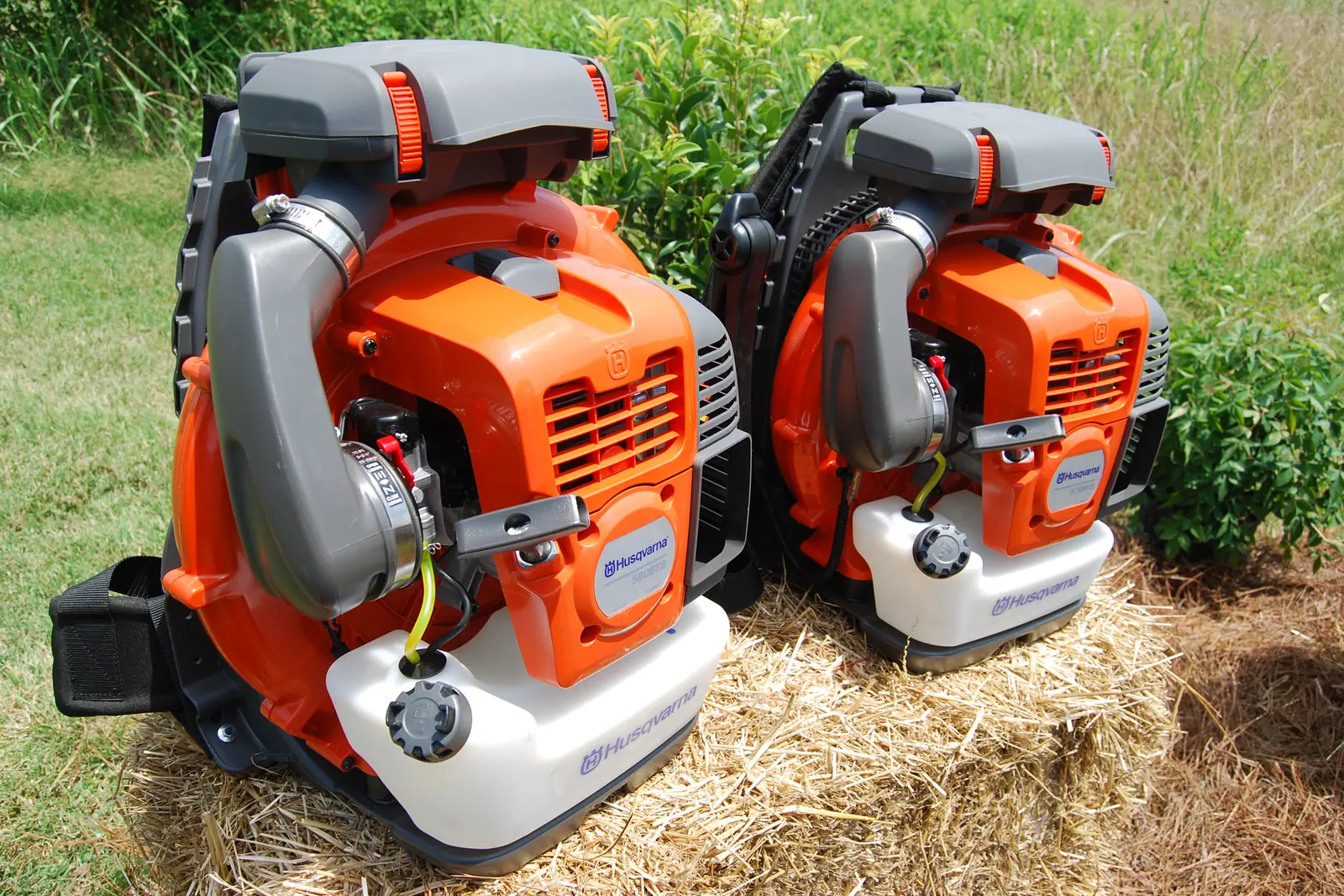
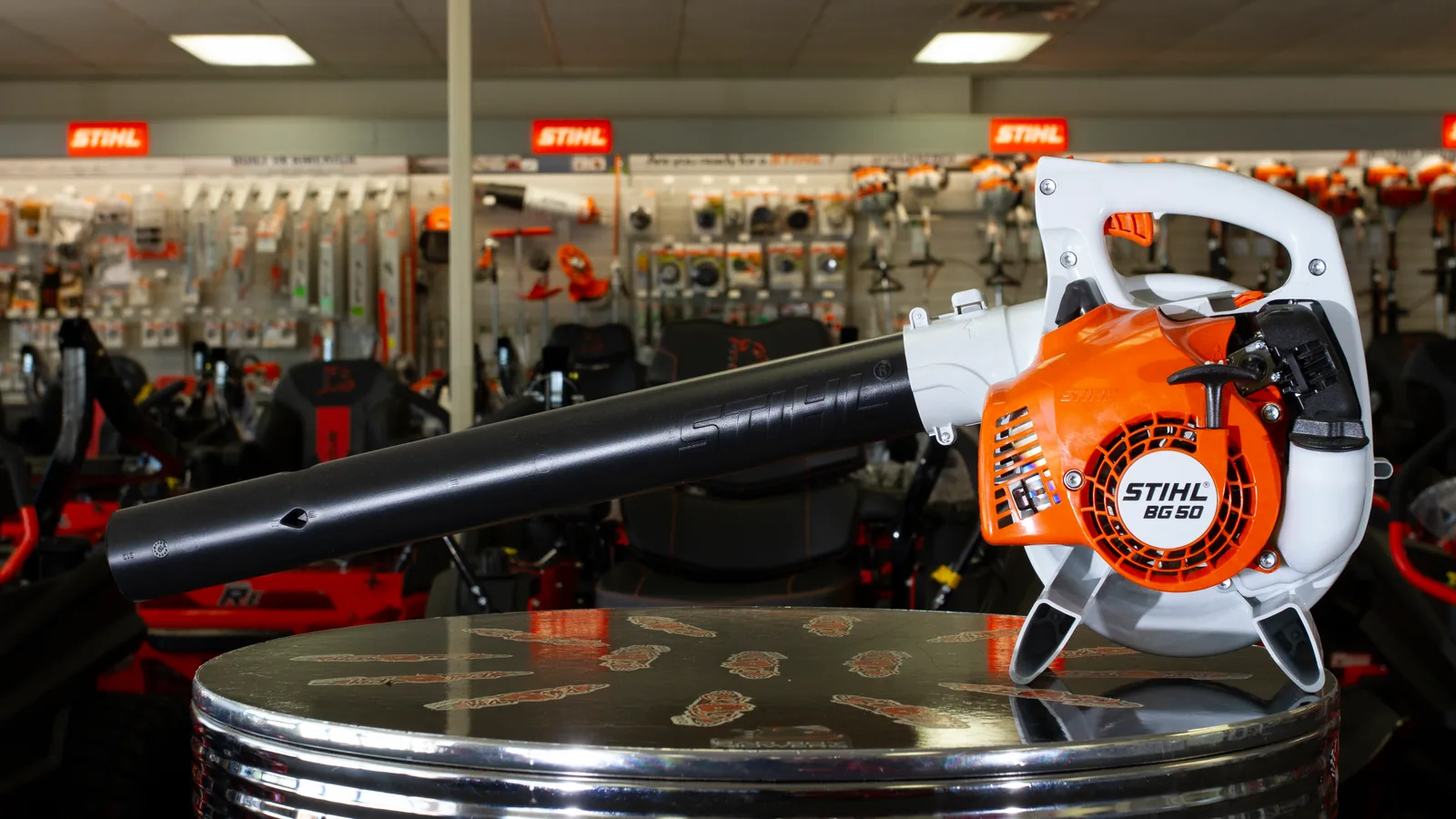
STIHL’s buying guide separates handhelds for shorter, compact cleanups from backpack units for larger or longer jobs. For a handheld, hold it with the battery or fuel load it will carry and see whether you can reach the trigger without shifting your grip. For a backpack, try the harness and controls with the unit off.
Battery, corded or gas
Our starting point: a battery handheld when you already own a compatible pack and charger, corded when an outlet and cord reach the whole job, and gas only when you want to run without either and will keep up the engine.
A battery blower avoids a cord and engine fuel, but you must charge and store the packs, so count the battery and charger in the price. EGO’s LB6700 page is a useful example: it lists a variable-speed dial up to 530 CFM with 670 CFM in turbo mode, up to 180 MPH with the tapered nozzle, and up to 80 minutes on a 4.0 Ah battery. The LB6700 is the bare tool; the LB6703 kit adds the 4.0 Ah battery and 320 W charger. The manual shows separate trigger, speed or lock-on dial and boost controls.
A corded electric blower never runs down, but the cord limits your reach and needs a suitable extension cord. Toro’s PowerJet F700 (model 51624) lists a cord lock, a variable-speed dial and a maximum of 725 CFM and up to 140 MPH, and Toro’s parts and manual record shows the serial range. A cord lock does not make a damaged or undersized cord acceptable; use the extension cord the manual specifies and keep the cord clear of the nozzle stream.
Gas needs no outlet or charged pack, and takes on fuel handling and engine upkeep as the price; follow that engine’s manual for both. Whatever the power source, price the whole package: machine, battery and charger or cord, nozzles and storage. A bare tool with a low sticker price costs more once you add what it lacks, and two batteries with the same voltage number do not necessarily fit the same tool. Only blowers designed and documented for it can vacuum or shred leaves, so do not improvise a bag or collector on a standard blower.
These are manufacturer figures, taken under their own conditions, so no one has shown how a 725 CFM corded tool and a 670 CFM battery tool compare in your yard. When you compare, put ordinary-operation figures next to ordinary-operation figures and turbo next to turbo, and treat a runtime as belonging to its battery size and speed setting.
Noise, dust and the neighbors
Electric blowers are generally quieter than gas models, and a lower speed is quieter again, according to the New York Department of Environmental Conservation. The same page says gas blowers emit hydrocarbons, nitrogen oxides, carbon monoxide and fine particles, while electric ones produce no ground-level exhaust, and that blowing raises dust that can include PM2.5 and PM10 particles, pollen and mold. Its advice is to use the lowest throttle that gets the job done, keep the air stream low with a nozzle extension, damp dry surfaces with a mister, or rake and sweep instead, and to avoid pushing large piles of debris with a blower.
Local rules differ. Some towns limit blower hours, noise level or engine type, so read your town’s ordinance before you buy a type you may not be allowed to run at the times you are free.
Protect yourself. NIOSH’s recommended occupational limit is 85 dBA averaged over an eight-hour day, and it advises hearing protectors once exposure reaches that level, so compare the sound ratings in the manuals and wear ear protection whenever you run a blower. Wear eye protection, since a blower throws grit and twigs, and add a dust mask or respirator for dry, dusty or moldy leaves. Read the protection and bystander distances your manual specifies. Never aim the stream at people, pets, cars or open windows, and keep children and pets well away while it runs. Stop the motor and remove the battery or unplug the cord before you clear a clog or change a nozzle.
Leaves do not all need to leave
Decide the destination before you start, because a blower only moves leaves. If you bag them, plan the surface and containers; if your town collects leaves, read its rules on accepted material and placement before building a pile. Mulching leaves into the lawn is the easiest disposal. Kansas State’s turf program, drawing on Michigan State research, says shredded leaves up to roughly a pound per square yard (about 6 inches deep before shredding) did no long-term harm over five years, and recommends mowing while grass still shows through the leaves (K-State). Use the blower to gather leaves from beds, walks and drives onto the lawn, then mow them in. For leaves you do remove, composting is a good alternative to bagging, and the same source says the compost can go to vegetable and flower beds.
Finish before the blower makes work. Pick a boundary, clear toward the pile, and handle corners with a hand tool, instead of pushing the same pile back and forth.
Parts, storage and the shortlist
Find the exact model’s manual and parts list, with replacement nozzles and tubes listed, before buying, and keep the model number and the kit’s contents with your receipt, since a retailer’s package name can differ from the bare tool’s model. Try a display model only as the store permits, with the unit off, and read the operating instructions before the first real use. A higher MPH figure is one specification, so weigh it with CFM, nozzle and the control you need around beds. Measure the assembled tool, charger and cord for storage, not the box.
A sound shortlist has a complete power package, controls you can manage comfortably, a route that fits the format and documentation you can download. For a one-time cleanup, renting a bigger machine tells you whether you would use it often enough to own it. More outdoor equipment is in our garden tools hub.
Written from manufacturer and retailer information and general garden practice. GardenHelm has not physically tested the products discussed here. How we choose products