Gas Leaf Blowers: Compare the Engine Routine, Carrying Format and Airflow
A gas blower brings an engine, fuel and maintenance with it, and a big airflow number does not settle the choice. Compare handheld and backpack fit and airflow measured the same way.
By GardenHelmPublished 4-minute readMore in Garden Tools
In this guide
Big lot, long driveway, a fall leaf drop that buries the lawn, and no outlet within reach: that is gas blower territory. It runs as long as you have fuel and does not tie you to a battery. In return you take on an engine: mixing or buying fuel, storing it safely, servicing the machine and accepting the noise. If you clear one patio and a short path a few times a season, a battery or corded blower will usually be the easier tool to own.
Check local rules before buying. Some towns restrict gas blowers or the hours you can run them, and California has phased out sales of most new gas-powered small engines, including leaf blowers, since 2024 under AB 1346. A store selling a blower does not mean you can use it where you live.
Will you keep up with an engine?
Picture the season, not one Saturday. If you will use the blower every week through the fall, a gas routine of fresh fuel, a filter check and a tune-up becomes habit. If it sits for ten months, plan for the off-season storage steps in the manual, or expect hard starting next autumn.
Remember the leaves still have to go somewhere. A blower moves them into piles; bagging, composting or curbside pickup is a separate job.
Handheld or backpack
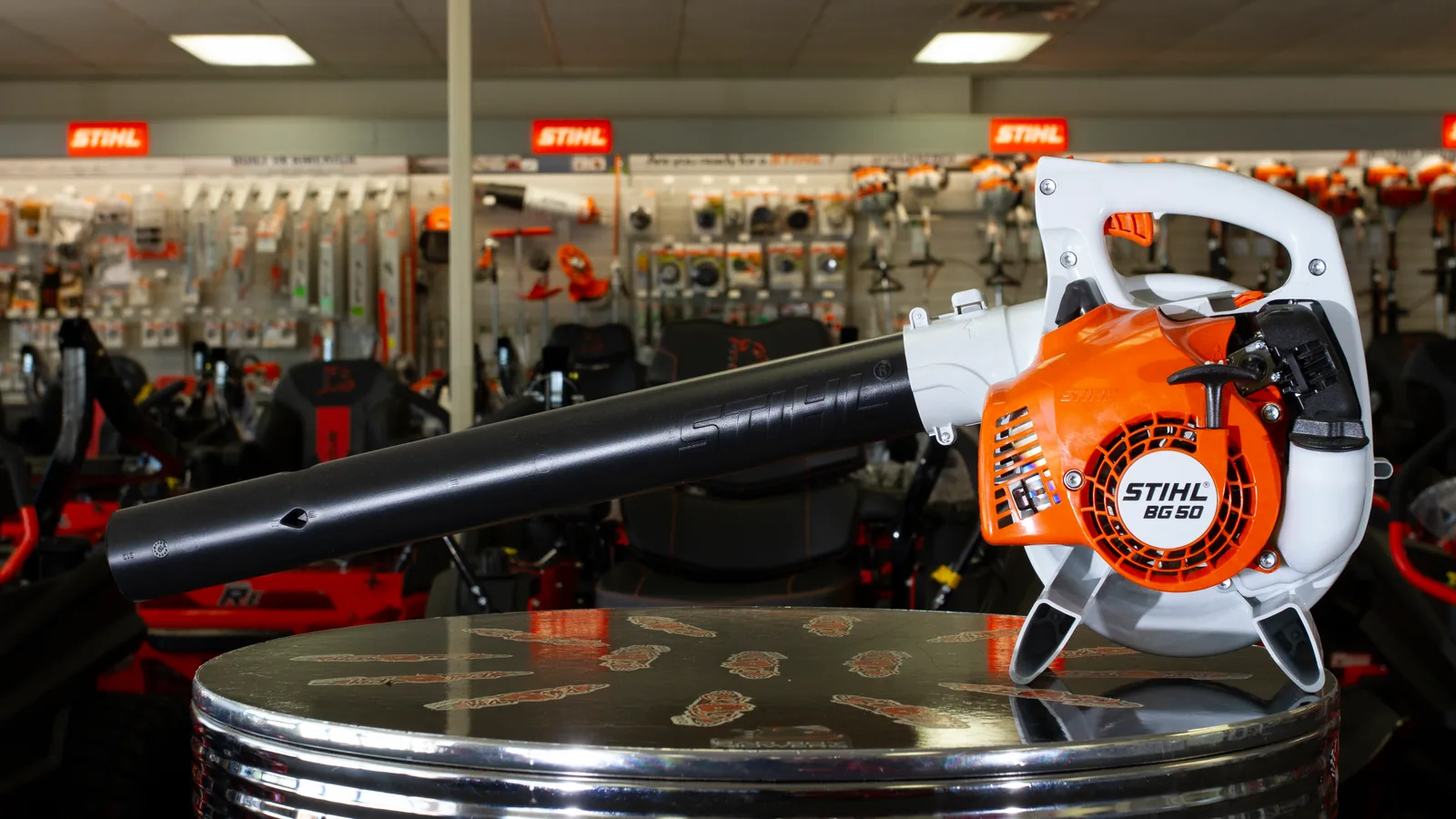
- Handheld: lighter, cheaper, easy to store. Good for patios, decks, paths and a modest lawn. Your arm carries the whole machine.
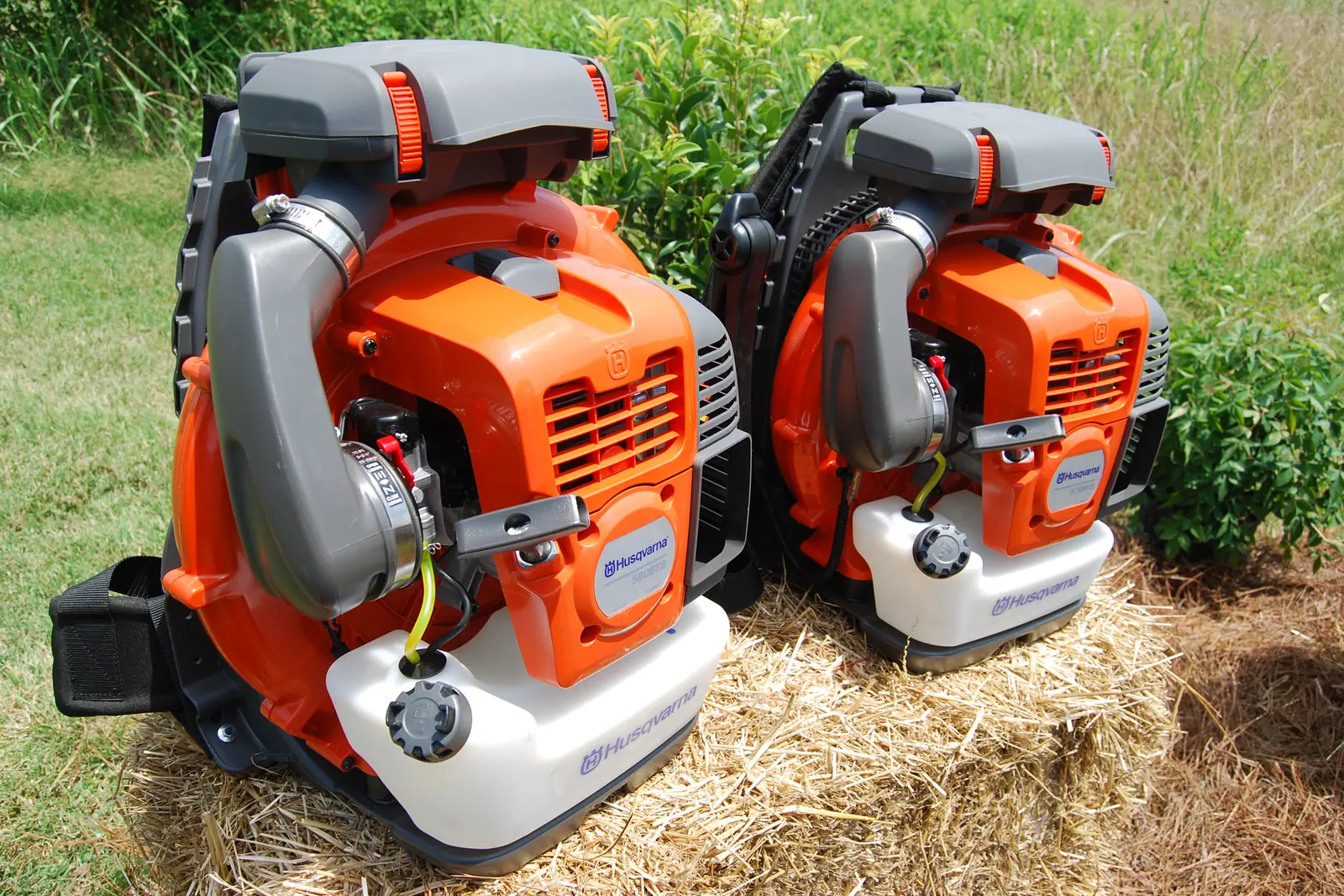
- Backpack: the engine rides on your back and the tube is in your hand. Better for long sessions and large leaf loads, but bulkier to store and transport.
Have a dealer fit a backpack model with the engine off: you should reach the throttle comfortably and be able to take it off without a struggle. Measure your shed and car for the assembled machine. Do not cut or swap tubes unless the maker allows it.
Compare airflow measured the same way
Air volume (CFM) and air speed (MPH) are the two headline numbers, and manufacturers measure them in different places. Husqvarna’s US 125B page shows why that matters: it lists 470 CFM in the housing but 425 CFM at the round nozzle, plus 130 MPH at that nozzle, from a 28 cc engine weighing 9.4 pounds without fuel. Put a housing figure from one brand next to a nozzle figure from another and you are comparing two different measurements.
| Number | Record with it | Do not compare |
|---|---|---|
| Air volume (CFM) | Housing or nozzle, and which nozzle | Housing output against nozzle output |
| Air speed (MPH) | Which nozzle | A top speed with no setup stated |
| Weight | What is included, and whether fuel is | A dry engine against a full working machine |
| Functions | Whether vacuum or mulching is supported | Accessories from a look-alike model |
In general, volume moves a big pile and speed lifts wet or stuck leaves; you want enough of both for your yard, measured on the same basis. The same 125B page says that model does not support a vacuum or mulching kit, so a sibling model’s accessories do not carry over. We have not tested it; it shows how to read a spec sheet.
Fuel comes from the manual
The June 2026 125B/125BVX manual specifies a 50:1 mix of gasoline and two-cycle oil, with fuel quality limits. It also warns against mixing fuel indoors or near heat and against refueling a running or hot engine. Other engines may call for different ratios, so use your model’s manual, not the ratio for the chainsaw in the garage. Premixed canned fuel is an option if the manual allows it and you use the blower rarely.
Service and used machines
Before you buy, find out who services that model near you and whether filters, tubes and other parts are easy to get. The manual says which jobs are yours, such as the air filter and spark plug on many models, and which belong at a dealer.
Before the first use, read the manual’s safety section: eye and hearing protection, keeping people and pets well back, and the muffler and engine stay hot after you stop.
A used blower that starts once has proven very little. Budget for a service visit, and check the model number so you can get the right manual and parts.
Gas, handheld or backpack: the call
Go gas if you have the ground to cover and you are willing to look after an engine. Choose handheld for small yards and paved areas, backpack for big leaf loads, and compare airflow only on matching measurements. The garden tools collection covers battery and corded alternatives.
Vacuum and mulch kits
A blower vacuums or mulches only if that model supports it with its own kit, listed in its parts or accessories for that model number. A kit sold for a similar-looking blower from the same brand may not fit.
Written from manufacturer and retailer information and general garden practice. GardenHelm has not physically tested the products discussed here. How we choose products