Lawn Mower Repair: Diagnose the Symptom Before Buying Parts
Sort starting, vibration, cutting and drive problems on gas, battery and corded mowers, and know what information to take to a repair shop.
By GardenHelmPublished 7-minute readMore in Lawn Mowers
In this guide
What exactly happens when you try to use it? That one question sorts most mower problems before you spend anything. A starter that clicks, an engine that spins but never fires, and a battery mower that quits in thick grass have different causes, and a new spark plug fixes at most one of them. Name the symptom precisely, run the owner-level checks for your power type, and hand anything beyond those to a shop with a clear description.
When to stop and not try again
Shut the mower down and leave it off after a hard strike on a rock or root, a sudden bad vibration, visible damage, a fuel leak, smoke from a battery or motor, or a control that no longer stops the blade. Pulling the cord again “to see” can turn a bent blade into a broken one.
Before any inspection, wait for the blade to stop, then disable the machine: pull the spark plug boot on a gas mower, remove the battery (and key, if fitted) on a cordless one, or unplug a corded one. Switching off is not enough. Keep your inspection above the deck unless you know the correct tipping position for your model; on most gas mowers the manual specifies a side, often carburetor and air-filter side up, because tipping the other way lets oil into the air filter or muffler. Never reach toward the blade to see whether the motor might start.
A gas mower that will not start
Does the engine turn over at all?
Separate “nothing happens” from “turns but will not fire”. With electric start, notice whether the starter is silent, clicks, turns slowly or spins without catching the engine. Briggs & Stratton’s starter troubleshooting treats these as separate diagnoses and lists safety interlocks among the parts of the starting system. Interlocks are there to be diagnosed, never bypassed. Starter and wiring repairs beyond the battery belong with a technician.
With a recoil starter, a rope that is suddenly hard to pull often has a simple cause. Briggs & Stratton’s troubleshooting tips say to hold the brake bar fully against the handle before pulling, and, with the spark plug wire disconnected, to clear clippings from under the deck that may be dragging on the blade. A rope that will not move at all after an impact is different: do not force it; describe the resistance to the shop.
It turns over but will not fire
Work through the cheap, likely causes in order:
- Starting procedure. An automatic-choke engine starts differently from one with a primer bulb or manual choke. Make sure any fuel valve is on and the throttle is where the manual says.
- Fuel age. Stale gasoline is a classic culprit. Briggs & Stratton says old gas can cause starting problems and to drain last season’s fuel and refill with fresh. Honda’s HRN216VYA owner’s manual advises buying only enough gasoline for 30 to 60 days, adding stabilizer if you keep it longer, and not using fuel with more than 10% ethanol in that engine; it also notes that stabilizer slows deterioration but will not restore stale fuel. Drain old fuel outdoors, away from flames, into an approved container, and dispose of it through your local hazardous-waste program.
- Air filter. A clogged filter starves the engine. Clean or replace it as the manual directs.
- Spark plug. Check that the boot is firmly on, then inspect the plug. Honda’s troubleshooting table lists a faulty, fouled or wrongly gapped plug, and a plug wet with fuel from flooding, among no-start causes.
If those four do not do it, a clogged fuel filter or carburetor is next on most lists, including Honda’s. That is the point where a diagnosis usually costs less than a string of guessed parts. Do not open a carburetor or test for spark near spilled fuel on the strength of a video.
Keep records that make diagnosis easier
Note when the oil, filter and plug were last done, and keep the engine’s own model and code alongside the mower’s model and serial number. The mower brand and the engine brand often publish separate parts lists. Toro’s residential support asks for the model and serial number to find the right manuals and parts, and points owners to their own manual for oil and filter care; another mower’s service interval or oil grade does not transfer just because the engine cover looks similar.
It starts but smokes
Briggs & Stratton says brief smoke is usually not serious: an overfilled crankcase or oil that reached the muffler when the mower was tipped are common causes, and it burns off as the engine warms. Smoke that continues, or comes with poor running, needs a professional inspection.
A battery mower that will not run or keeps stopping
Start with the indicator lights and what the manual says they mean. Make sure the pack is the right model, charged and fully seated, and that any safety key or handle position the mower requires is in place. The Toro 22276 operator’s manual, for example, lists battery seating and charge among its starting checks and sends a damaged battery or electrical fault to service. That is a model example, not permission to open a pack.
If it cuts out, note when: immediately, after several minutes, or only in dense or wet grass. Stopping under load usually means asking too much of it; raise the cutting height or slow down, as you would with a gas engine bogging in tall grass. A mower that restarts after a pause has not necessarily been fixed, and repeated unexplained shutdowns with a persistent fault light need diagnosis.
Take a swollen, damaged or overheated pack out of service and follow its maker’s handling and disposal directions. Never bridge contacts, use a substitute charger or fit a battery that merely looks compatible.
A corded mower that will not start
- Unplug it, then inspect the mower cord, plug and extension cord for cuts, crushed sections and scorched pins.
- Use an outdoor-rated extension cord of the gauge and length the manual allows; a long, thin cord can starve the motor.
- Plug into the protected outlet arrangement the manual specifies, and see whether the protection has tripped.
The original LawnMaster MEB1114K manual separates cord or supply faults from a faulty switch, requires unplugging before inspection, and sends excessive vibration from a bent motor shaft to service. In other words, check the supply yourself and leave the switch and motor housing closed.
Stop if a cord is damaged or the protection keeps tripping. Do not tape a damaged cable, defeat grounding or keep resetting a breaker to finish the lawn.
Vibration, a bad cut or no self-propel
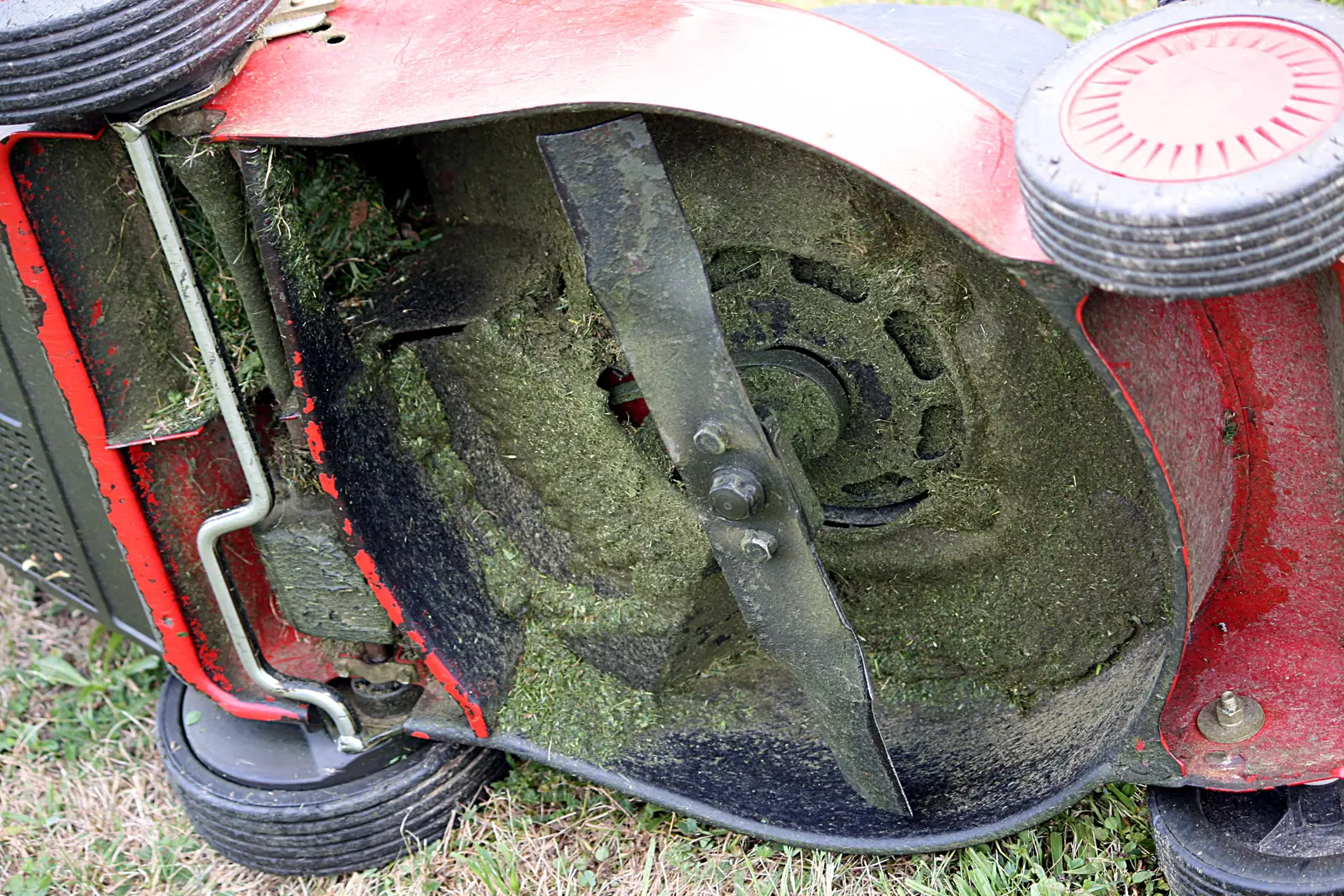
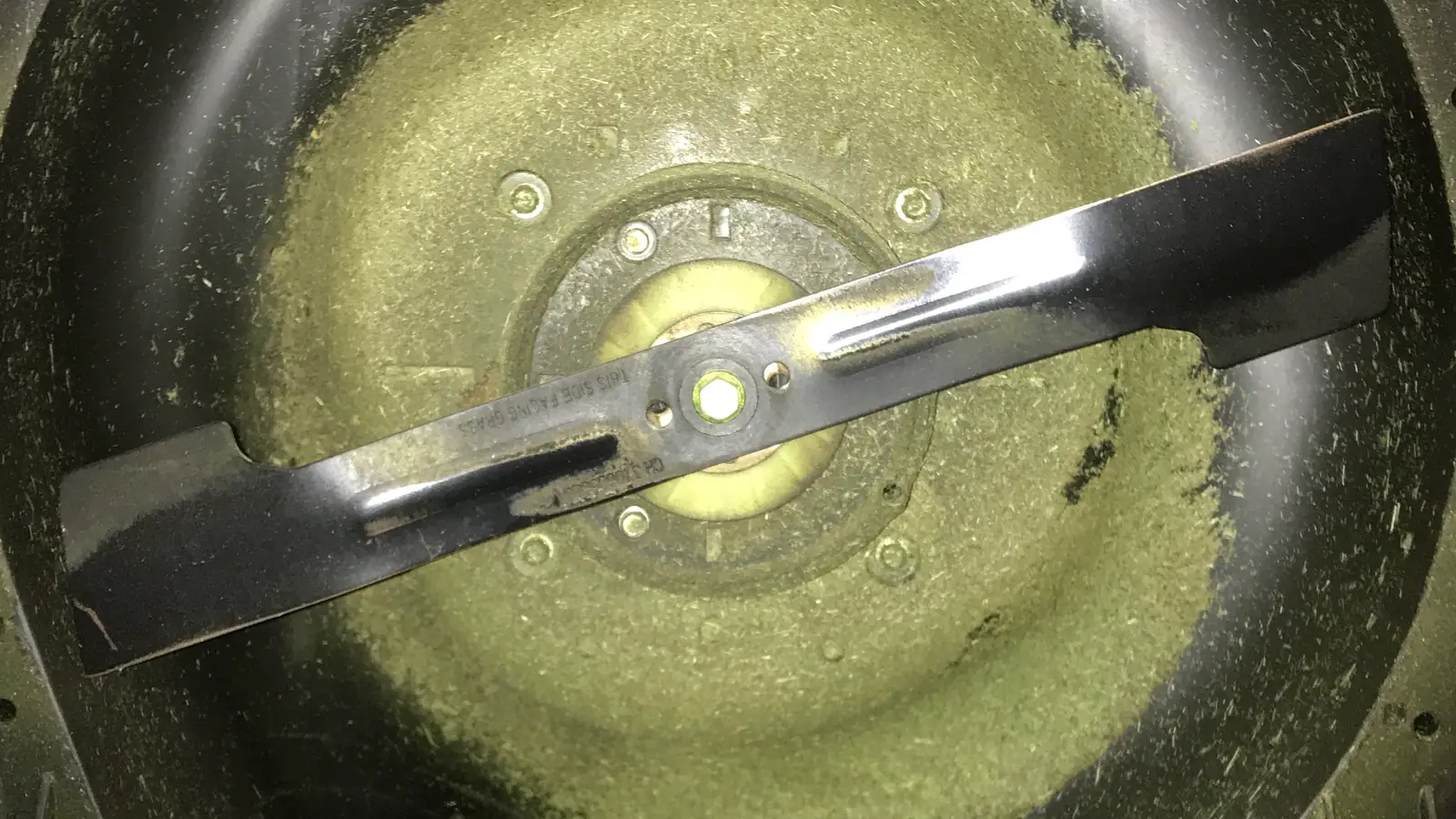
Vibration that starts after hitting something, or after blade work, points to the blade, its bolt or the parts it mounts on. With the mower disabled, check whether the blade is bent, loose or out of balance. Honda’s manual lists grass lodged under the deck and loose blade bolts as owner fixes, but bent or improperly sharpened blades and mechanical damage such as a bent crankshaft as dealer repairs. Sharpening will not fix a bent shaft, and you should never run the mower with a guard off to find the source.
A poor cut without vibration is usually setup or condition. Check that all wheels are at the same height setting, that the deck and bag are not clogged and that the blade is sharp. Change one thing at a time so you know what worked. If the blade does need work, follow the exact blade, hardware order and torque for that mower.
Lost self-propel while the blade still runs points to the drive: a cable, belt, wheel gear or transmission, depending on the design. Use the owner adjustment in the manual if there is one. Do not crank a cable tighter and tighter until the wheels move; over-adjustment can create a new operating problem. Past the documented adjustment, it is a shop job.
Taking it to a repair shop
A short written note gets a faster, cheaper diagnosis. Include:
- mower model and serial number, engine model where relevant, or battery model;
- the exact symptom and when it started;
- any strike, long storage or recent maintenance just before it;
- error lights or messages, with a photo;
- parts you already changed and what happened;
- purchase date and warranty details.
Ask whether the shop services your brand and power type, whether there is a diagnostic fee, and whether it will call before exceeding an agreed amount. Find out whether to bring the battery, charger or bag, and follow its instructions on fuel before transport.
Whether to repair or replace depends on the written estimate set against the rest of the machine. A tune-up on a sound mower is easy to justify; a major engine fault on a mower with a rusted-through deck and a worn drive is not. No fixed dollar rule fits every case, so get the written estimate before you decide.
Written from manufacturer and retailer information and general garden practice. GardenHelm has not physically tested the products discussed here. How we choose products