Lawn Mower Blade Sharpeners: Files, Drill Stones, Grinders and Balancers Compared
Files, drill stones, grinders and balancers give you different control over the edge. Check what your manual allows, add a balancer and know when a shop is the better tool.
By GardenHelmPublished 4-minute readMore in Lawn Mowers
In this guide
The instruction sheet in one universal drill-mounted sharpening kit says to sharpen only the outer 3 to 4 inches of each cutting edge. That single line shows what these tools are for. They restore an edge that has gone dull or picked up nicks. They do not rebuild a blade, and which one suits you depends on how much metal you are likely to remove and how steady you are with a power tool.
This page compares the tools. It is about rotary walk-behind blades, and the procedure itself, from inspection to torque, belongs to your mower’s manual. Some makers do not allow owner sharpening at all, so read the blade section of your manual first. If it sends you to a service center, that is the answer.
File, drill stone or bench grinder
A hand file is the slowest option and the easiest to control. Mother Earth News calls a coarse-toothed file probably the best choice, and the better one if power tools make you uneasy, and it advises following the angle already on the blade and leaving the flat side alone. Because you take off so little metal per stroke, you can stop as soon as the edge is clean.
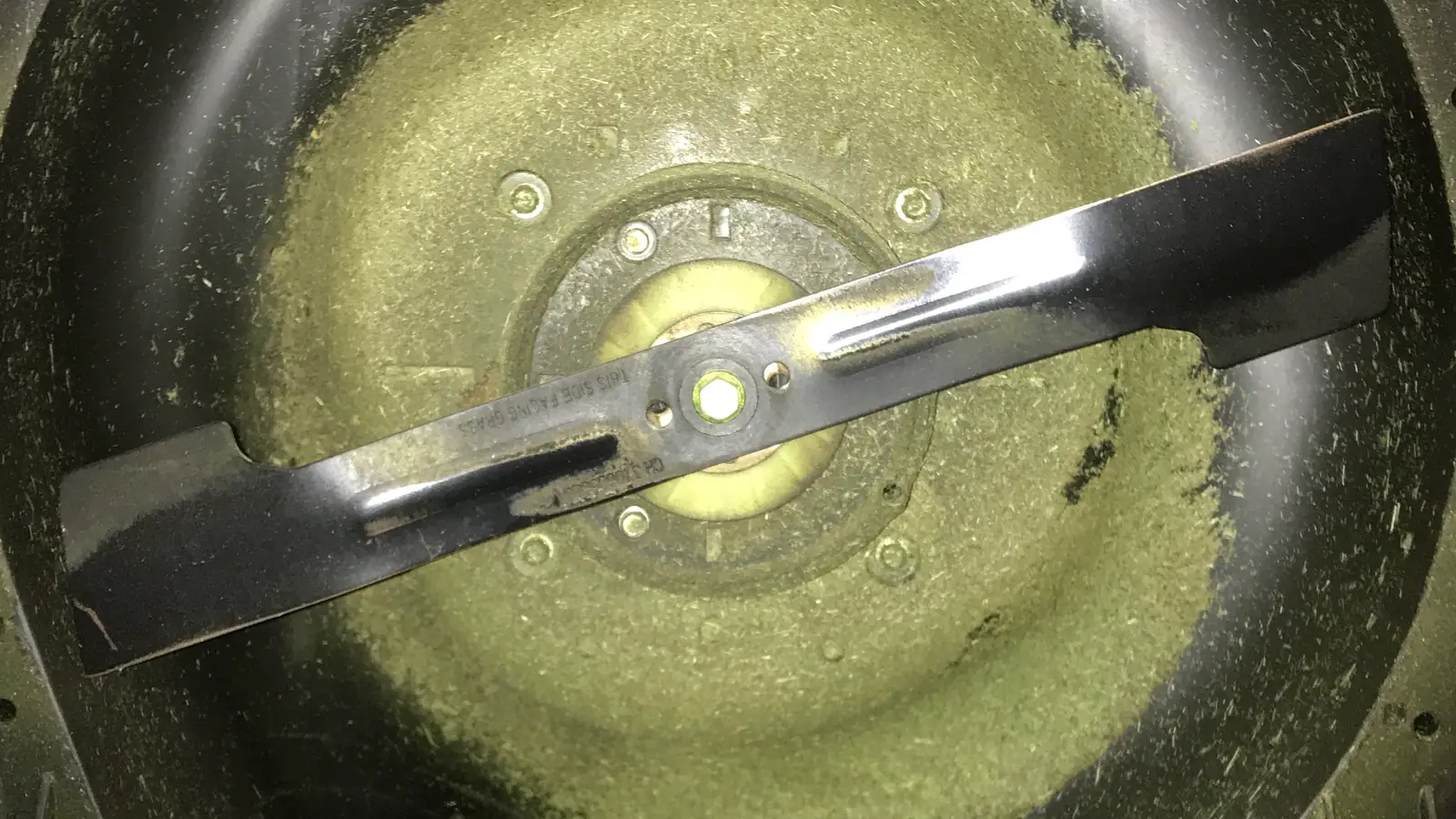
A drill-mounted stone speeds up routine touch-ups. The Lowe’s-hosted sheet for a universal sharpening and balancing kit has you clamp the removed blade in a vise with one cutting edge up and use a 1/4-inch or 3/8-inch drill. A nylon guide rides flat against the underside of the blade while the stone works the bevel. The same sheet warns that the sharpener can jam against the end of the blade. The kit is billed as working with all walk-behind and riding blades, which speaks to the sharpener’s fit and leaves your mower maker’s approval out of it. Look at your blade before buying: if it has a high lift or a mulching profile, check that the guide can follow the bevel along the whole outer edge.
A bench grinder removes metal fastest, and Mother Earth News says that speed is the risk. It warns that grinders usually leave a concave edge that dulls sooner, and that heat from a rapidly turning grinder can weaken the blade, so it advises dipping the blade in water frequently while you work. If you already own a bench grinder, keep it for blades with heavier damage and finish with a file. Guarding matters here. OSHA’s rule for workplace offhand grinders limits the work rest to a gap of one-eighth inch from the wheel and the tongue guard to one-fourth inch, and a home grinder that cannot meet that gap, or has lost its guard, should not be used on a mower blade. OSHA 1910.215 lists the details.
A shop makes sense when you lack a vise or a stable bench, when the damage is unclear, or when the manual says so. Illinois Extension notes that many lawn service businesses will sharpen blades.
Add a balancer to any of them
Sharpening takes metal off unevenly unless you are careful, and a heavy end makes the mower vibrate. Illinois Extension says a kit often includes a cone-shaped balancer and that an unbalanced blade can wobble, strain the mower and cut unevenly. Oregon’s 42-100 is a standalone example: a static balancer in zinc die-cast metal, which Oregon says verifies unbalanced and bent blades. A nail or screwdriver shank clamped level in a vise does the same job for nothing, per Mother Earth News.
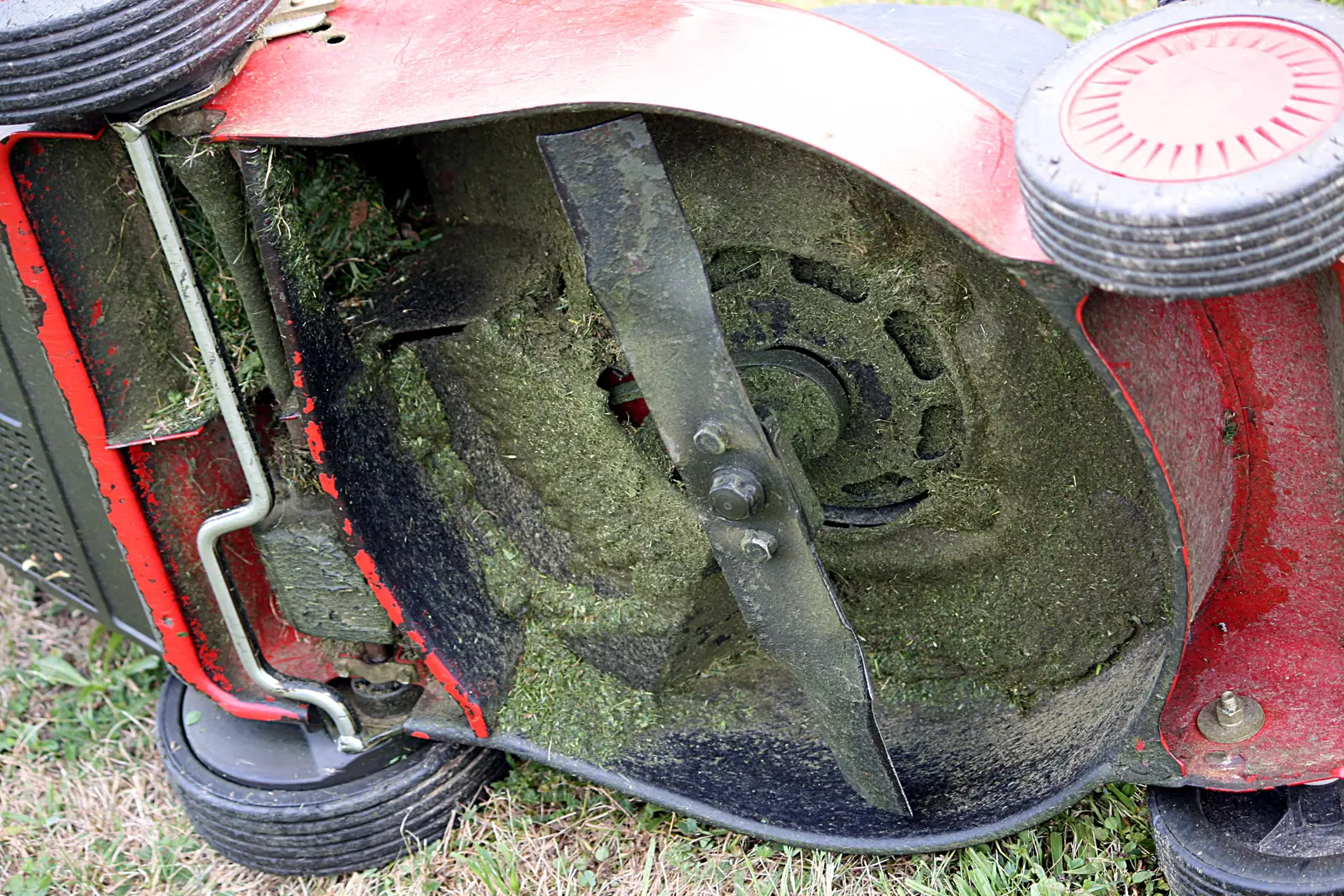
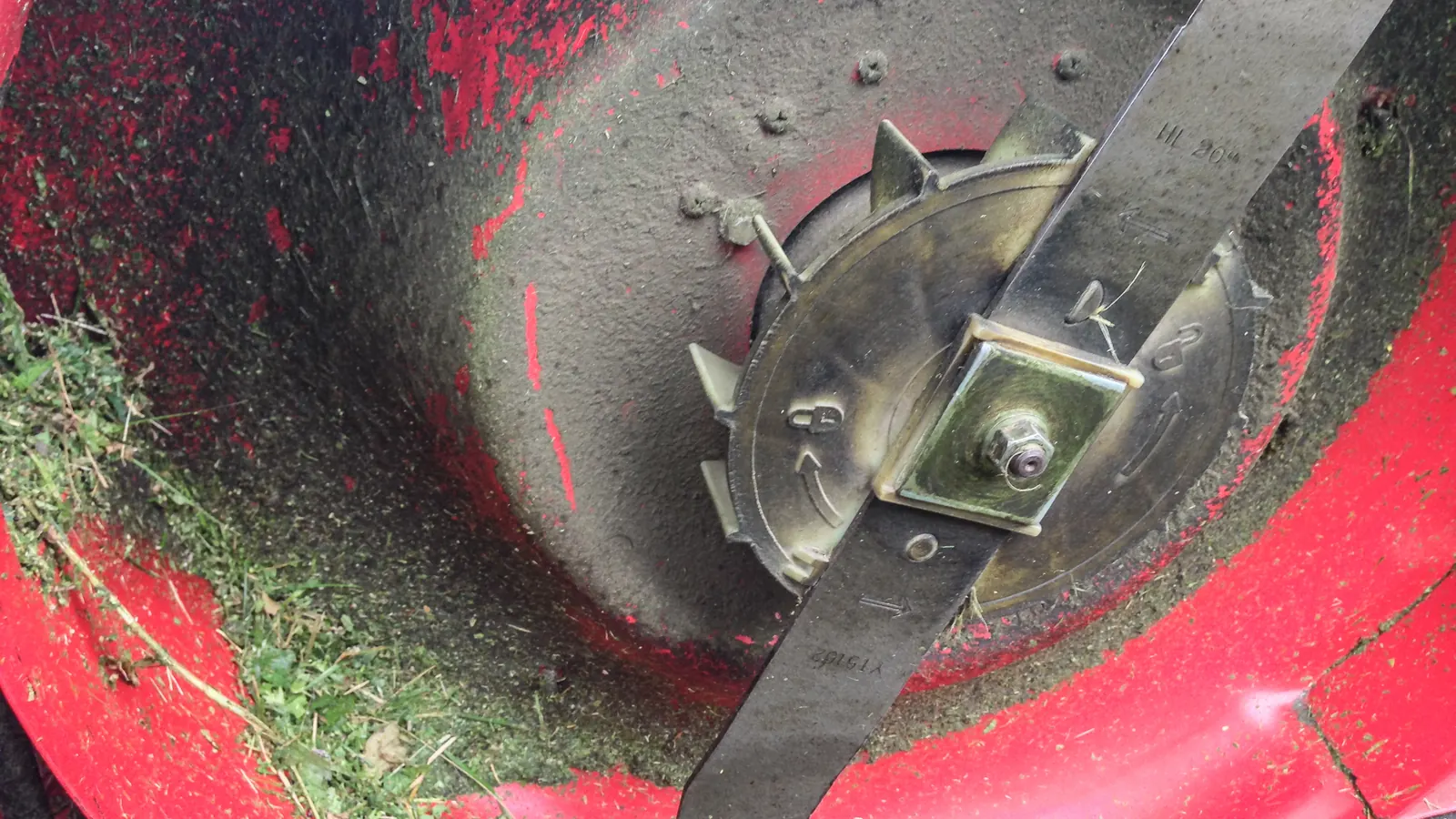
A balancer reveals which end is heavier. Cracks at the mounting hole are invisible to it, so look over the whole blade separately. If the center hole is a shaped opening, check that the cone seats properly before you trust its reading.
Make the mower unable to start, and protect your eyes
Illinois Extension says to disconnect the spark plug on a gas mower, or remove the battery on a battery mower, before removing a blade. Mother Earth News gives the reason: turning the blade can turn the engine over. The Lowe’s kit sheet adds that the engine should be cold. On a corded mower, unplug it. Wear leather gloves when you handle or loosen the blade, and wear eye protection for filing, drilling or grinding, because grinding throws sparks and metal. Mother Earth News also suggests wedging the blade against a 2-by-4 so it cannot turn while you loosen the nut.
Which one should you buy
For one walk-behind and a yearly touch-up, a file and a balancer cost the least and leave the least room for error. For several mowers, or a rocky yard that nicks blades often, a drill stone saves time, provided the guide fits your blade. A bench grinder earns its place only if you already own one with intact guards and are comfortable controlling heat. Budget for a vise, gloves, eye protection and a torque wrench, so the bolt goes back to the figure in your manual. A bent or cracked blade is a replacement, whichever tool you own.
Written from manufacturer and retailer information and general garden practice. GardenHelm has not physically tested the products discussed here. How we choose products