Black Spots on Maple Leaves: Tar Spot or Something Else?
Raised tar-like black patches on maple leaves are often tar spot, usually cosmetic. How to tell it from look-alikes, what cleanup can do and when the tree needs a closer look.
By GardenHelmPublished 4-minute readMore in Plants & Bulbs
In this guide
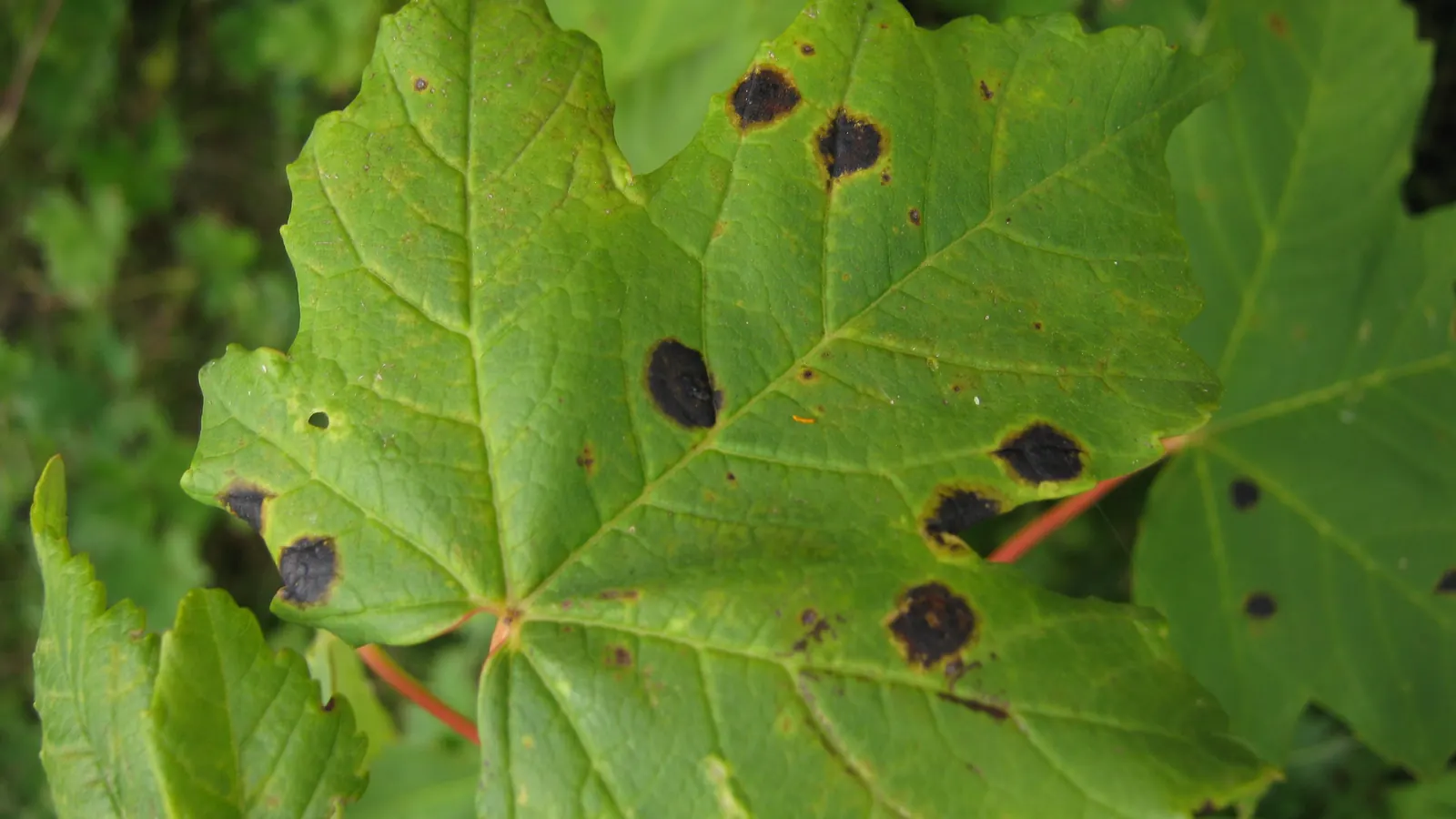
Raised, shiny black patches that look like a drop of tar on a maple leaf, usually ringed in yellow, are almost always tar spot. It looks alarming and does the tree little harm. Flat, irregular dark blotches, scorched edges and sticky black film are different problems with different answers, so the shape of the mark settles the question quickly.
Tar spot, up close
The University of Wisconsin’s plant clinic says tar spot can affect many maples, including silver, sugar and Norway, and a few other trees such as boxelder and willow. It starts as small yellowish spots that can grow to about three-quarters of an inch. Black, tar-like structures then form. On Norway maple you tend to see many small clusters, and on silver maple fewer, larger raised blobs. Wisconsin tar spot guidance names several Rhytisma fungi as the cause.
The University of Minnesota’s maple leaf diagnostic page describes both large tar-like patches and groups of smaller spots, with the dark structures becoming obvious later in the growing season. Photograph an early yellow spot and a mature black one, along with the whole canopy.
Tar spot also turns up on sycamore maple, Acer pseudoplatanus, a different tree from American sycamore, Platanus occidentalis.
Is it something else?
| What you see | What to investigate |
|---|---|
| Raised black patches, often with yellow around them | Tar spot |
| Irregular dark blotches along veins, curled young leaves | Anthracnose |
| Browning that starts at tips and margins | Drought, drainage, compaction or salt |
| Sticky leaves with a dark surface film | Honeydew-producing insects and sooty mold |
Anthracnose brings dark, irregular lesions and distorted leaves in cool, wet weather. Minnesota Extension says it generally does not seriously harm established shade trees, though a severe case can cause early leaf drop. Minnesota’s anthracnose guide covers the details.
Browning at the tips and edges points toward site stress. Minnesota’s leaf-edge page describes stress that begins at tips and margins and may progress inward, a clearly different pattern from separate raised dots.
Sticky foliage is the clue for insects. Sap feeders leave honeydew that sooty mold grows on, and on silver maple, woolly alder aphids can fold leaves and leave white, woolly material. Look at both leaf surfaces and nearby twigs, because the black may sit on the leaf and not in it. See Minnesota’s distorted-leaf guide. A tree can have two problems at once.
Will it hurt the tree?
Wisconsin says tar spot does not kill trees and typically does not cause serious defoliation. That holds for a maple that is otherwise leafy and vigorous. Dead limbs, a thinning crown or heavy leaf loss before fall color are separate signs, and tar spot should not be used to explain them away.
What cleanup does
The fungi overwinter in fallen leaves and release spores in spring that infect the new foliage. Wisconsin’s advice is to collect affected leaves each fall and dispose of them properly, by burning where allowed, burying, or hot composting. It describes hot compost as reaching about 140°F, with the pile turned so the outer leaves end up in the center. A cold, unturned pile of whole leaves does not qualify, and if you cannot run a pile that way, send the leaves through a municipal yard-waste program that accepts diseased material. The composting category will help you judge whether your setup can do it. Never spread half-rotted leaves back under the tree.
Cleanup lowers next spring’s inoculum. It does nothing for spots already on the leaves, and you should leave attached leaves on the tree.
Why spraying rarely makes sense
A fungicide cannot repair a leaf that is already marked. Minnesota’s leaf spot guidance says fungicides are protective, must go on before symptoms appear, and generally are unnecessary unless severe leaf loss keeps recurring. Wisconsin goes further and calls treatment rarely, if ever, warranted. Where it is, it names three applications, at bud break, at half-expanded leaves and when leaves are fully expanded, using products labeled for the purpose and following the label for protective gear. Coating a full-size maple crown is also a job for a licensed applicator, not a stepladder and a pump sprayer. Minnesota Extension also advises fertilizing only for a demonstrated nutrient need, so skip the fertilizer as a spot remedy.
When the spots are not the main story
Ask an arborist or a plant diagnostic lab to look when the marks do not fit tar spot, when a young tree loses a lot of foliage, or when a tree drops much of its canopy before normal fall leaf drop most years. Tell them about dead branches, trunk damage, recent digging, drainage changes and deicing salt, which can matter more than the spot count. Ask the lab how to package a sample. Photos of the whole tree, both sides of several leaves and the edge between healthy and spotted tissue are what they will want. Pruning off spotted branches solves nothing, though dead or unsafe limbs do need professional attention. For general plant guidance see plants and bulbs.
Written from manufacturer and retailer information and general garden practice. GardenHelm has not physically tested the products discussed here. How we choose products