Sycamore Tree Disease: Leaf Symptoms, Anthracnose and Next Steps
A sycamore that drops young leaves in a cool wet spring and one that scorches every late summer need different conversations. Note when symptoms appear, then gather evidence for a diagnosis.
By GardenHelmPublished 5-minute readMore in Plants & Bulbs
In this guide
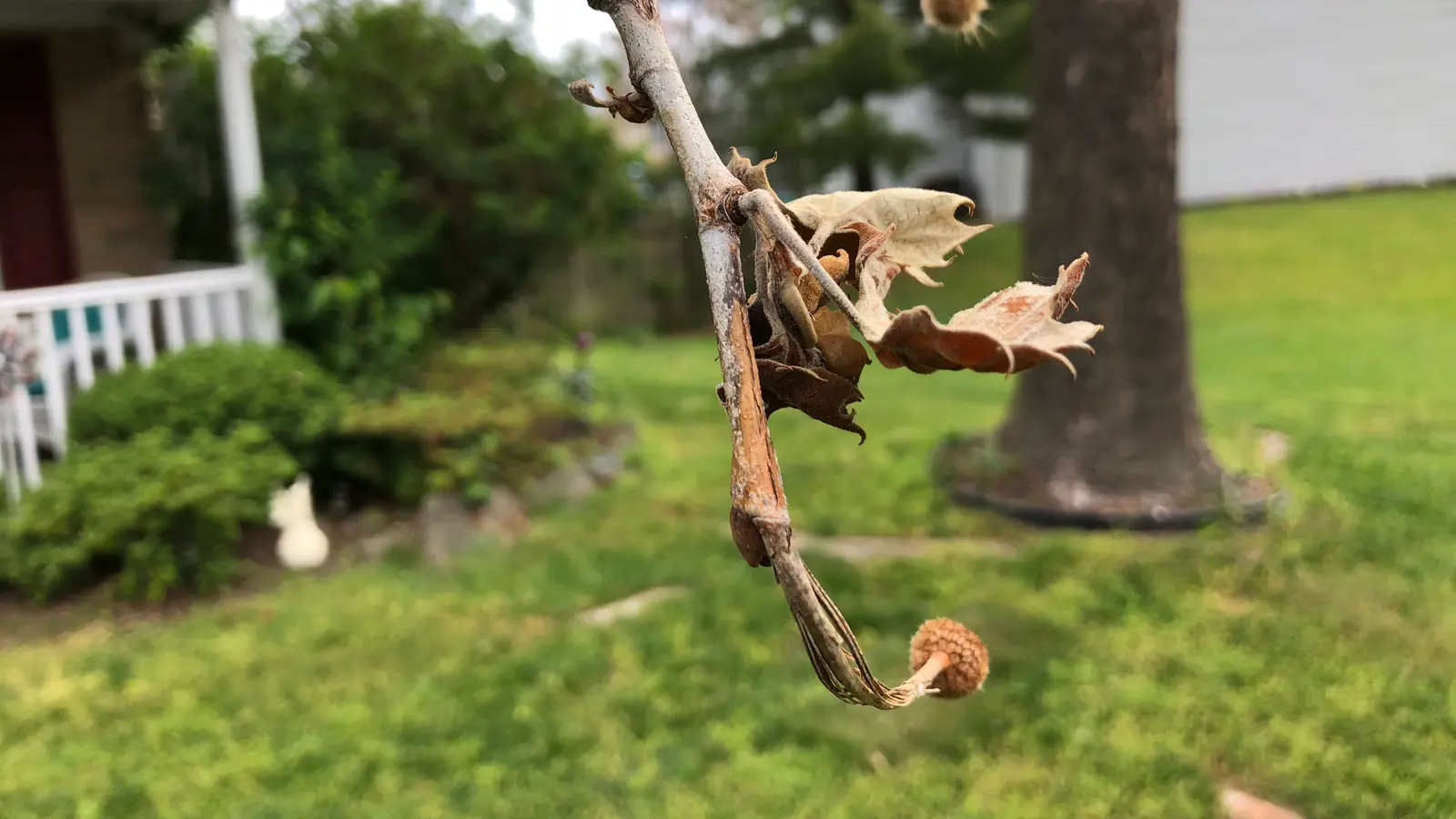
A sycamore whose new leaves wilt and blacken in a cool, wet May is, in most yards, dealing with anthracnose, and the tree usually grows a fresh set of leaves by midsummer. Brown, scorched leaves that return every August and creep through the crown over several years are a different animal, and that pattern is where a diagnosis is worth paying for. The month the symptoms start is the best clue you have.
This page covers American sycamore and its relatives in the genus Platanus. It sorts the common causes by timing, says what you can do yourself, and says when to call a qualified arborist.
Confirm it is a sycamore first
NC State’s description of American sycamore lists alternate, lobed leaves, round fruiting balls and mottled bark that exfoliates to expose pale inner bark. Peeling bark is therefore normal on this tree and no sign of disease.
Common names mislead. Sycamore maple is Acer pseudoplatanus, a different genus with different problems, so advice written for one should not be applied to the other. If you are unsure which you have, take a whole-tree photo, a leaf and the trunk to your county Extension office.
Sort by timing and pattern
| What you see | Likely suspect | Worth noting |
|---|---|---|
| Young leaves collapse in cool, wet spring; brown along veins | Anthracnose | Leaf-out date, spring weather, whether a second flush appears |
| Margins scorch from mid to late summer, worse each year | Bacterial leaf scorch or another cause of scorch | Which branches first, which leaf ages |
| White powder on leaf surfaces | Powdery mildew | Both leaf surfaces, distorted new growth |
| Pale speckles above, dark deposits underneath | Lace bug feeding | Close photos of leaf undersides |
| Thin canopy with sunken, elongated areas on wood | Canker or another woody-tissue problem | Whole-branch view, not only a bark close-up |
Treat the table as a list of questions. One matching feature does not make a diagnosis, and frost injury in spring looks much like early anthracnose.
Anthracnose: ugly in May, usually survivable
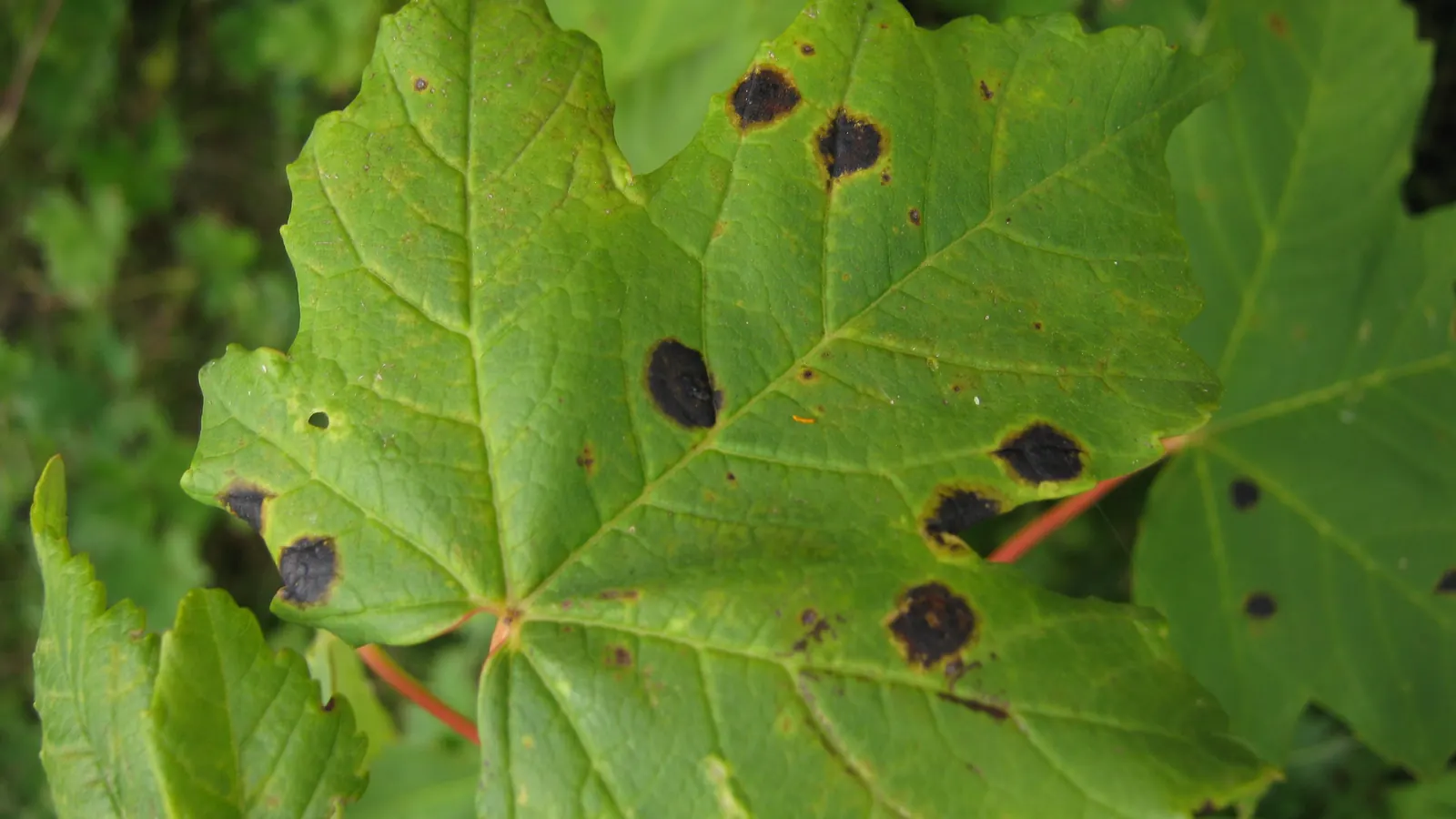
Colorado State Extension describes the sequence. Infection is most active in early spring in cool, wet weather. Emerging leaves wilt fast, older leaves get brown lesions along the main veins and then curl and drop, and the fungus can also form cankers on twigs and branches. Repeated twig death over the years can leave clusters of thin shoots called witches’ brooms. CSU adds that a tree may put out a second crop of leaves from mid-June into July.
Severity follows the weather. CSU says shoot blight is likely to be serious when average temperatures stay below 55°F for the two weeks after the first leaves open, and that little disease develops when averages stay above 60°F. American sycamore is much more susceptible than London plane, and CSU names ‘Bloodgood’, ‘Columbia’ and ‘Liberty’ as resistant London plane cultivars, which is worth knowing if you are planting a replacement.
UMass Extension takes a similar view of the long game: anthracnose is often not a major threat on its own, but it adds to decline when a tree is also stressed by compaction, restricted roots, mechanical injury or drought. So judge the tree by whether it refills its crown, and photograph it from the same spot each June so you can compare.
What you can do:
- Rake up fallen leaves and twigs. CSU notes they carry spores into the next spring; removal lowers the load but will not end the disease.
- Prune out dead twigs you can reach safely from the ground. On a mature tree the affected twigs are too numerous and too high to be worth climbing for, and large limbs near buildings or walkways are work for a qualified arborist.
- In a dry winter, CSU suggests watering about once a month when daytime highs are above 40°F, and feeding with nitrogen after leaf-out according to a soil test.
Fungicide is a narrow option. CSU says sprays start as buds swell and repeat every 7 to 14 days in a rainy spring, that the label must cover shade trees, and that a licensed applicator can inject a systemic product into a large tree. CSU says treatment is worth considering when a tree is hit repeatedly, and that cankers can girdle and kill large branches. A single bad spring on an otherwise healthy tree rarely justifies it. Whoever applies a product should follow the label for protective equipment and the restricted entry interval. If someone proposes treatment, ask for the diagnosis, the product, the timing and what result to expect.
Repeated summer scorch
University of Maryland Extension describes bacterial leaf scorch as a vascular disease that can affect sycamore. Symptoms usually start on older, interior leaves of lower branches in mid to late summer and spread through the crown over successive years. Drought and root problems can look the same. Antibiotic injections given by professionals may ease symptoms but do not cure it, and a fungicide has no effect on a bacterial problem.
Texas A&M Forest Service calls for laboratory testing to confirm it. Before cutting any sample, ask the diagnostic lab which tissue it wants and how to package it. Keep a short year-by-year note: the first year you noticed scorch, the month it starts, whether the same branches repeat, and any digging or paving near the roots.
Mildew, lace bugs and canker
UF/IFAS’s sycamore guide describes white surface growth for powdery mildew and pale stippling, with dark deposits beneath the leaf, for lace bug. It also describes canker stain, with canopy thinning and long sunken patches on woody tissue, and names contaminated pruning tools as an important way it spreads. Clean tools between trees, and leave the bark alone: scraping it to take a picture only adds wounds. When insects turn up, confirm they account for the decline before paying to spray for them.
When to bring in a professional
Call a qualified arborist when branches are dying back year after year, when a large limb looks cankered or hangs over a house, play area or drive, or when scorch returns each summer. A lab test can name a pathogen but cannot judge whether a heavy limb is sound. Keep people and cars out from under any limb you doubt until it has been looked at. Send the arborist or Extension office a whole-tree photo, a branch photo and close-ups, labeled by branch, plus the exact name and date of anything you have already applied.
For wider plant-care topics see the growing hub.
Written from manufacturer and retailer information and general garden practice. GardenHelm has not physically tested the products discussed here. How we choose products