Wall-Mounted Hose Reels: Plan the Mount and the Watering Route
A wall reel keeps the hose off the path, if the wall can hold it and the hose can reach every watering spot from there. Walk the route first, then pick the reel and mount.
By GardenHelmPublished 5-minute readMore in Hoses & Reels
In this guide
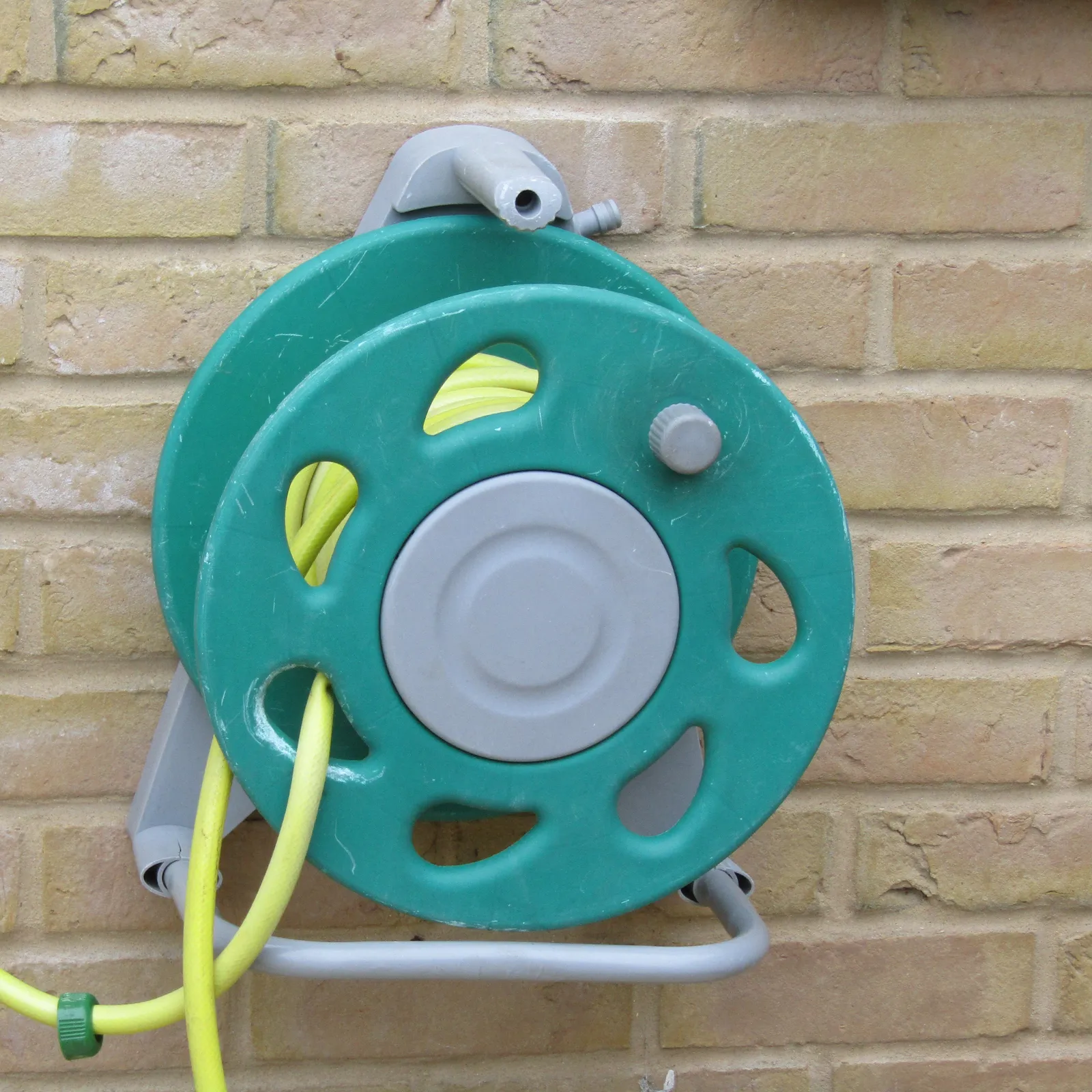
A wall-mounted reel beside the spigot keeps the hose off the path and turns watering into a pull-out, wind-back routine instead of untangling a heap. Two things decide whether it works: the wall has to hold the reel, the hose and the tug of pulling, and the hose has to reach every spot you water from that position. Walk the route and identify the wall before you look at finishes or the biggest capacity number.
Walk the route first
Stand where the reel would go and walk to the farthest bed, pot or car-washing spot, measuring around corners, through gates and past the patio, not in a straight line across the lawn.
Watch for places where the hose would rub on a sharp edge, drag through plants or lie across a busy path. Next to the spigot is the obvious spot for the reel, but it may send the hose around an awkward corner every time; another position might save buying extra hose.
Think about rewinding too. Where will you stand, and can you guide the hose back without stepping into a bed or blocking a door? A spot that only works when the driveway is empty stops working once a car is parked there. Check the product drawing for how far the reel and its crank stick out from the wall.
What is behind the siding
Brick, siding and stucco are surfaces; what matters is the structure behind them. The reel’s mount carries the reel, a wet hose and every yank on it, so follow the instructions for your actual wall construction.
ELEY’s Model 1041 installation guidance gives separate methods for wood-frame walls, masonry and posts, and says stucco needs solid support behind it. That is a good illustration of why one bag of generic anchors does not suit every wall.
If you cannot tell what is behind the surface, ask an installer. Check for hidden wiring and pipes before drilling, and seal the holes as the product and your siding require. If the wall will not work, a reel on a properly installed post, or a freestanding reel, is the alternative. Renters should get permission first.
Which kind of reel
| Type | Good for | Check |
|---|---|---|
| Open hand-crank reel | Seeing and guiding the hose as it winds | Crank position, hose guide, frame size, replaceable swivel |
| Enclosed retractable reel | A tidy look and spring-assisted rewinding | The included hose, how the return works, pivot range, hose replacement |
| Removable wall unit | Taking the reel indoors for winter | How it releases, its weight with the hose, storage space |
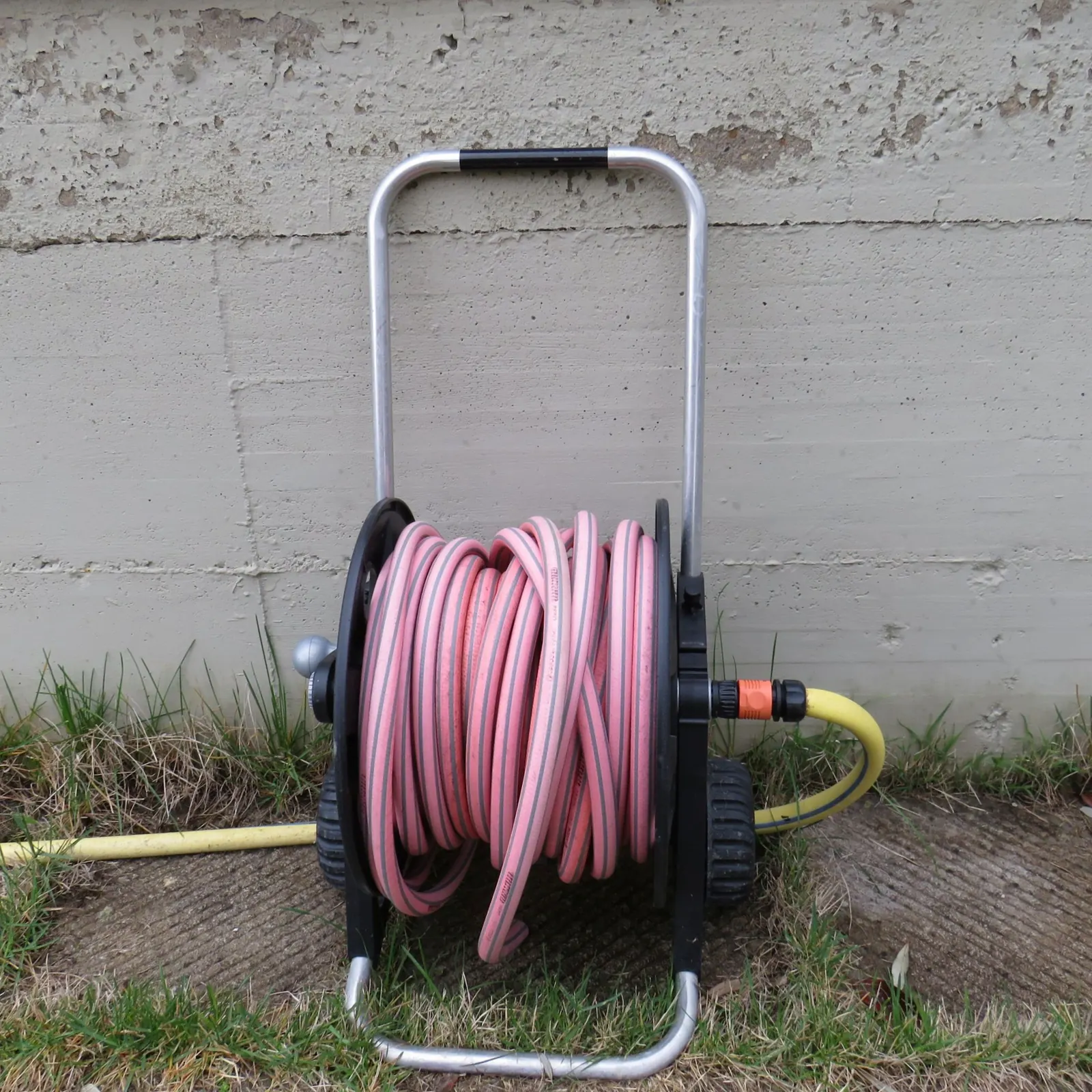
With an open reel, check whether you guide the hose by hand and whether the crank can go on your preferred side; reverse the frame only if the instructions allow it. A removable unit is only useful if you can actually lift it, hose and all.
Retractable reels
A retractable reel comes with its own hose and a spring return. Check that the hose length matches your measured route, and whether the reel mounts on the wall or needs a ground stand.
Read how the return works before buying. GARDENA’s North American manual for model 20500-80 and related models describes releasing the lock with a short tug, then holding the hose end and walking it back, and warns against letting it whip back uncontrolled or keeping hands and clothing near the inlet. The same manual says to depressurize the reel when not in use and to bring it in for winter because it is not frost-proof. Other models release differently, so read your own.
Ask what happens when the hose, stopper or spring needs service, and who can do it. Never open a spring housing yourself unless the maker gives an authorized procedure; the spring is under tension.
Capacity depends on hose diameter
A reel’s capacity is quoted for a particular hose diameter; a thicker hose fills it faster. Note your hose’s length and diameter and compare against the maker’s figure for that size. If a listing gives a big length with no diameter, ask. Do not force the last few coils on.
Expandable, flat and specialty hoses may have their own storage needs, so check the hose maker’s advice too.
Buy for the route you measured. Every extra foot is more to pull out, rewind and store. If one reel would need an awkward route to cover the whole yard, two smaller watering zones may serve you better than one huge coil.
Pull direction and the leader hose
Some reels pull in one direction only; others pivot or can be assembled different ways. ELEY’s 1041 configurations, for example, distinguish pulling along the wall from pulling away from it (assembly guidance). Check what your reel allows.
The short leader hose connects the spigot to the reel. Check whether it is included, its length and fittings, and whether replacements are sold. Route it without kinks or strain on the spigot. Similar-looking quick connectors are not always compatible, and any backflow preventer on the spigot should stay in place; ask a plumber if the connection is unclear.
After installing, turn the water on and look for drips at each joint. Fix a leak with the right washer or seal rather than cranking the fitting tighter, which can crack it.
Winter
In freezing climates, a wall reel still needs winter attention, so mount it where you can reach the leader hose, swivel and any removable parts. ELEY’s freeze-damage guidance warns that disconnecting the inlet alone can leave water inside, and that an unheated garage can freeze too. Suncast tells owners to drain the reel and store reel and hose above freezing in its winterization FAQ. Follow your own model’s draining instructions; a cover does not stop trapped water from freezing.
Parts and upkeep
Before buying, look for a model number, instructions and a parts list: swivels, leader hoses, seals, cranks and brackets wear or break eventually. Keep the manual with your garden records, check the mount and connections each season and stop using a loose or damaged reel until it is fixed.
Buy the smallest reel that reaches your measured route and that your wall can hold securely. The irrigation hub covers broader watering plans.
Written from manufacturer and retailer information and general garden practice. GardenHelm has not physically tested the products discussed here. How we choose products