Rubber Garden Hose: Choose the Right Length, Ratings and Fittings
Rubber is not a full specification. Choose length from the route, then compare weight at that length, working pressure, temperature ratings and fittings you can repair.
By GardenHelmPublished 6-minute readMore in Hoses & Reels
In this guide
Rubber hoses are heavier than vinyl or hybrid hoses. In return, many are rated to stay flexible in cold weather and resist abrasion; check the model’s own claims. Whether that trade suits you comes down to length. A 50-foot rubber hose is easy to live with; at 100 feet the weight becomes the thing you notice every time you pull it around the house. So buy the shortest length that reaches your farthest bed by the real route, then compare the published ratings and fittings of that exact model.
We are talking about garden watering hoses here. Air, fuel, chemical and hydraulic hose follow different specifications.
Rubber, hybrid or expandable
The word “rubber” on a listing may describe only the grip or the washer, so read what the hose body is made of.
| Type | Choose it when | Keep in mind |
|---|---|---|
| Rubber | You want durability, cold-weather flexibility or a hot-water rating | Heaviest per foot |
| Hybrid polymer | You want a lighter, flexible hose for everyday watering | It is a different material, whatever the marketing says |
| Expandable | Storage space is tight and runs are short | Reach depends on water pressure; check the operating requirements |
Flexzilla describes its garden hose as hybrid polymer, a lighter alternative to rubber rather than a type of it. Pocket Hose’s Copper Bullet specifications give separate contracted and expanded lengths, which is the number to check on any expandable hose.
Two rubber hoses show what a useful listing looks like:
- Gilmour Professional Rubber Hose, model 1852: Gilmour’s specification page lists virgin rubber with reinforcement and gives its own hot-water and burst-pressure figures.
- Dramm ColorStorm 5/8-inch, 50 feet: Dramm’s model page lists EPDM rubber, a 130 psi working pressure and a separate 518 psi burst rating.
Those figures belong to those models, not to rubber hoses in general. We cite them as examples of documented specifications, not as tested picks.
Length: measure the walk, not the yard
Walk from the faucet to the farthest point you water, around beds, gates and corners, and add a little slack so you can aim the nozzle without the coupling pulling tight. A bed 50 feet away in a straight line can easily need 70 feet of hose once the route goes around the house.
If the route calls for a 100-foot garden hose, compare one long run with two shorter hoses joined together:
| Your watering pattern | Worth considering |
|---|---|
| The far bed needs water almost every time | One continuous hose that reaches by the real route |
| Pots by the door daily, the far corner now and then | A short everyday hose plus an extension |
| Faucets on both sides of the house | A shorter hose at each faucet |
One long hose avoids a mid-run joint, but you drag all of it to water the pots by the door. Two sections let you use only what you need, at the cost of one more coupling that can leak or snag.
Then look up the weight for the exact length and diameter, and check your reel’s capacity for that hose. Within a product family sold in 100 feet, each material and diameter can still handle differently. Flexzilla, for instance, sells several lengths in its hybrid line; that tells you nothing about the weight of a 100-foot rubber hose. Manufacturer’s hose page
For a sprinkler, check the sprinkler’s flow and pressure requirements. A long or narrow hose delivers less at the far end.
Handling
A weight printed beside a length selector may apply to only one size, so ask if it is unclear. Dry weight is also only part of it: you will drag the hose around corners, lift it onto a reel and carry the water still inside. If a store has a display sample, pick up a coil.
| Main job | What matters most |
|---|---|
| Watering porch pots | Short length, comfortable coupling, storage by the faucet |
| Reaching a distant bed | Routed length, diameter, how it drags around corners |
| Running a sprinkler | The sprinkler’s needs, plus hose diameter and length |
| Moving it around often | Weight at your length, how it coils, easy fittings |
| Using an existing reel | Reel capacity for that diameter and length, leader hose fit |
A tough, heavy hose can still be the wrong choice for someone who carries it up steps every day.
Working pressure versus burst pressure
Working pressure is the rated operating limit. Burst pressure is the point of failure in the maker’s test, a much higher number that should never be treated as a target. The Dramm listing shows the gap: 130 psi working, 518 psi burst. If a package shows only a big burst number, find the working rating before buying.
Your setup is only as strong as its weakest part. A high-rated hose does not upgrade the plastic timer, splitter or nozzle attached to it. If your water pressure is high enough to need regulating, fit a pressure regulator at the spigot; a sturdier hose leaves the pressure as high as it was.
When a listing is unclear, ask:
- Is this number working or burst pressure?
- At what water temperature does it apply?
- Does it include the fittings?
- Can the hose be left pressurized with the nozzle closed?
Do not test a hose by pushing it toward its burst rating.
Hot water and cold weather
Gilmour publishes a 180°F hot-water limit for the Professional Rubber Hose cited above (product specifications). That rating covers that hose, not every rubber hose, and not your nozzle or your hands; water that hot can scald.
Cold weather raises three separate questions: how the empty hose handles in the cold, what water temperature it accepts and how to drain and store it so water does not freeze inside. “All-weather” on a label does not answer all three. If you only water the garden, put length, weight and easy repair ahead of a hot-water rating.
When it leaks, check the fitting first
Leaks often start at the ends. Turn off the water, release the pressure and look where the water came out: the threaded joint, where the fitting meets the hose, or the hose wall. A worn or missing washer is a common cause and is cheap to replace.
Identify the thread before buying an adapter; the hose diameter is not the thread size. Never force a coupling that starts crooked or smear sealant on mismatched threads.
For a damaged end, see whether the maker sells replacement fittings and what tools they need. Dramm lists fittings and a crimping system for its ColorStorm hose (professional hose and repair components); a generic clamp-on end may not match. Repair a hose that is otherwise sound. If it is cracking along its length or keeps failing, replace it.
Reels and winter
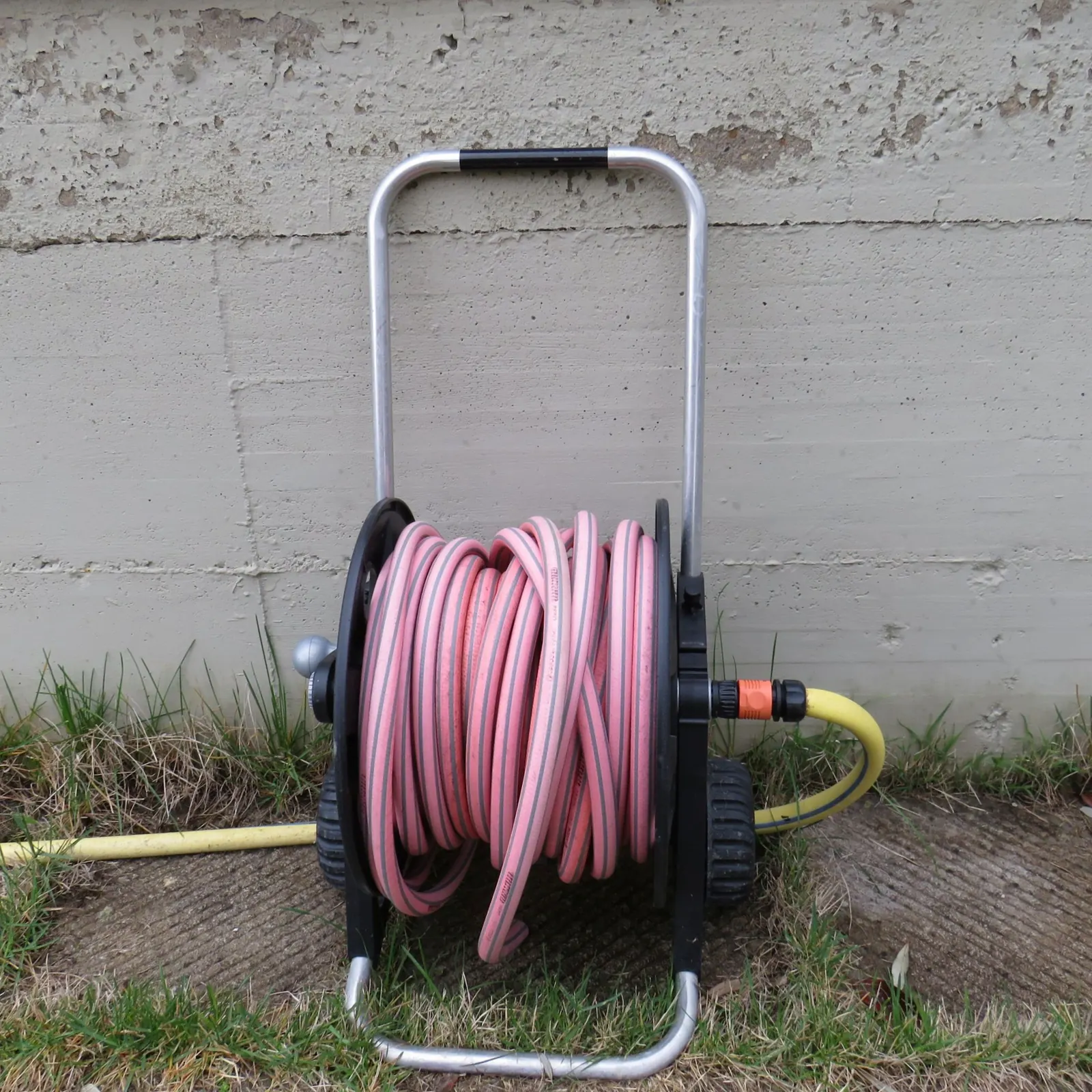
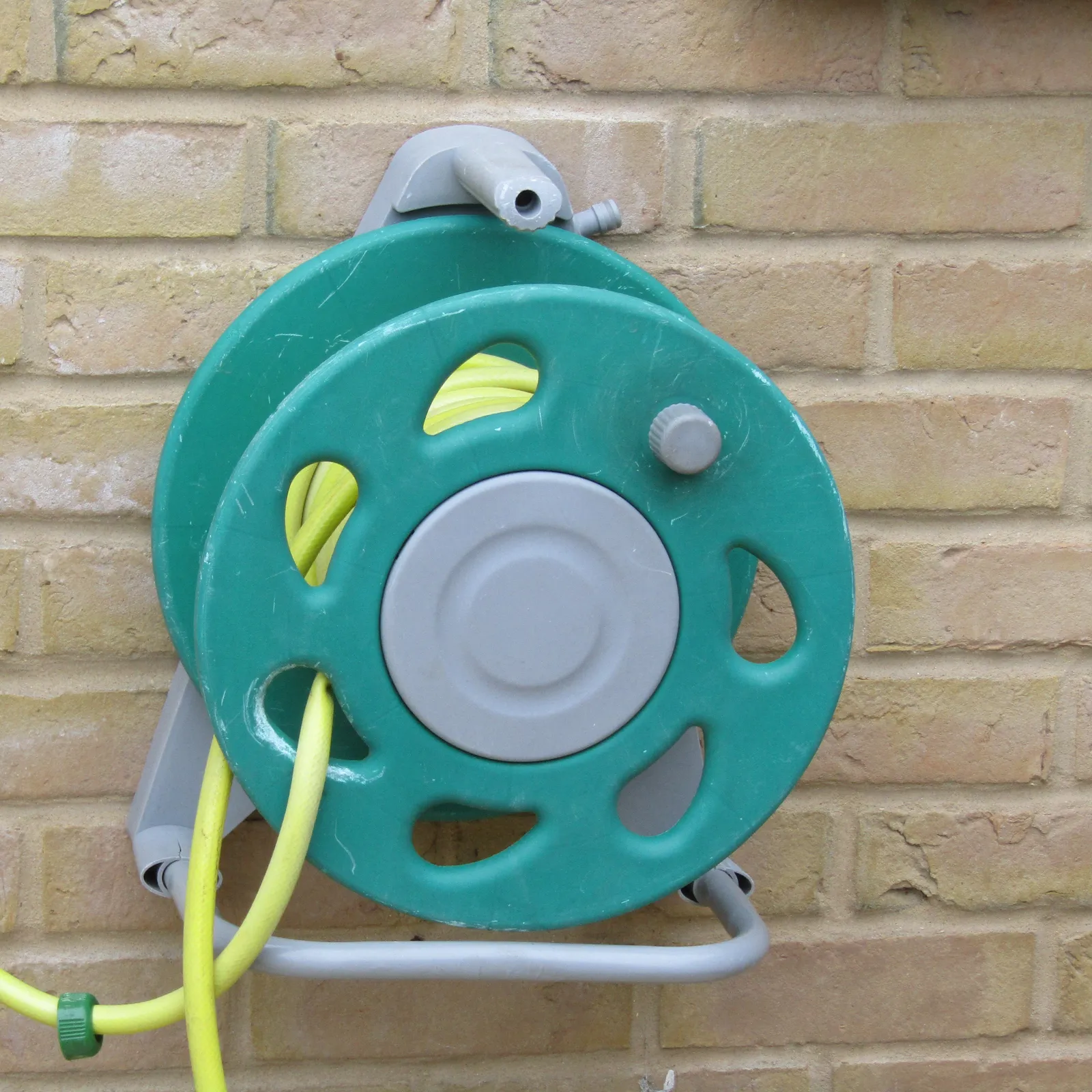
Get a reel rated for your hose’s diameter and length, with a matching connection, and mount it to something that can hold the full, wet weight. Drain and store the hose as its maker directs before freezing weather, and avoid a sharp bend at the fitting to squeeze the coil into a small space.
Read the actual warranty terms: a long warranty may exclude abrasion, freezing or heat. Keep the model number, since hose color is a poor way to identify it later.
Drinking from the hose
Only drink from a hose whose exact model carries a drinking-water rating, which is a separate claim from its garden-watering specification and from the materials it is made of. You can check a claimed certification in NSF’s certified-products directory.
If the hose will feed a timer or drip line rather than a nozzle, our irrigation guides cover those connections.
Written from manufacturer and retailer information and general garden practice. GardenHelm has not physically tested the products discussed here. How we choose products