Potting Soil: Choose a Container Mix by Use, Ingredients and Feeding
The best mix for a pot of annuals is not the right one for orchids or a seed tray. Check the bag is for containers, read what the ingredients do and what fertilizer is already in it.
By GardenHelmPublished 5-minute readMore in Soil & Fertilizer
In this guide
We may earn a commission from links on this page, at no extra cost to you. How this works
For pots, buy a mix labeled for containers, not garden soil or topsoil. Dug soil packs down in a pot, squeezing out the air roots need and draining poorly. A general potting mix suits most patio annuals, mixed containers and vegetables in pots; orchids, seed trays and self-watering planters each have their own media. Once you know which category you need, read the ingredients and check whether fertilizer is already in the bag.
Container mix versus garden soil
“Potting soil” is a shopping name, and most good container mixes contain little or no actual soil. Iowa State’s container-growing answer explains that garden soil alone compacts in a pot and impairs drainage and aeration; a container medium needs to hold moisture and still drain well.
So the first thing to read on the bag is what it is for: filling containers, or amending soil in the ground. A cheaper bag of garden soil is not a bargain in a pot. Raised beds are a separate case with their own guidance.
What the ingredients do
Iowa State’s potting-media component guide explains that the components and their particle sizes set the balance of water and air in the pot:
| Ingredient | Its role |
|---|---|
| Peat or coir | Holds water |
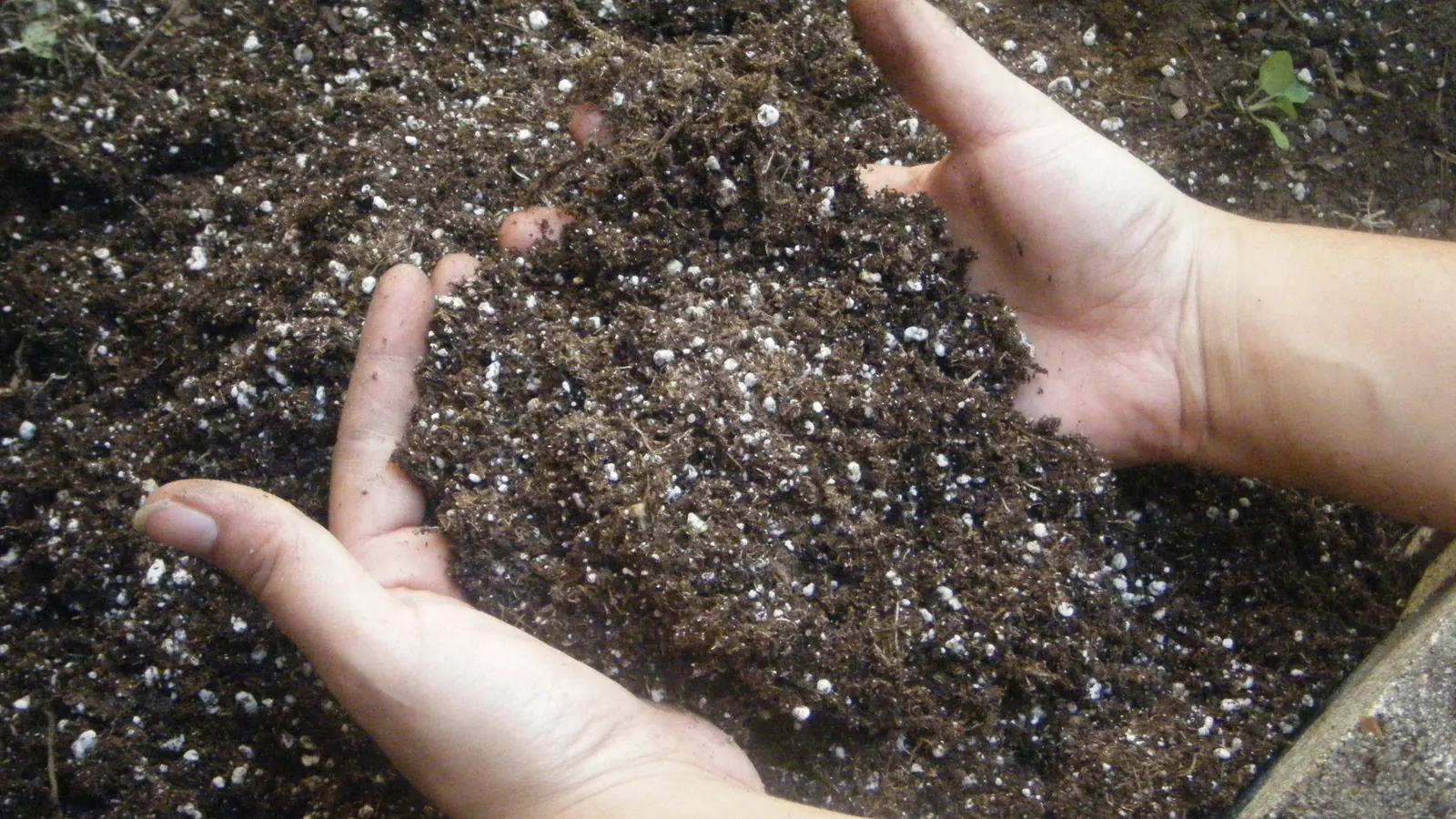
| Perlite | The white granules; creates air spaces |
| Vermiculite | Holds water and some nutrients |
| Processed bark | Adds structure; coarse orchid bark is very different from fine processed bark |
The list does not tell you the proportions, so two bags with similar ingredients can behave differently. If they are labeled for different uses, believe the label. There is also no need to stir extra perlite or sand into every bag out of habit; a mix made for the job is already balanced.
Match the mix to the job
UMass Extension’s bagged-media guidance separates general mixes for annual flowers and mixed containers from specialized media, such as the coarse, airy material orchids need. Plant Addicts’ listing for Orchid Chunky Potting Mix by Sol Soils shows what that looks like on a label: coconut husk chips and recycled forest products with chunky perlite, in a 2-quart bag sized for refreshing a couple of orchid pots. The same listing sends jewel orchids and very young orchids with fine roots to a less chunky mix, so “orchid mix” still depends on the orchid.
Write down the job before comparing prices: patio annuals, a particular houseplant, a tray of seedlings. If two jobs need different mixes, buy two smaller bags rather than one big one that suits neither. For a self-watering planter, check what medium its maker specifies before using a general mix. Lechuza, for example, makes LECHUZA-PON, a peat-free mineral substrate of pumice, lava and zeolite, for its own self-watering planters, and the listing tells owners to water from above for the first 2 to 3 weeks before switching to the reservoir. Those directions belong to Lechuza planters; another brand’s reservoir pot comes with its own.
Check for built-in fertilizer
UMass also distinguishes a small starter charge of fertilizer from incorporated controlled-release fertilizer. A starter charge feeds young plants for a short while; controlled-release granules feed for longer, for the period the bag states. Read which one you have, and follow the bag’s directions on when to start feeding, rather than adding a second fertilizer right away.
Two bags show how differently this is printed. Coast of Maine’s Bar Harbor Blend potting soil lists a guaranteed analysis of 0.40-0.11-0.07 from kelp meal and lobster and crab shell meal, and its listing says to plan on feeding once that initial charge is used up. LECHUZA-PON’s listing states slow-release fertilizer for about 6 to 8 months, and Lechuza sells BASICPON without fertilizer for growers who want to set the feeding themselves. Look for both on any bag: what the fertilizer is, and whether the label gives a duration for it.
How much to buy
Compare bags in the same units: two 20-liter bags hold the same as one 40-liter bag, so compare the total price for the volume you need. Estimate the space you are actually filling, allowing for the root ball and the fill line below the rim, since a decorative outer pot can make the job look bigger than it is. For compressed coir bricks or bales, use the stated prepared volume, not the size of the package.
Buy what you can carry and store as directed. Leftover mix is only useful if it stays dry and clean until next season.
Filling the pot
Iowa State warns that pressing or tapping mix into a container reduces the air spaces. Fill loosely, settle it with a gentle watering and top up if needed (even where a bag’s own tips, such as Bar Harbor’s, suggest tapping the pot), and avoid stacking filled pots directly on top of one another. Moisten dry peat-based mix before planting, as the bag directs, because very dry peat repels water at first.
Keep the bag label, or a note of what you used, with your plant records. Next season you will know what worked in your conditions.
The growing and soil guides cover planting, containers and feeding.
Will the mix feed my plants all season?
Usually not. A starter charge runs out early; controlled-release fertilizer lasts for the period on the bag. Plan to feed after that, following the product and plant directions.
Can I pick the best mix from the ingredient list?
Not on its own. Proportions and processing matter as much as the ingredients. Choose by the intended use on the label, then compare size and price.
Written from manufacturer and retailer information and general garden practice. GardenHelm has not physically tested the products discussed here. How we choose products