Potting Bench Guide: Work Surface, Basin and Storage That Fit Your Routine
The overall height of a bench is not its working height, and a removable basin is not a plumbed sink. Set up a trial work area first, then compare surface, storage and placement.
By GardenHelmPublished 4-minute readMore in Hand Tools
In this guide
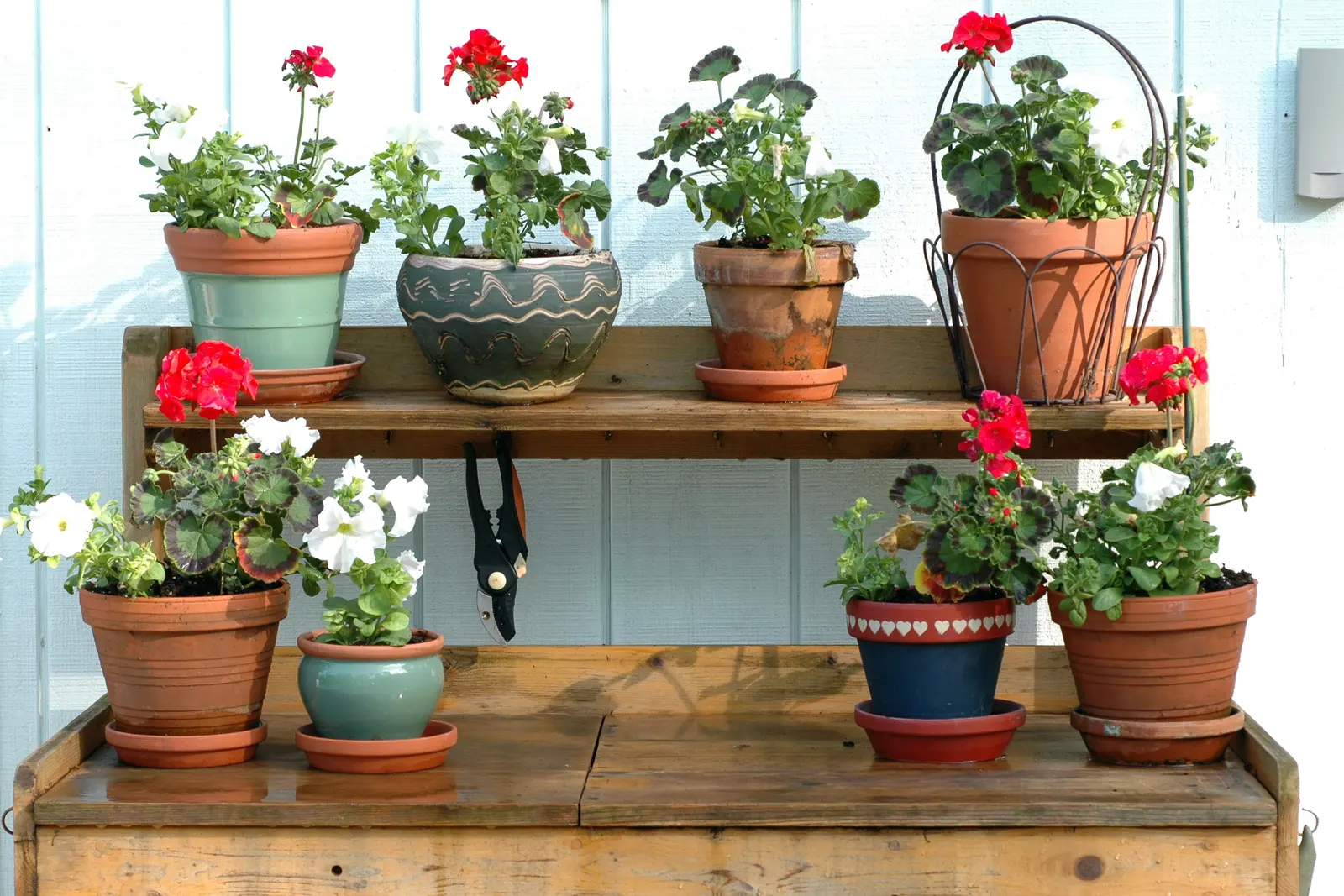
Picture a spring Saturday at a good potting bench: the root-bound plant waits on one side, the new pot sits in front of you, a scoop of mix goes in without spilling over the edge, and when you finish you brush the debris into a basin and the top is clear again. A bench earns its place by making that sequence easy. If it ends up as a shelf for empty pots, a cheaper storage rack would have done the same job. Our garden tools hub covers the tools you might hang nearby.
Test the work area before you shop
Set up a rehearsal on any table you already have. Put down the largest pot you usually handle, your tray or bin of potting mix and the tools you reach for. Leave room for the plant that is waiting its turn. In five minutes you will know whether you need a wide clear top, a recessed basin or just better organization of what you already own.
Do the arithmetic on the surface, too. A 30-inch clear worktop holding two 10-inch pots side by side leaves 10 inches for everything else. Depth matters as much: a narrow top puts the back of a wide pot against the backsplash and the front over your toes.
Height: find your number
Advertised height usually measures to the top of the back panel or upper shelf. What you need is the height of the worktop, and many listings make you dig for it.
Veikous’s PG0103-02GY shows the gap. Its original listing gives overall dimensions of 46 inches wide, 15.3 inches deep and 47.9 inches high, while the worktop sits 33.7 inches off the ground. It also describes a removable stainless basin, a drawer, shelves and side hooks. Veikous potting table specifications The listing we saw was sold out, so treat it as a documented example, not a stock recommendation.
Find your own number by potting something at a kitchen counter, then at a lower table, and noticing which leaves your back and shoulders happier after twenty minutes. Measure that surface and shop for a worktop within an inch or two of it. If you pot seated, check the underside as well: a low shelf or crossbar can sit exactly where your knees need to go. Ask the seller for a photo of the underside if the listing does not show one.
When the “sink” is a removable basin
In many listings, “sink” simply means a bowl dropped into a cutout. That is handy for loose soil or rinsing tools, but unless the parts list says otherwise, expect no faucet, no drain fitting and no plumbing connection.
Think about how you will use it. A basin you can lift out and cover gives you a flat surface back; one that stays in place splits the top in two. If you work with a large tray, compare its footprint with the uninterrupted surface beside the opening. And plan water realistically: a hose or watering can for supply, and a spot where runoff can drain harmlessly. Connecting a bench to household plumbing is a separate project with its own code requirements.
Storage you will actually reach
Sort what goes on the bench by how often you use it. Trowel, gloves and labels belong within arm’s reach of the worktop. The bag of perlite you open twice a year can live on the bottom shelf. If the top becomes permanent storage, the bench stops being a workspace.
Check that the lower shelf opening clears the items you plan to slide in, full, not empty: a full bag of mix sags and spreads wider than it looks. A drawer needs open floor in front of it. Hooks are for the tools they were designed to hold, not for hanging heavy buckets. Load ratings belong to individual shelves and the top; adding them together does not give you an overall capacity, so stay within each figure the maker lists.
Where to put it
Mark the bench’s footprint on the ground, then the space an open drawer needs and the path you walk carrying a full pot. A bench against a narrow patio edge may be better shallow and long than deep, so you are not reaching across it. In a greenhouse or shed, check the door width and the assembly sequence before ordering: a completed bench may not fit through, so plan to build it inside if needed.
Outdoors, wood species alone does not settle durability. Fir, cedar and metal benches all vary with finish, hardware and how they are maintained, so read the maker’s care and placement instructions. A bench under an overhang or against a sheltered wall, out of standing water, is better placed than one sitting on wet lawn.
When a bench is not the right buy
If a sturdy table and a removable tray already do the job, better storage may solve the real problem for less money. A dedicated potting bench makes sense when you pot often enough that a clear, right-height surface with supplies at hand saves you setup time every session. Before ordering, save the dimension drawing with the worktop height on it, compare it with the space you marked out, and ask the seller for any figure the listing leaves out.
Written from manufacturer and retailer information and general garden practice. GardenHelm has not physically tested the products discussed here. How we choose products