Pergola Ideas: Four Useful Ways to Furnish and Enjoy the Space
Dinner outdoors, an afternoon with a book and a planted walkway need different pergolas. Four ideas built around one main job, and the order in which to add accessories.
By GardenHelmPublished 5-minute readMore in Pergolas & Covered Terraces
In this guide
Palram’s clear 0.8 mm SUNTUF polycarbonate sheet passes about 90 percent of the light, and its Solar Control sheet passes 20 percent. A pergola that starts open to the sky can end up anywhere between those two once you add a cover, which is why the most useful pergola idea is a decision about the job it does. Dinner, a book and a planted walkway each want a different frame, furniture and cover, and trying to serve all three is how pergolas end up cluttered.
Below are four schemes, each with the furniture that earns its place, the thing to leave out and the upkeep it brings. They suit an existing or professionally specified structure, and leave footings, overhead loads and building a roof to the structure’s own design.
A dining room that works mid-meal
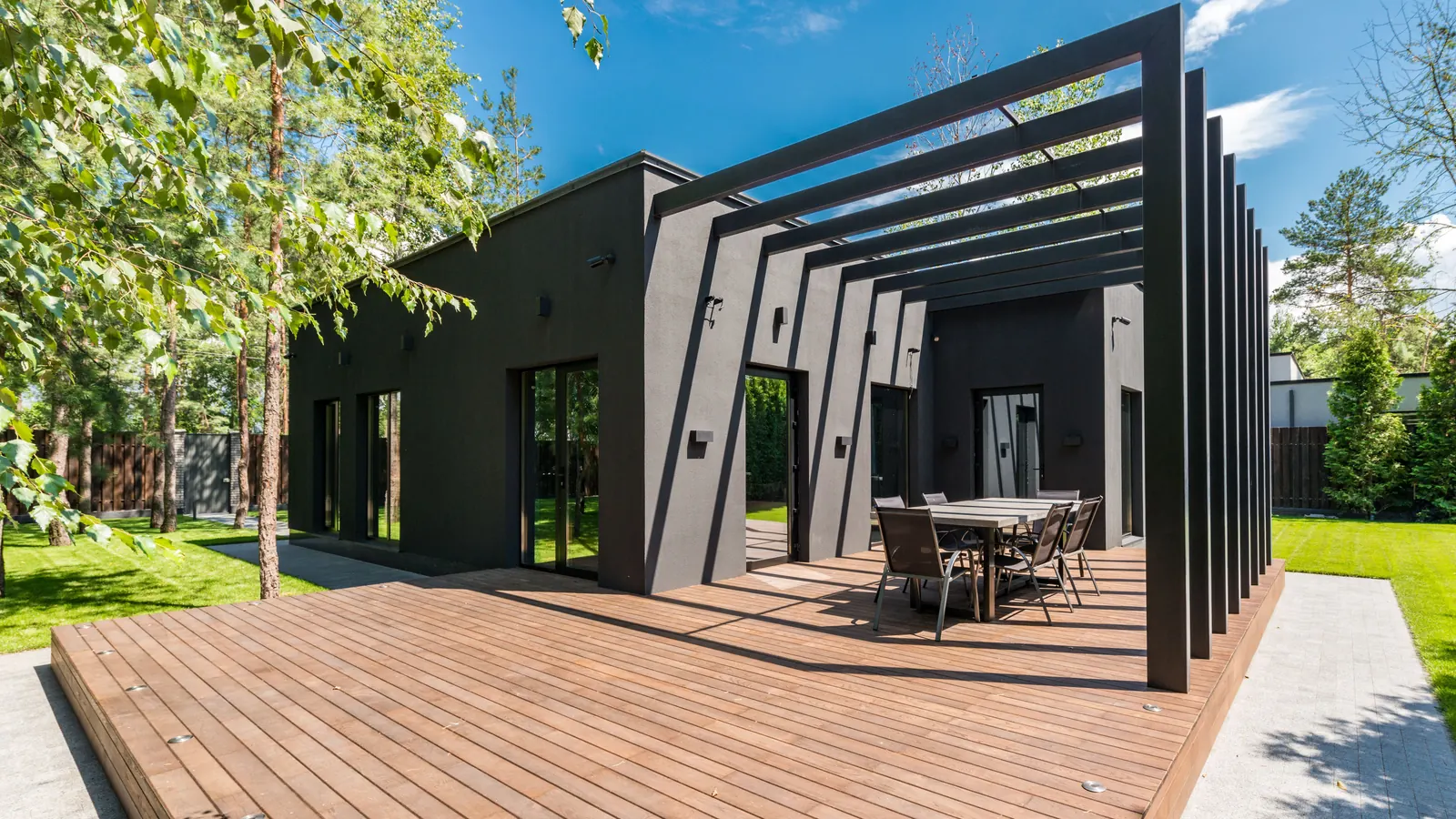
Center the arrangement on the table and its chairs, not on the pergola’s geometric middle. Walk from the kitchen door with a tray, then reach a chair as though someone already sits beside it. A table that forces every plate through one narrow gap will be avoided. Rectangular tables fit long frames and round ones change how people circulate; mark the tabletop and the pulled-out chairs on the ground before buying either.
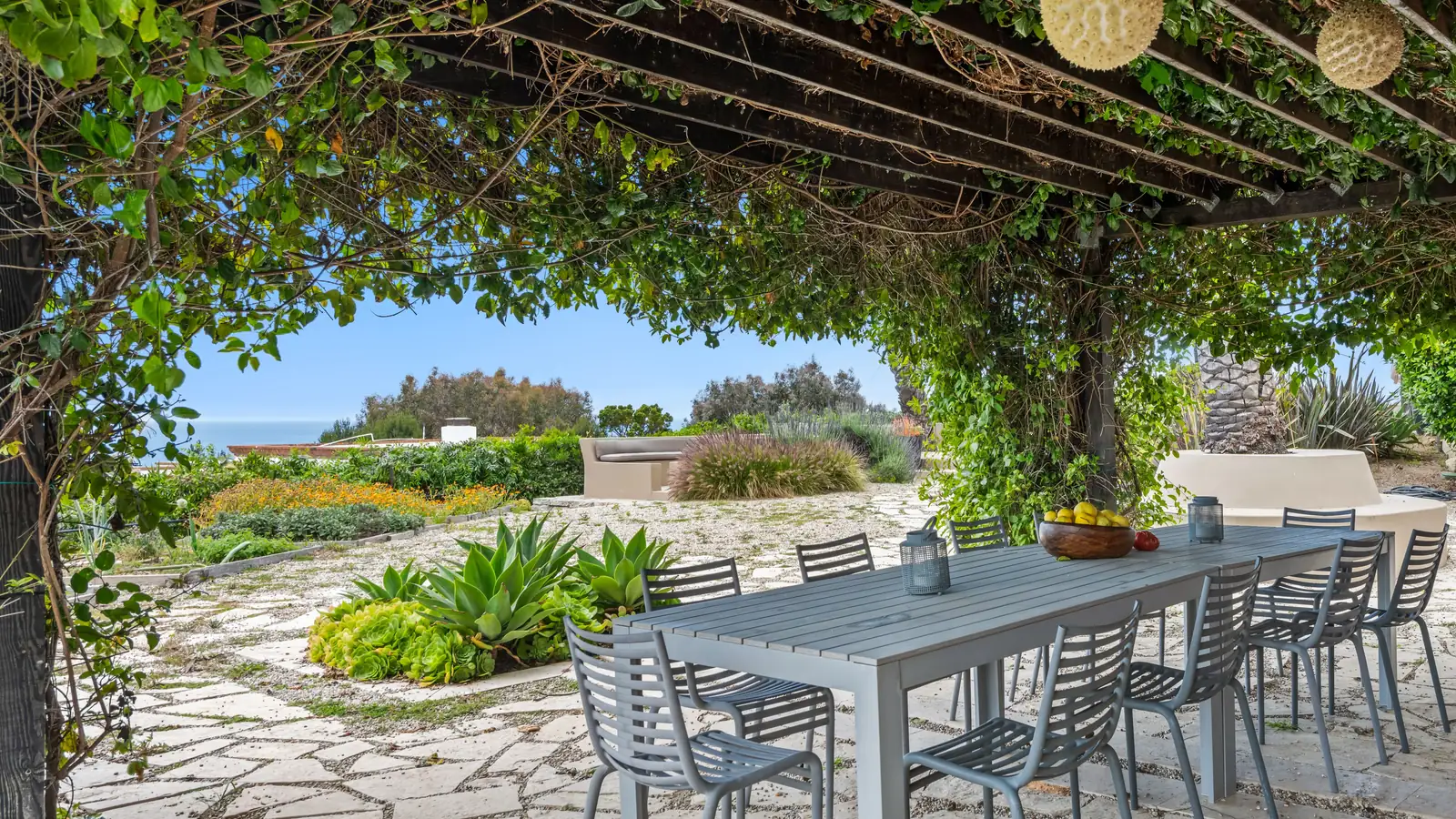
A simple scheme is to repeat one finish, say a gray table with charcoal chairs, and let a single group of pots supply the contrast so the set does not have to match the planters. Give serving dishes a separate landing, such as a narrow side surface beyond the walking route, and choose furniture made for outdoor exposure.
A modest table that leaves clear circulation makes a better dining area than a larger matching set that fills the frame. Leave out the lounge sofa tucked behind the dining chairs, because the same floor is needed for serving. Plan, too, where cushions, tableware and cleaning supplies live. Carrying six separate things through the house before every meal can make a handsome arrangement an occasional one.
A reading corner built around one seat
Choose the seat first: a low lounge chair, an upright chair and a bench sit very differently, and a photo cannot tell you which suits you. Sit in the actual chair if you can, and note how easy it is to get out of. Add a small table within reach, not a large coffee table in the center, and decide what the seat faces. Two chairs angled toward each other still leave the middle open.
Use one planting group to define an edge instead of a pot at every post. Containers need access for watering and drainage, and a large wet planter should not go on a raised surface until you know the surface can carry it. Try the seat at the hour you will read, since open beams and vines do not guarantee shade at every time of day. If you need a screen or canopy, buy one made for the structure.
Skip the swing or hanging chair unless the frame and its attachment are approved for that load and motion, because a hanging seat is a structural attachment that a freestanding chair is not. Soft furnishings need a storage and care plan to match their labels, and a hall closet that is far from the seat decides how often the cushions come out; decide whether carrying one out each visit is acceptable before building the scheme around upholstery.
A conversation area that rearranges
Separate seats suit a household whose group size changes. Four individual chairs around a modest table can rotate toward the garden or turn inward for guests, where a large sectional locks in one relationship between seats. Start from the arrangement you use most, and check where the moved chairs go without blocking the entrance or pressing into planting.
Pick a table the group can sit around without stepping past it, or two smaller surfaces if you accept more objects to move. If the chairs differ in shape, keep the palette restrained and repeat one color in cushions or small accessories. Leave enough empty floor for the layout to change; movable pieces earn their keep only when moving them takes a minute, so heavy chairs defeat the idea.
Treat a fire feature, heater or grill as an appliance with its own instructions, not as a centerpiece. Palram says the warranty on its SUNTUF panels is void if temperatures above a grill exceed 212°F, a reminder that a roof, the beams and an appliance have clearance limits set by their makers and by local rules. Movable furniture also needs a plan for wind, since light pieces are easy to push around on an exposed site.
A planted walkway
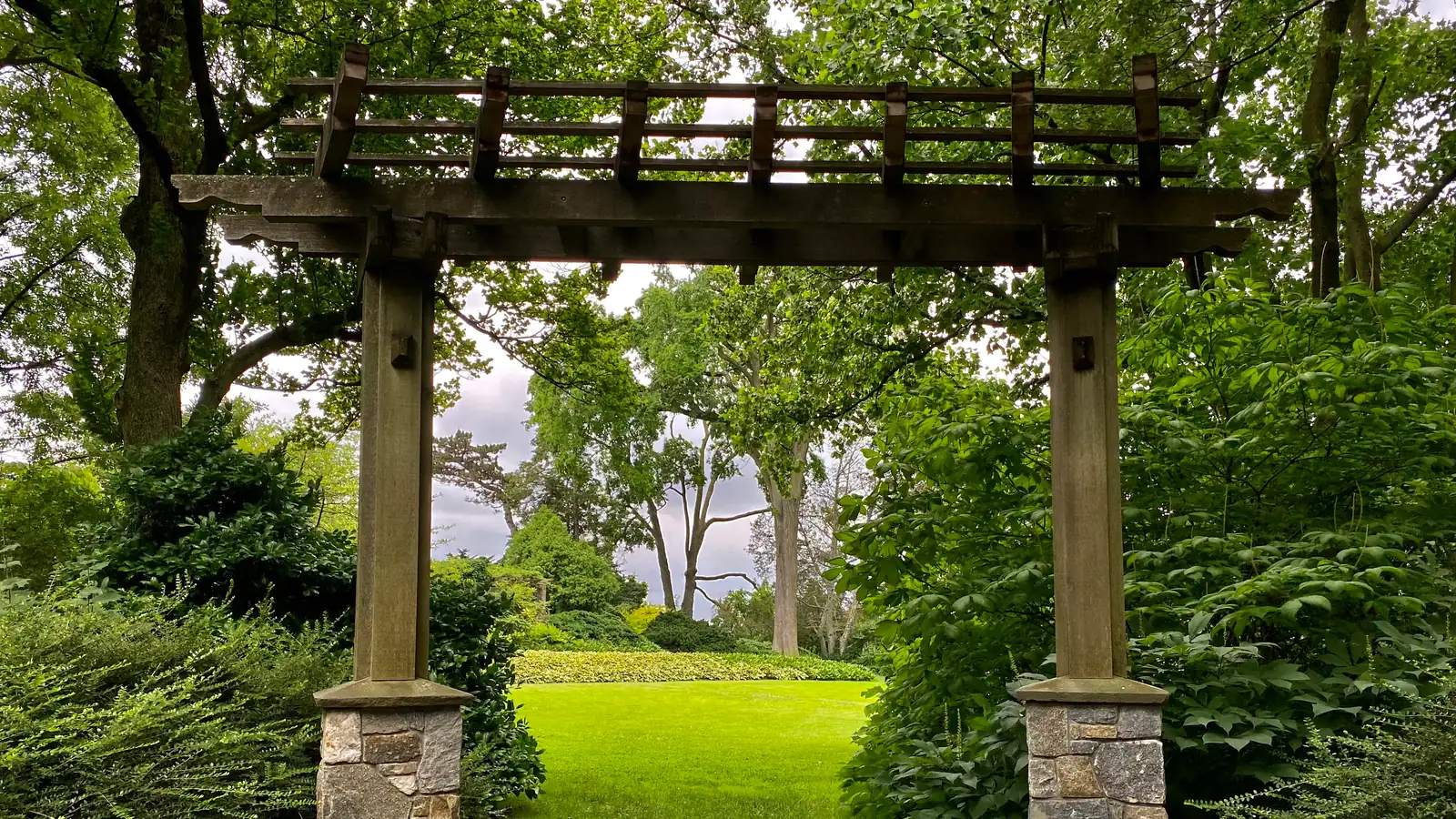
A pergola can frame a route and need no table at all. The RHS describes pergolas as open-topped canopies for eating areas or walkways, and suggests uprights about 9 feet high so climbers can trail down without blocking the way. RHS on pergolas It lists rambling roses, clematis that need little pruning and vigorous honeysuckles among suitable climbers, and advises avoiding large-leaved and evergreen climbers in exposed spots. Its examples are British, so use them as a prompt and ask your local nursery or extension service which climbers suit your region.
Choose climbers from your regional list, since species, hardiness and growth habit never show in a photo. Keep the central route obvious. A bench beside the path or at its end gives the frame a purpose, and a row of big containers along both sides takes the room the walkway needs. One planted edge does more. Decide how much planting you want to manage: a single climber with a training plan is one project, covering every post another. Allow for mature growth and for access to inspect and prune before you attach anything, and keep furniture, lights and ornaments from making that work awkward. A planted frame needs regular looking after, and a bench placed so you can still reach the posts helps.
Accessories, in the order that solves a problem
Use the space for a few weeks, note the recurring annoyance (nowhere for a serving dish, sun on the seats at the best hour, cushions with no home) and fix that first. Roofs, screens and lights are system choices. PERGOLUX publishes assembly resources for its own systems, and parts built for one frame belong on that frame. Keep a short list of unresolved choices rather than buying accessories that depend on a roof or frame you have not picked yet.
If you add a solid cover, decide how much light you want as well as how much rain protection. Palram’s SUNTUF page lists transparent, translucent and opaque colors, rates a clear 0.8 mm sheet at 90 percent light transmission and its Solar Control sheet at 20 percent, and says clear panels pass the most light and heat. Roof support, drainage and how the cover attaches are separate design questions, and the pergolas category has more structure options.
Dining, reading and conversation can share a pergola if the actual furniture and circulation fit at full size. If both feel awkward, choose the one you do most and put secondary seating nearby.
Written from manufacturer and retailer information and general garden practice. GardenHelm has not physically tested the products discussed here. How we choose products