Best Mulch for Flower Beds: Match the Material to the Planting
Bark suits an established perennial bed; a softer, short-lived mulch suits a bed you replant often. Match the material to the bed's yearly work, then set the depth and quantity.
By GardenHelmPublished 5-minute readMore in Soil & Fertilizer
In this guide
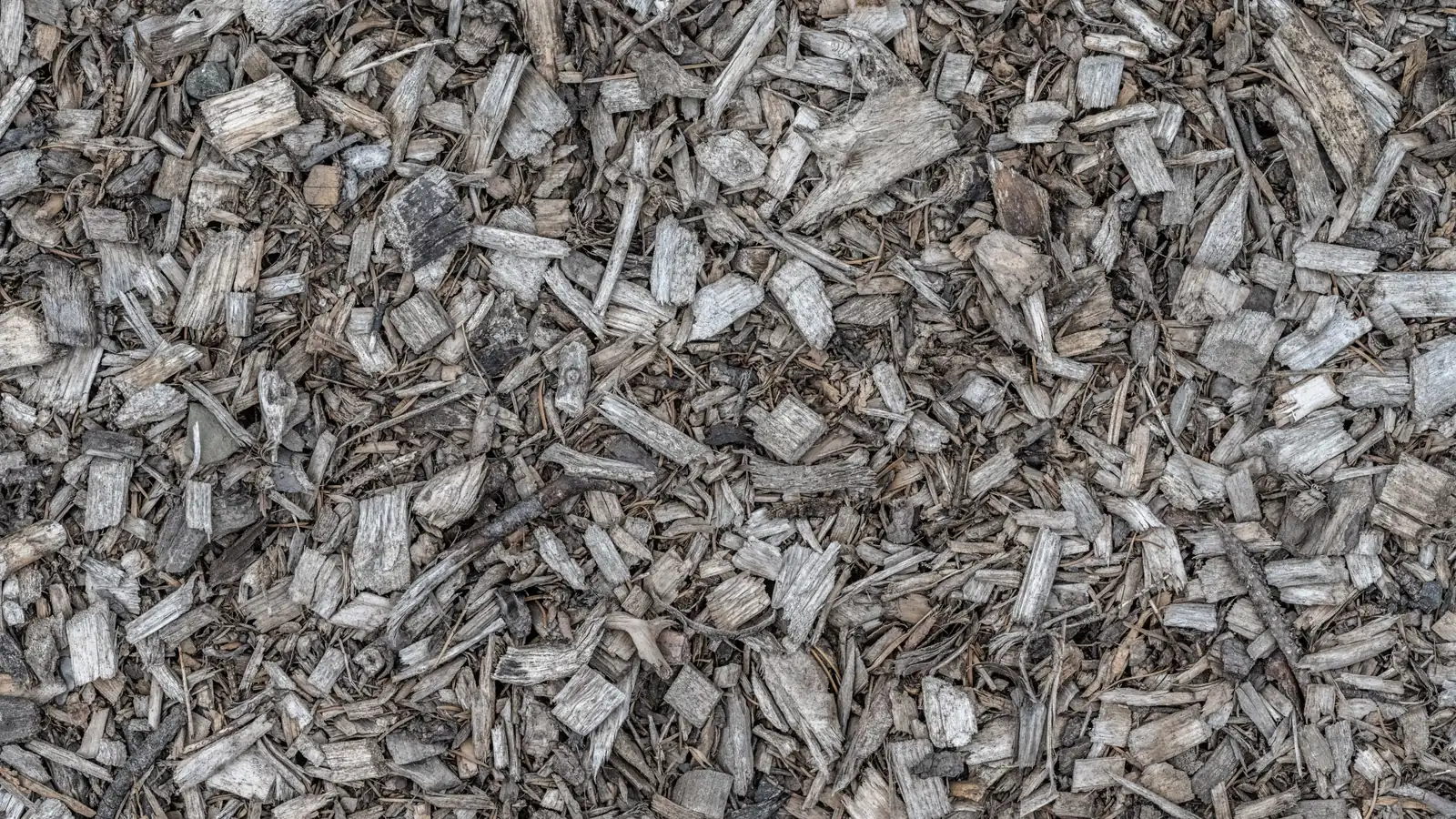
Spread shredded bark 2 to 3 inches deep around flowers and keep it off the stems. Iowa State Extension calls 2 to 4 inches generally effective, with coarse mulches at the deep end and fine ones at the shallow end, and puts shredded bark at 2 to 3 inches. Colorado State Extension says most mulches, wood chips included, go down 3 to 4 inches, and adds, “More is not better!” Go shallower with fine mulch and deeper with coarse, and stop at the top of the range. Which material you spread depends on what the bed does all year.
Match the material to the bed
An annual bed gets dug and replanted, so CSU suggests a temporary organic mulch such as composted leaves or grass clippings, which you can turn under in fall. For trees, shrubs and perennials it points to wood chips or inorganic mulches like pea gravel; Iowa State lists bark and wood chips for established plantings. Both are in Iowa State’s mulch comparison and CSU’s mulch guidance.
| Material | Where Iowa State and CSU place it | Watch for |
|---|---|---|
| Shredded bark | Perennials, shrubs, roses | Dyed bark can upstage the plants; cedar and cypress last longest |
| Wood chips | Established landscape plantings, deeper end of the range | Shredded chips stay put better than coarse ones; chips from lumber or pallets break down fast and may carry chemicals |
| Shredded or composted leaves | Annuals, perennials, vegetables | Shred or compost first so they do not mat or blow away; unshredded leaves are a poor winter mulch for perennials |
| Compost | Nearly any garden setting | Suppresses weeds less well than other mulches |
| Grass clippings | Annual beds | Let them dry first, since fresh clippings mat and smell; skip clippings from weedy lawns or from lawns treated with broadleaf herbicide until after two or three mowings |
| Cocoa bean shells | About one growing season; somewhat expensive | 1 to 2 inches; chocolate is toxic to dogs |
Iowa State describes shredded bark as slow to break down and grass clippings as quick, so choose by how often you are willing to top up the bed.
Keep it off stems and crowns
Pull mulch back from woody stems. CSU says rodents living in mulches such as straw and loose leaves can chew bark and girdle plants, so keep those types at least 6 inches from the base of woody plants. Iowa State warns that deep “mulch volcanoes” keep trunks wet, inviting cankers and root rot. Leave a clear ring around shrubs and roses, and keep perennial crowns uncovered.
Timing matters for perennials. Iowa State advises waiting in spring until the ground has warmed and perennials have emerged, since early mulch can slow them, and mulching in fall only after plants go dormant, since early mulch can delay dormancy.
Nitrogen, gravel and fabric
High-carbon mulches such as hardwood bark, ground pallet wood, straw and sawdust can draw down nitrogen as microbes break them down. Iowa State says the effect is strongest on herbaceous plants and newly set woody plants and fades as the mulch breaks down. Mixing wood chips into the soil is what CSU says can lock nitrogen up; leave them on the surface. Never use weed-and-feed fertilizer in mulched areas, CSU adds.
Gravel passes more heat to the soil than wood chips do, per CSU. That can help in cold winters but may push tender plants to start growing too early. It also complicates digging and dividing later. CSU favors pea gravel with stones under half an inch, since larger ones do not suppress weeds or conserve water well, and notes that gravel can also warm nearby buildings.
CSU says landscape fabric is not needed beneath other mulches and is often harmful to plant and soil health, so skip the roll in the retail bundle.
Near the house, check local defensible-space rules. Oregon State Extension says bark mulch is not recommended within 5 feet of a home because bark and chips can ignite, especially when dry, and suggests nonflammable decorative rock or gravel next to the house, and it warns against recycled rubber mulch, which burns readily (OSU fire-resistant landscaping guidance).
Working out how much to buy
Dig a few spots to see how much mulch is already there. A bed with a usable layer needs a top-up to your target depth, and many beds need none. For the amount, convert like this: square feet times depth in inches, divided by 12, gives cubic feet. Divide by 27 for cubic yards. A cubic yard therefore covers 108 square feet at 3 inches deep, and 162 square feet at 2 inches.
Subtract paving and unmulched ground, and break a curved bed into a few simple shapes. As a worked example, a 4-by-18-foot border is 72 square feet; 2 inches of new mulch is 72 x 2 / 12 = 12 cubic feet, which is six 2-cubic-foot bags or about 0.44 cubic yard, and a 1-inch top-up halves that to 6 cubic feet. That is why measuring the existing layer can change the order. Ask what a bag actually contains, since brown mulch describes a color, not an ingredient or particle size, and look at a sample beside your edging before a big delivery. For bagged mulch, compare price per cubic foot from the labeled volume, since bags that look alike hold different amounts. For bulk, add delivery and any minimum order, and think about where the pile will sit while you spread it.
Before spreading, locate small plants, dormant crowns, irrigation outlets and labels, and spread by hand around them, a mulch fork or shovel elsewhere, and walk the bed after the first rain to see whether material has crept onto the path. For the wider picture on soil and planting, see our growing hub.
Written from manufacturer and retailer information and general garden practice. GardenHelm has not physically tested the products discussed here. How we choose products