Lawn Fungus: How to Identify Common Lawn Diseases and What to Do
Brown patch, dollar spot, red thread, snow mold, rust and other lawn diseases: how to recognize them, the weather that triggers them and the cultural fixes to try first.
By GardenHelmPublished 5-minute readMore in Lawn Care
In this guide
Most lawn fungus problems are managed with changes in care rather than a spray: water early in the morning instead of the evening, mow at the right height with a sharp blade, feed the right amount at the right time for your grass and let air and light reach the turf. Many lawns recover once the weather that favored the disease passes. A fungicide makes sense for a confirmed, recurring disease, applied in the right window. The hard part is diagnosis, because drought, grubs, a dull mower blade and a fertilizer spill can all look like fungus from across the yard.
Why disease shows up when it does
UC IPM’s lawn-disease guide explains the disease triangle: a susceptible grass, a pathogen and favorable weather all have to coincide. The pathogens are almost always present; what changes is the weather and the condition of the grass. That is why the same patch can appear every humid August, and why changing care, which you control, is usually more effective than chasing the fungus.
UC IPM also warns that poor watering and other non-disease problems can look like infection. Keep a short log: date, location, recent weather and anything you did to the lawn, with photos from the same spot each time. If you send a sample to your extension service, that log is half the diagnosis.
Common lawn diseases and what favors them
| Disease | What to look for | Conditions that favor it |
|---|---|---|
| Brown patch | Roughly circular blighted patches, often on tall fescue | Hot, humid weather with warm nights; NC State describes warm-weather pressure on tall fescue in its region |
| Dollar spot | Small, pale, coin-sized spots that can merge, with lesions on the blades | Long periods of leaf wetness and dew; often worse on underfed turf |
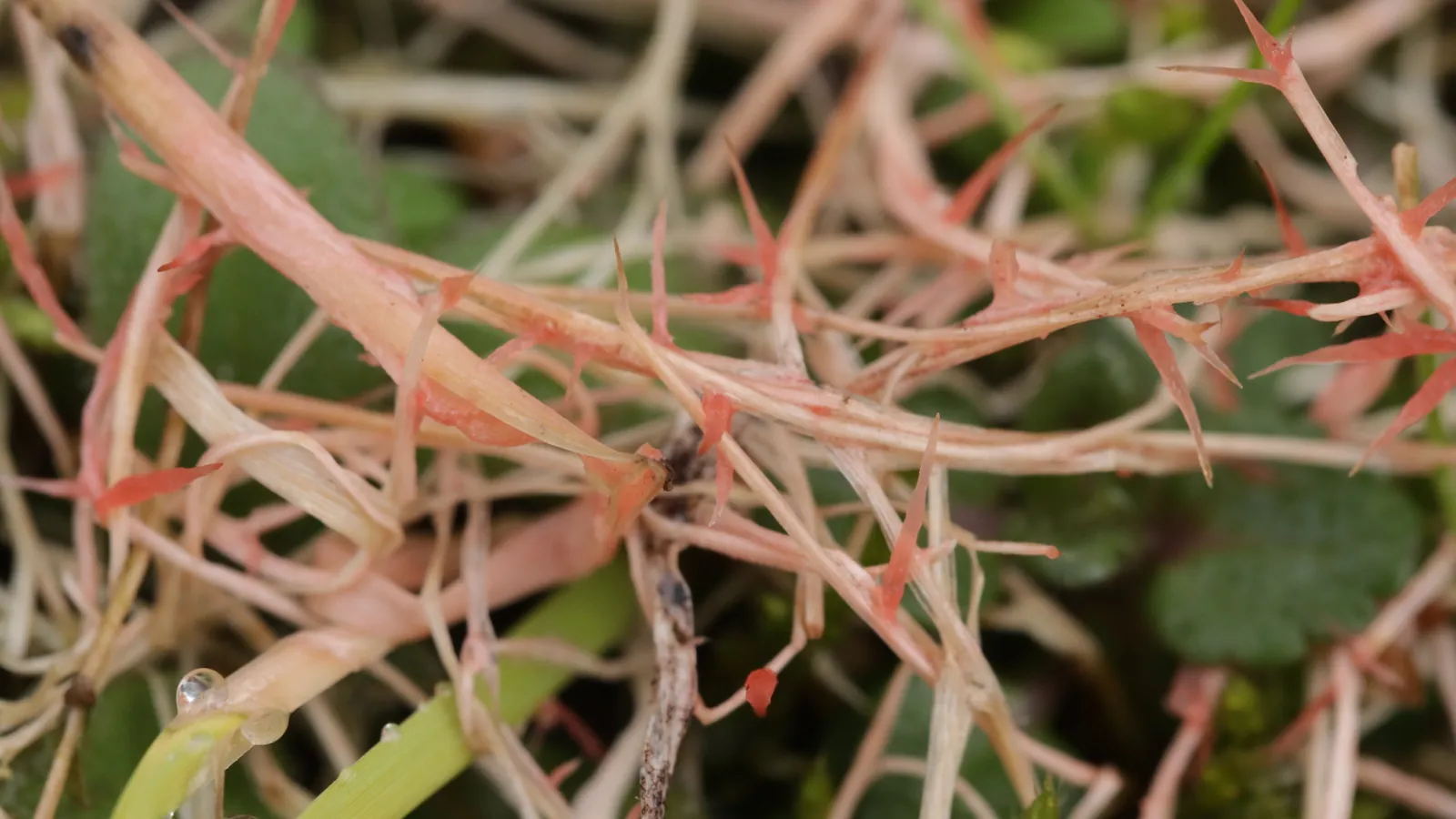
| Red thread | Pink or red threadlike strands on the blade tips | Cool, wet spells, often on underfed lawns |
| Summer patch | Circular straw-colored patches | Hot summer weather; Maryland highlights Kentucky bluegrass and fine fescue |
| Rust | Orange powder that rubs off on shoes and mowers | Slow-growing, stressed turf, often late summer into fall |
| Powdery mildew | White coating on the leaves | Shade and poor air movement |
| Gray leaf spot | Bleached leaf spots with dark margins, irregular blighted areas | Hot, humid weather |
| Gray snow mold | Matted, grayish grass revealed as snow melts | Long snow cover |
Sources for the disease descriptions: NC State landscape turf disease management, UC IPM, Maryland lawn diagnosis and Connecticut gray snow mold guidance.
Use the table to know what to look for up close, not as a photo identification key. Get down on your knees: threads, powder, spots and lesions on individual blades are the clues that separate disease from drought or insects.
Rule out the look-alikes
Maryland’s diagnostic guide also lists mower injury and fertilizer or herbicide injury among common lawn problems. A fungicide cannot sharpen a blade or undo a spill, and treating every pale patch as hungry grass misses the real cause.
Quick checks before blaming fungus:
- Tug the grass. If it comes up easily with the roots gone, look for grubs.
- Push a screwdriver in. If it will not go in, the patch may simply be dry or compacted.
- Look at the cut tips. Shredded, whitish tips point to a dull blade.
- Think back. A straight line or sharp-edged shape often matches a spreader path or a spill.
Change one thing at a time. If you spray, fertilize, change the irrigation and reseed on the same day, you will never know what helped.
Care changes that prevent most problems
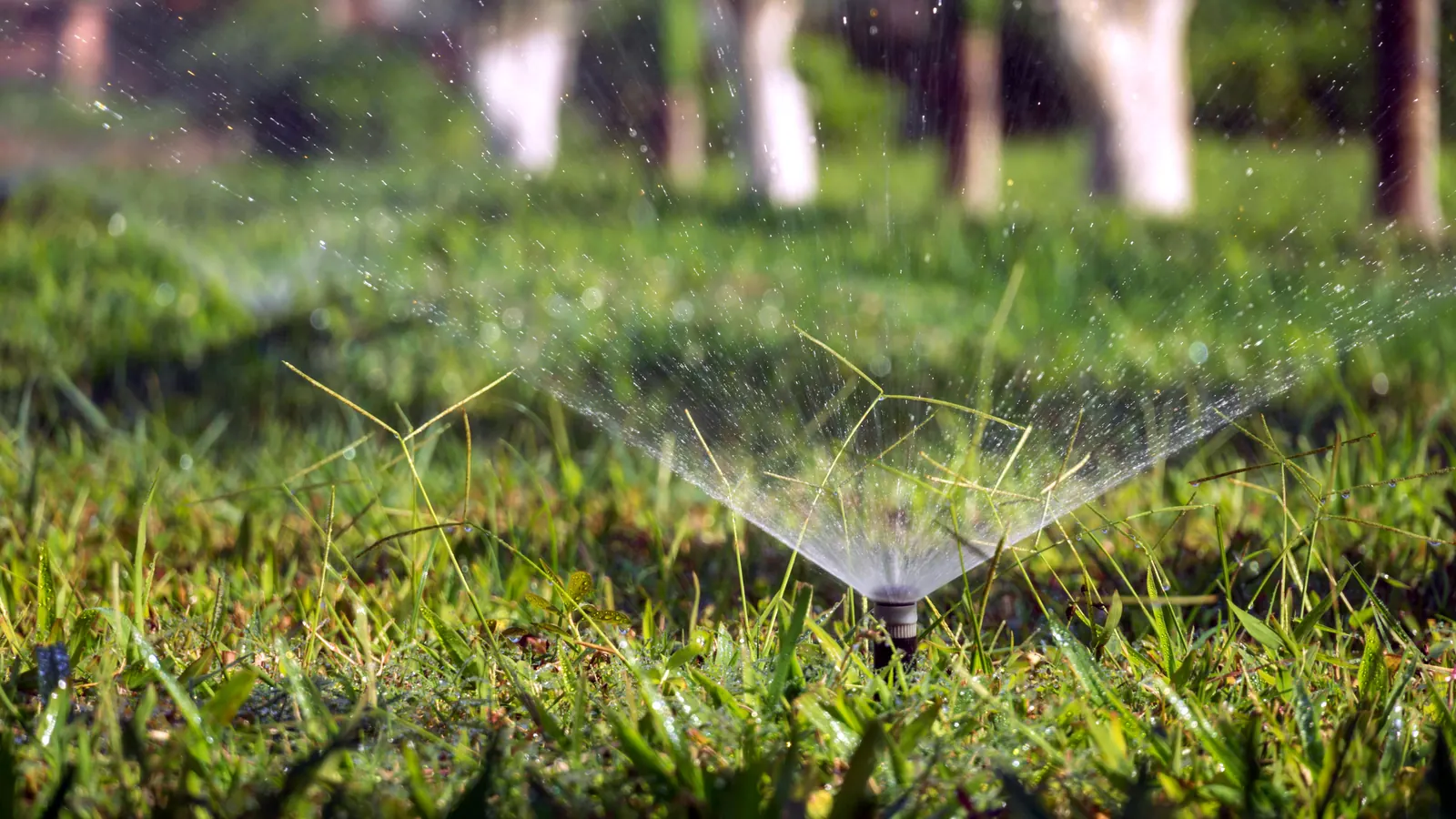
- Water early in the morning, so the grass dries during the day. Evening watering keeps blades wet overnight, which is exactly what dollar spot and brown patch like.
- Water deeply and less often rather than a little every day.
- Mow at the recommended height for your grass with a sharp blade, and avoid mowing wet grass when disease is active.
- Feed by the calendar for your grass. Underfed lawns are prone to dollar spot, red thread and rust; heavy summer nitrogen on cool-season grass can make brown patch worse.
- Let in light and air. Thinning low branches helps against powdery mildew in shade.
- Choose resistant varieties when you reseed an area where the same disease returns.
When a fungicide makes sense
NC State distinguishes preventive and curative fungicide use and notes that results depend on timing, application and disease pressure. It also lists active ingredients and FRAC groups, a reminder that a different brand name does not always mean a different mode of action. Its recommendations are regional.
A fungicide is most useful against a confirmed disease that returns in a predictable window, applied before or at the very start of that window. Check that the label covers residential lawns and your target disease; a product listed in an extension table may still be unavailable or unapproved for homeowners in your state. Last year’s product helps only if this is the same confirmed disease and the label covers it. Mixing rates come from the label of the exact formulation.
Snow mold: why timing matters
The Connecticut Agricultural Experiment Station’s gray snow mold fact sheet describes disease that develops under prolonged snow cover. Crowns and roots commonly survive, and much of the damage on home lawns is cosmetic. A spring fungicide does nothing for it; where prevention is justified, it goes on before permanent snow cover. In spring, rake the matted areas lightly to let them dry, and most will green up. If an area does not recover, have it looked at.
Fixing what is left
Treating disease and replacing dead grass are separate jobs. If patches have died, correct the cause first, then reseed or patch at the right time of year for your grass. Our lawn care hub covers repair and maintenance.
Hiring a lawn service
Ask for the diagnosis, the product name and label, why it is timed when it is and what happens next. If the plan is a routine calendar of fungicide sprays, ask: what evidence says this lawn needs it? A history of a confirmed recurring disease is a good answer; a vague “everyone gets it” is a reason to keep looking.
Written from manufacturer and retailer information and general garden practice. GardenHelm has not physically tested the products discussed here. How we choose products