How to Take Care of Tall Fescue Grass in Summer
Raise the mowing height, measure what the sprinklers deliver and do not feed every brown patch. A green lawn, a dormant lawn and new seed each need their own summer routine.
By GardenHelmPublished 3-minute readMore in Lawn Care
In this guide
Tall fescue growth often pauses in summer heat, and University of Maryland Extension says not to mow when growth has paused from drought stress or heat over 90°F. That one fact reorders the summer routine: the usual weekly cut, the steady sprinkler schedule and the urge to feed a pale lawn all assume growth that is not happening. Confirm you have tall fescue first, since fine fescues and warm-season grasses follow different rules. More lawn context is on our lawn care hub.
Mowing
Maryland keeps tall fescue at 3 to 4 inches, uses the highest mower setting in the hottest, driest weather, and removes no more than a third of the blade per mowing. On a 4-inch lawn that means taking off no more than about 1⅓ inches. Maryland on maintaining an established lawn North Carolina State’s June to August calendar gives its own target: mow to 3½ inches before the grass gets taller than 5. NC State tall fescue calendar The two sources differ a little, which is normal for different climates; both stay at 3 inches or higher, which NC State’s disease advice also asks for.
Set the mower for the remaining height, then mow when the grass has grown enough to need it. Measure the turf in several spots, not the tallest weed. Maryland says to sharpen the blades at the start of each season or replace them once a year, and puts the rule of thumb at about 10 cumulative hours of use. It also prefers leaving clippings on the lawn, since they return nutrients and do not cause thatch.
Water
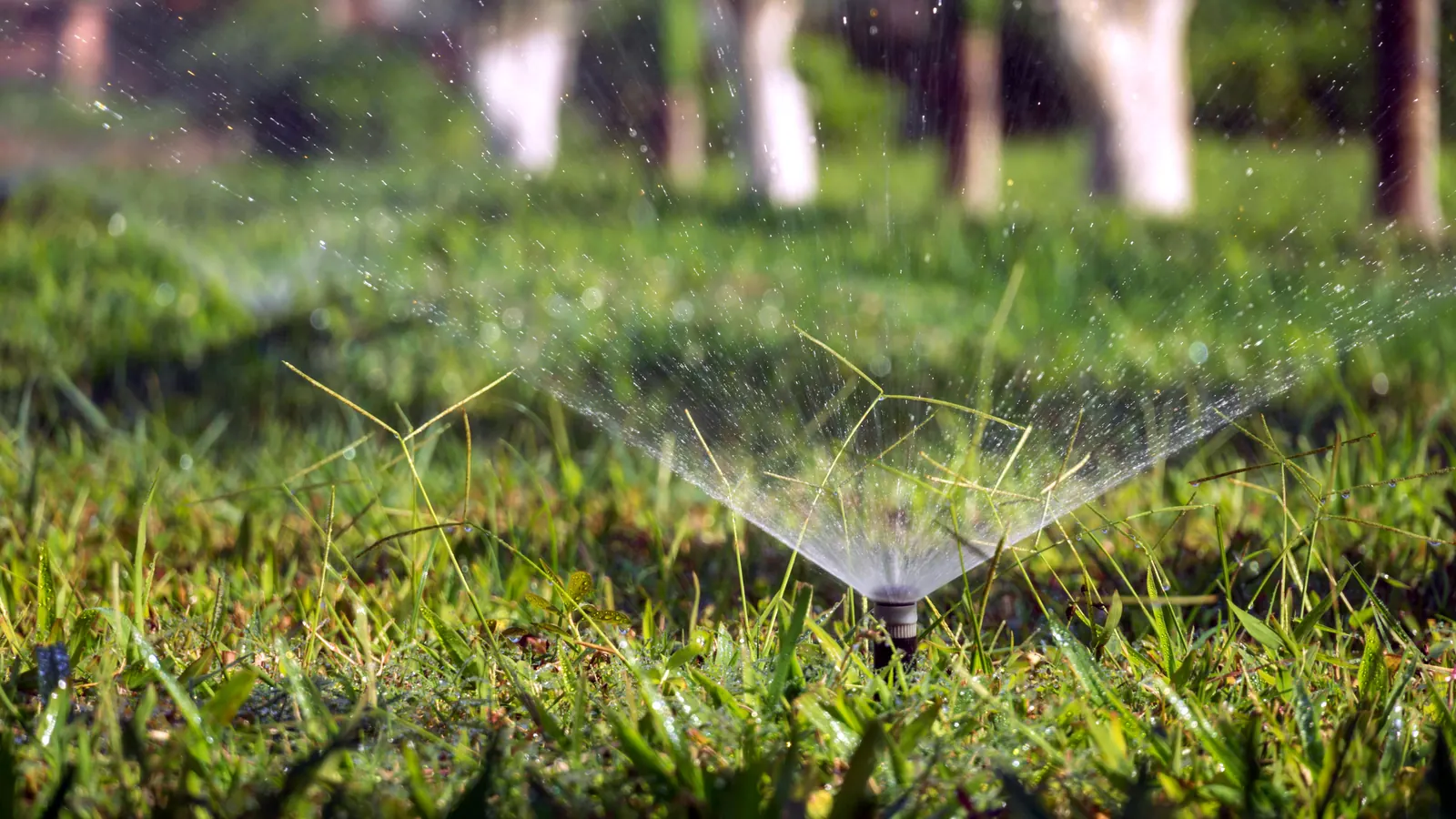
Actively growing grass needs about 1 inch a week from rain and irrigation together, according to Maryland. That is a depth, and sprinklers deliver it unevenly, so set out a rain gauge or shallow cans across the zone, run the system for a set time and see what lands where. Use the readings to even out coverage, and if an area runs off before the water soaks in, split the run into shorter cycles.
You have two legitimate summer choices. Keep the lawn green with regular watering, or let it go dormant. Maryland recommends letting cool-season lawns go dormant in summer instead of forcing growth with frequent irrigation, and, in a drought of four weeks or more, watering just often enough to keep crowns and roots alive. NC State gives a specific interval for dormant lawns in drought, every three weeks, a regional figure that applies to dormant established lawns. Keep foot and vehicle traffic off dormant turf, because Maryland warns that walking on drought-stressed grass can cause significant damage.
For disease, water between 2 a.m. and 8 a.m., as NC State suggests for brown patch.
Brown patches
Tall fescue is prone to brown patch and gray leaf spot. NC State links brown patch to temperatures above 85°F and gray leaf spot to nights that stay above 70°F with high humidity, notes they are hard to tell apart and says fungicide may be needed in severe outbreaks; for gray leaf spot it also advises mowing consistently and removing clippings. A distinct patch that keeps growing is worth showing to your county extension office with a close-up of its edge.
Feeding is the wrong first move. NC State’s summer advice is to fertilize only as needed for color or recovery, at roughly one-fifth to one-half pound of nitrogen per 1,000 square feet. Maryland’s tall fescue schedule applies no nitrogen from June through August. It puts 0.7 to 0.9 pound per 1,000 square feet in September and again from October to November 15, with an optional May to early June application, and state law bars nitrogen and phosphorus between November 15 and March 1. Check whether a pale zone is simply getting less water before blaming nutrients.
Save repairs for fall
NC State says to delay aeration until fall and not to apply herbicides in summer. In its western region it overseeds thin or bare tall fescue areas from August 15 to September 1, and Maryland aerates in autumn just before overseeding. Use summer to mark thin areas on a sketch, noting which are poorly watered and which are unexplained, so the fall work targets the cause.
Written from manufacturer and retailer information and general garden practice. GardenHelm has not physically tested the products discussed here. How we choose products