Firewood Storage Sheds: Airflow, Capacity and Siting
A woodshed should keep rain off the stack and let it breathe, unlike a sealed garden shed. Estimate real capacity, check the base and place it with fire risk and access in mind.
By GardenHelmPublished 5-minute readMore in Garden Sheds
What this guide compares
- Usable stack capacity
- Roof coverage and airflow
- Ground clearance and drainage
- Safe access and stack support
- Local siting and wildfire requirements
In this guide
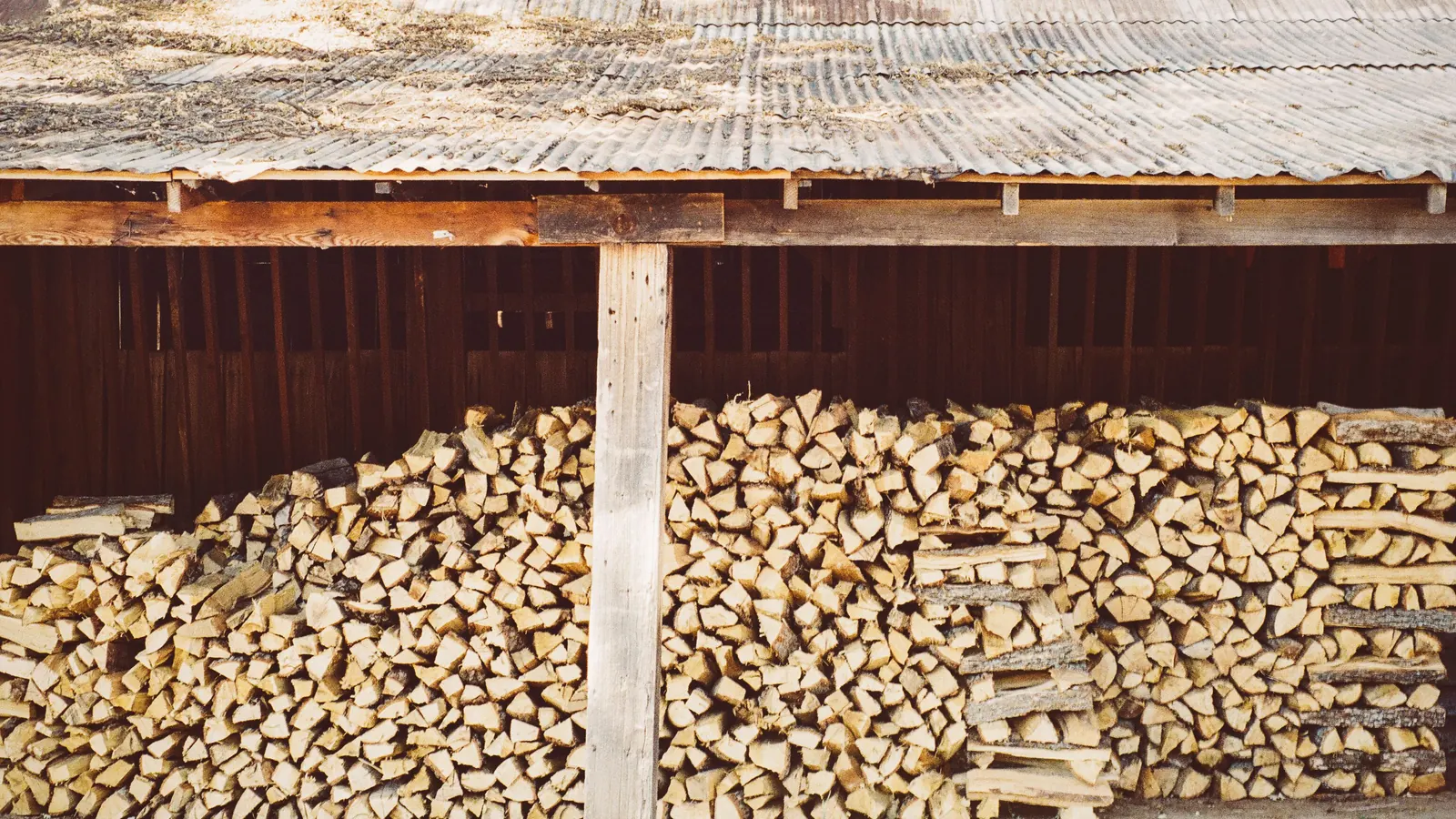
The EPA’s wood-burning advice says to store firewood outdoors, off the ground, “with only the top covered”, because covering the sides traps moisture. That one line explains what a firewood shed is for. It is a roof on legs with open or slatted sides, built to let wind pull water out of the stack while keeping rain and snow off the top. A closed garden shed, however solid, works against that.
Buy or build around three things in this order: how the wood dries, how much you need to hold, and where the shed can safely stand.
Seasoning comes first
Freshly split wood needs time and moving air. The EPA’s firewood-storage resource recommends seasoning softwood for at least 6 months and hardwood for at least 12, splitting before you stack to shorten drying, and using a base that keeps wood off the ground. Your weather, the species and how finely you split all shift that timetable, so treat those as minimums.
The calendar alone will not tell you the wood is ready. The EPA’s archived Burn Wise guidance recommends testing with a moisture meter and burning wood below 20 percent moisture. Split a piece and read the fresh face, since the outside dries first. Follow your stove or fireplace manual and any local burning rules alongside that.
What this means for the shed: if you buy green wood or cut your own, you need space for at least two batches, one drying and one ready to burn, and a way to reach the older batch without unloading the newer one. Two or three bays side by side, each loaded and emptied in turn, does that better than one deep stack. Chalk the delivery or splitting date on a post at each bay.
Airflow and rain: what the structure has to do
A sloped roof sheds water away from the stack. EPA’s storage page also suggests letting a woodshed roof overhang about a foot on all sides, which matters more than it sounds: logs that poke past the supports, or a stack built to the edge, lose the protection an empty shed seemed to offer. Look at which way your storms usually blow and where the roof will drip. Runoff should land clear of the base and the path you walk with an armload.
Open or slatted sides let air move through. Gaps between back boards, a small gap behind the stack and a raised floor of rails or pallets all help. If one corner of the stack stays dark and damp after a week of dry weather, restack it looser or move it to the windward side.
A tarp can stand in for a roof on a small pile, but tie it over the top only and let the sides breathe. Draped to the ground, a tarp holds in moisture.
Working out how much it really holds
Sellers describe woodsheds by exterior size, a nominal cubic-foot figure or a number of cords, and none of those means much until you know the stack behind it. Interior posts, braces, a low roof edge and the space you need to reach in all take volume away.
Multiply the stack’s length, depth and height in feet. A stack 8 feet long, 4 feet deep and 4 feet high takes up 128 cubic feet, which is one cord, gaps included. The Washington State Department of Agriculture’s firewood guide explains that a cord is wood stacked compactly with the pieces parallel. A loosely thrown pile of the same outside size holds less wood, and a “truckload” is not a legal measure.
| Question | How it shapes the shed |
|---|---|
| How much do you burn in a season? | Sets the size of the ready-to-burn bay |
| Will next year’s wood dry at the same time? | Adds at least one more bay |
| What length are your logs? | Sets row depth; 16-inch pieces in two rows need different supports from one row of 24-inch |
| Can you reach the oldest wood first? | Decides how many bays and which side opens |
| Is the capacity based on inside dimensions? | Stops you overestimating usable space |
Base, supports and stacking safely
Firewood is heavy, and its weight changes with species and moisture. A listing should state the load the floor and end supports are designed for and how the shed is anchored; if it does not, get those figures in writing. A light tool-shed floor or an improvised shelf may not carry a dense stack.
Pick a firm, well-drained spot. Clearance under the wood helps, but the rails or blocks carrying it also need to stay sound, so inspect them each time a bay is empty. End supports should be built for the sideways push of a stack, not a thin decorative panel, and wood should not lean on walls never meant to hold it. Keep stacks low enough that pulling a piece from the top does not bring the row down, and keep children out of the stacking area.
Where to put it
Where wildfire is a risk, distance from the house matters more than convenience. The Colorado State Forest Service’s home-ignition checklist calls for firewood at least 30 feet from the home, away from decks, with flammable vegetation cleared around the pile. That is Colorado guidance, so follow your local fire authority where it differs, but it is a good reason not to attach a woodshed to the house just to shorten the walk. Local rules on accessory structures and property-line setbacks also apply.
Think about winter access. Can a delivery be tipped near the shed without driving over a septic field or blocking a door? Will the path stay walkable in rain and snow, with an armload, in the dark? A level, cleared route a few extra yards long beats a scenic corner you cannot reach in January.
Rack, open shed or enclosed shed
A covered log rack suits a smaller supply and is simple to judge: check how the cover is secured, how the frame is anchored and whether replacement covers exist.
An open or slatted woodshed gives a permanent roof and room for separate bays. It needs more site prep, may need local approval at larger sizes, and must be braced and anchored for wind on its own. A full stack does not count as bracing.
An enclosed shed adds security and keeps tools dry, but it is the wrong place to season wet wood unless it has real cross-ventilation. If you share one building between garden gear and firewood, give the wood its own vented end and a loading route that does not pass the mower. The outdoor storage hub compares other storage buildings for the tool side of that split.
When comparing listings, line up dimensions, assembly instructions, base requirements and the stack behind any capacity claim, and note whether floor, end supports, anchors and installation are included. Then, each fall before the new load arrives, use the empty bays: check the roof, fasteners and supports, clear debris from underneath and fix leaks while you can still reach them.
Written from manufacturer and retailer information and general garden practice. GardenHelm has not physically tested the products discussed here. How we choose products