Compost for Garden Soil: Choose, Measure and Apply It Wisely
Compost improves soil; it is not soil. How it differs from topsoil and potting mix, how to judge finished material and how much to buy for the area you are covering.
By GardenHelmPublished 5-minute readMore in Soil & Fertilizer
In this guide
Spread compost a quarter inch to an inch deep on an established bed each year, and you are following the range Oregon State Extension gives. Spread the same stuff a foot deep and you have a different problem. Compost is an amendment that feeds and loosens soil you already have. It sits between soil and fertilizer, and in quantity it can hurt what you grow.
This guide is about buying and spreading finished compost. Making it from scraps is a separate project; our growing hub has the wider soil picture.
Compost, topsoil, potting mix: three different jobs
Finished compost is decomposed organic matter that you mix into or spread over existing soil. Topsoil is mineral soil, and loads vary a great deal in texture and quality. Potting mix is made for containers, where drainage and air matter more than anything. A raised-bed blend is one supplier’s recipe for a stated use, so read what is in it.
The distinctions matter most in pots. Minnesota Extension explains that heavy garden soil and topsoil restrict air and water movement in containers, which is why container media exist. Choosing the right growing medium Buying the cheap material and trying to rescue it later is harder than buying the right one.
How much, and how often
Oregon State’s garden-compost guide gives specific starting points:
- New vegetable beds: 3 to 4 inches on the surface, worked into the top 8 to 12 inches.
- Established beds: a quarter inch to 1 inch each year.
- Existing lawns: a quarter to half inch as topdressing, in late spring or early fall.
- Raised beds filled with excavated soil: up to 25 percent compost by volume, and never compost alone, since compost lacks the mineral component that soil provides.
These are Oregon figures and a starting point. A soil test and the bed’s history should adjust them, because a plot that has had compost or manure every year is in a different spot than a new one with little organic matter. Dark color does not mean the nutrients are right.
Extra compost carries risks. Minnesota Extension documents nutrient imbalance and high soluble salts from excessive compost and manure, and says to test the soil before assuming any fix. Problems caused by excessive compost Oregon State adds that compost salts can harm seeds, transplants and lawn seed, and that compost may carry herbicide residue that shows up as cupped, distorted new growth. When you send a sample, tell the lab or the extension adviser what you have already added: type, rough amounts and how often.
Judging the pile you are offered
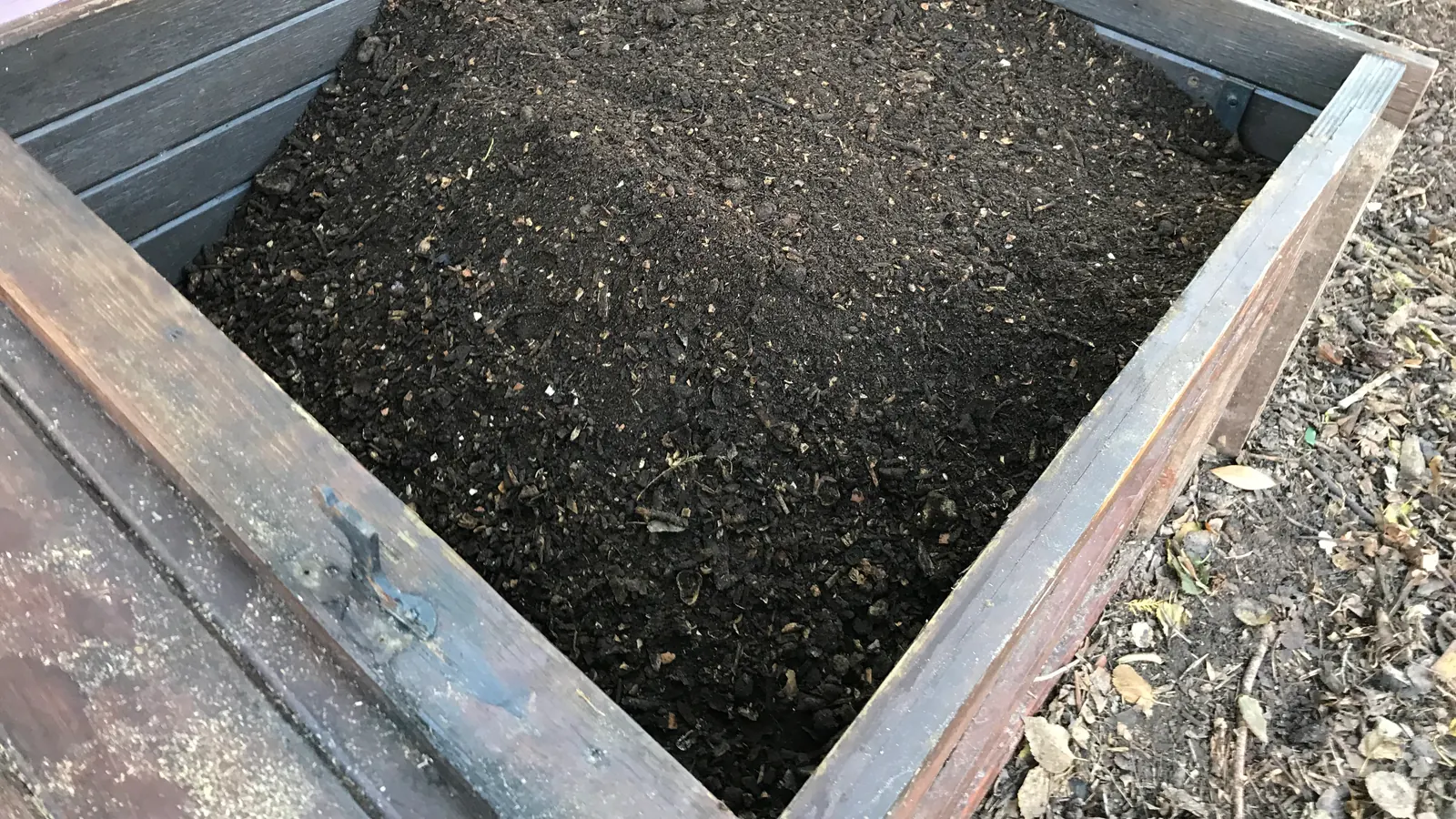
For homemade material, EPA describes finished compost as dark, loose and crumbly with an earthy smell, after a curing period once the heat has died down. EPA’s home composting guidance Those cues separate finished from fresh. They do not prove safety or maturity.
With bagged or bulk compost, questions do more than looking:
- What went into it: yard trimmings, food waste, manure?
- Is this batch meant for garden beds, lawn topdressing or blending?
- How fine is it screened? A coarse product will not spread through turf.
- Is there a recent analysis, and can someone explain it?
- Can you look at the load first, and what happens if the delivery is not what you saw?
Oregon State’s guide also suggests checking moisture before buying: over 60 percent moisture is clumpy, under 40 percent is dusty. Skip anything with visible trash. Color and smell cannot tell you whether weed seeds, pathogens or herbicide residue are present.
If an analysis comes with the load, remember that the lab’s method shapes the numbers. Oregon State’s compost-analysis guide explains that extraction methods affect results, so values from different methods cannot be compared directly. A report describes the compost, not your soil, and a limit lifted from a growing-media chart may not apply to the test you have. What you want from it is an answer: suits this job or not, how much, and any reason to hold back.
Working out the volume
Cubic feet equal length in feet times width in feet times depth in inches, divided by 12. Divide by 27 for cubic yards. For irregular beds, split them into simple shapes and add the areas first.
A 4 by 8 foot bed at 1 inch needs about 2.7 cubic feet. A 10 by 10 foot area needs about 8.3 cubic feet at 1 inch and about 16.7 cubic feet, or 0.62 cubic yard, at 2 inches. Bag sizes vary, so read the volume on the bag, and plan to use the depth you calculated rather than spreading whatever is left.
Bags suit a few small beds even at a higher unit price. A bulk load makes sense for larger areas if you have somewhere to drop it that does not block a drain or a shared access, and a way to move it.
Putting it on
In a new in-ground bed, spread the full amount across the whole area and mix it in before planting, rather than packing it into individual holes. In a planted bed, work around the roots and keep it off stems and crowns. Note where it went. If half a border got compost, the next soil sample will make more sense for it.
On a lawn, use fine, screened material and keep within that quarter-to-half-inch limit. Burying turf under a bed-depth layer smothers it. Try a small area first if you have not used the product.
In containers, compost can be one ingredient in a formulated mix and is not a substitute for it. Compost does not replace watering or guarantee drainage, so if plants struggle, diagnose before doubling the dose. Keep bag labels or the delivery note with your garden records, so next season you know what went on.
Oregon State warns against filling raised beds with compost alone, and potting mix exists for pots.
Written from manufacturer and retailer information and general garden practice. GardenHelm has not physically tested the products discussed here. How we choose products