Vertical Gardens: Choose a System You Can Grow and Maintain
Pole beans on a trellis and an irrigated living wall are both vertical gardens. Start with where the roots live, then check light at each level and how water reaches every pocket.
By GardenHelmPublished 5-minute readMore in Planters & Containers
In this guide
We may earn a commission from links on this page, at no extra cost to you. How this works
A trellis of pole beans and a modular living wall are both vertical gardens, yet only one of them keeps its roots in the ground. That single difference drives nearly everything else: how much soil each plant gets, how water reaches it, how heavy the wall becomes and who has to climb a ladder to replace a dead plant. Our growing guides help with the crop plan that goes with the structure. Pick the root arrangement first and the number of planting pockets last.
Where the roots live
| Arrangement | Roots grow in | Watch for |
|---|---|---|
| Climber on a trellis | A ground bed or container at the base | Root space, mature vine size, a strong enough support |
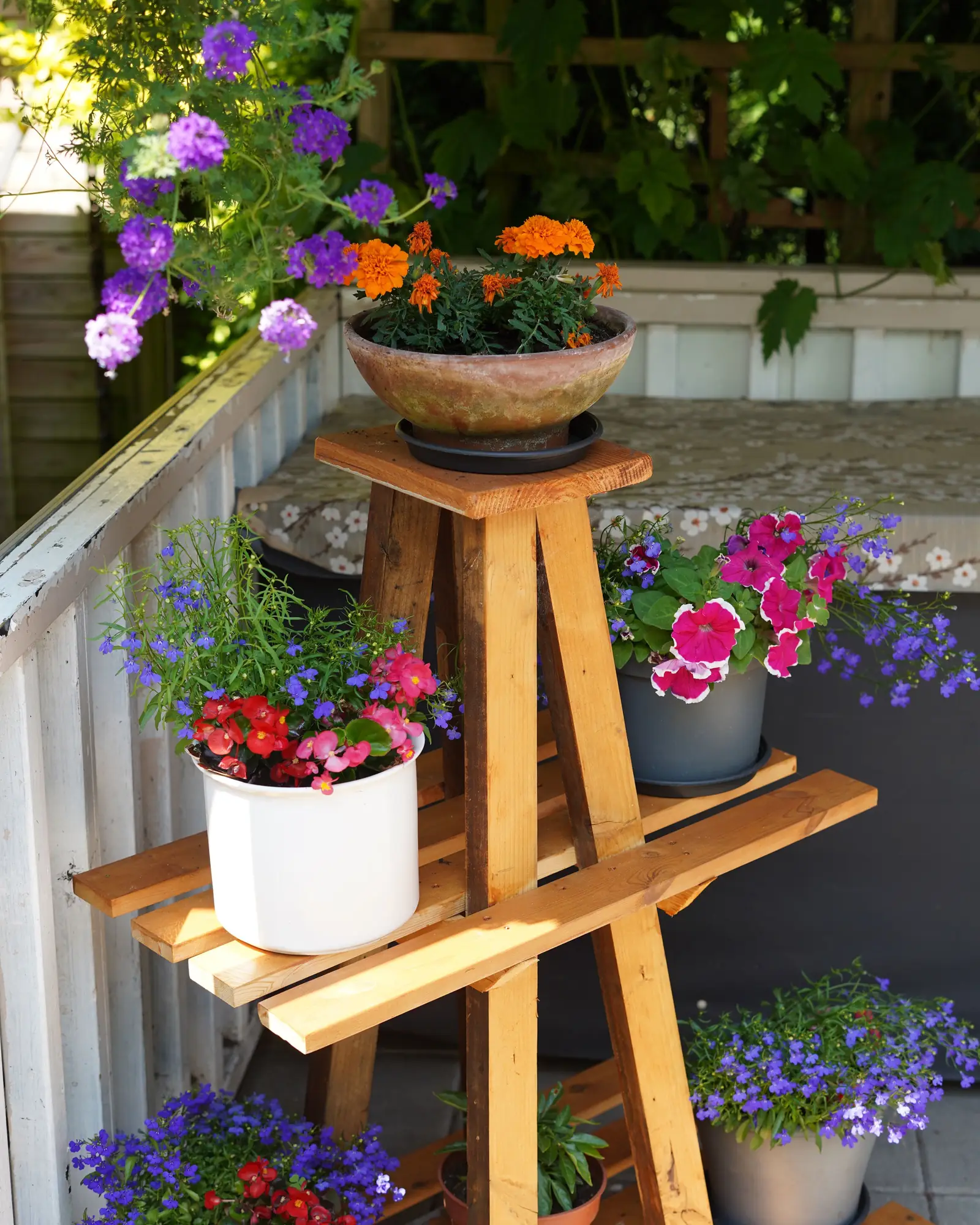
| Pots on shelves or wall brackets | One container per plant | Access to every pot, and where drainage water lands |
| Stacked planter | Compartments at several heights | Actual volume of each compartment, and how water gets to the lower ones |
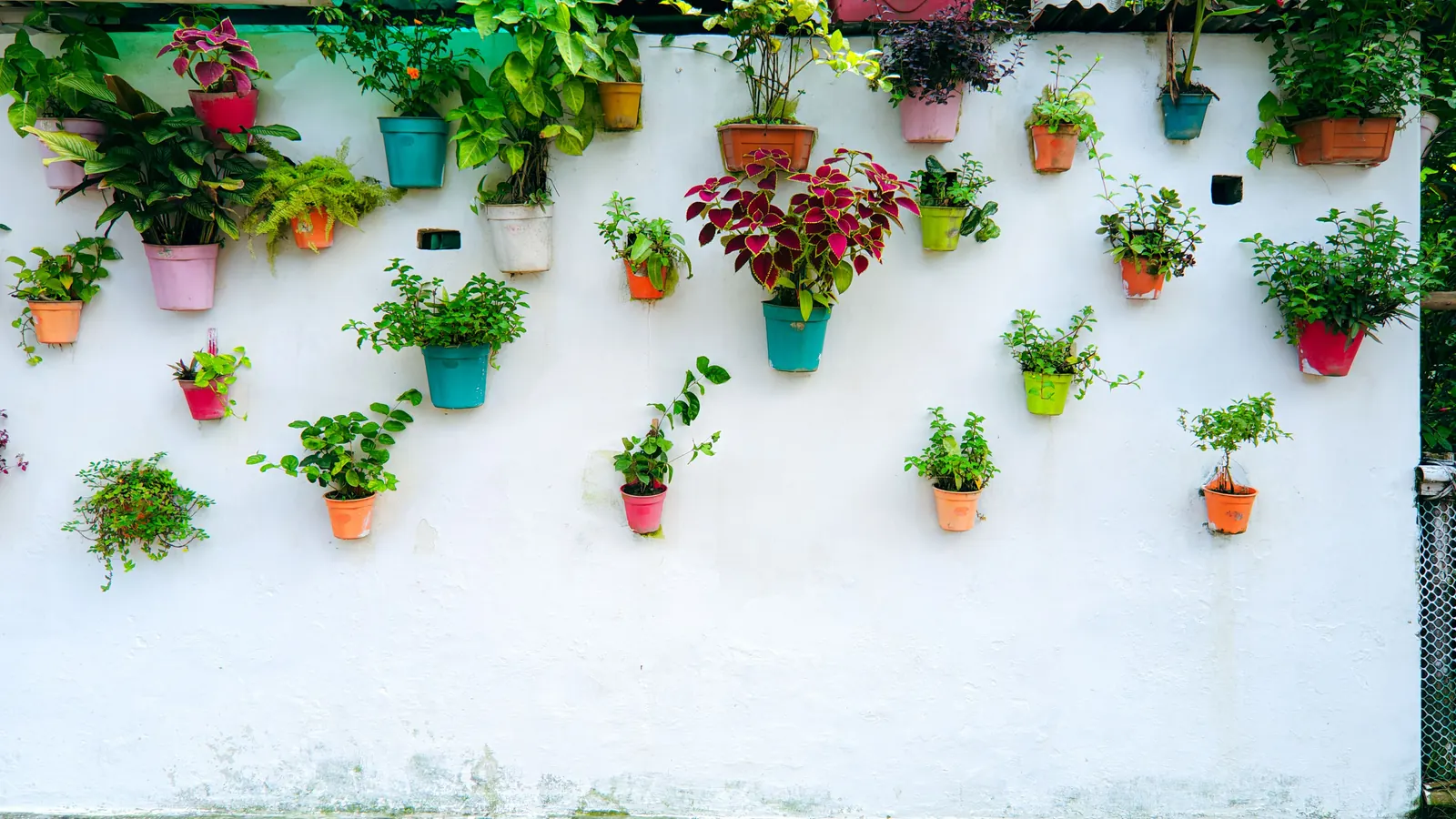
| Living-wall modules | Small pockets across a panel | Irrigation, replacement access, protection of the wall behind |
| Hydroponic tower or frame | A soilless system fed with nutrient solution | Reservoir care, nutrients, the system’s own instructions |
The RHS separates indirect greening, where climbers grow up a wall clad with wires or trellis, from living-wall systems built from planter boxes or felt fixed to the wall. It says living-wall systems often need irrigation, usually connected to drip lines, and that large installations may need professional fitting and maintenance. For smaller budgets it points to grow-bag-type products for walls and small panels that can be extended over time, planted with young stock. A wall of foliage often takes more upkeep than a trellis of beans.
Hydroponic and vertical describe different things, since a plant can grow hydroponically in a low container and a tall stack can hold ordinary potting mix. University of Minnesota Extension’s small-scale hydroponics guide covers the water, nutrients, plant support and light a system needs, and a tower’s shape removes none of them.
Plants and the room they need
For food, Illinois Extension names pole beans, peas, cucumbers, squash and gourds as crops to train up a support, with fences, poles, wire cages and trellises as the options. They differ in season and weight, so choose the variety and plan for its mature size and your local planting window. The seed packet page gives both. Botanical Interests lists its Blue Lake FM-1K pole bean seeds as 5- to 8-foot vines ready in 66 days, sown directly outdoors 1 to 2 weeks after your average last frost once the soil reaches at least 65°F, and not recommended for starting indoors. A support for that variety should reach about 8 feet and be in place on sowing day. A climbing bean in a proper bed and a compact herb in a small pot are different projects. A shallow wall pocket takes herbs, greens and young transplants; a full-size fruiting vegetable usually needs generous soil volume.
Illinois advises relating container size to the plant’s mature size and its water needs. Apply that to every compartment: a decorative shell, reservoir or tapered end may take volume the roots cannot use, and several small pockets add up to nothing like one big root zone for a vigorous plant. If the maker gives no usable volume per planting position, you have an unanswered question about whether the system suits the plant. For trellised containers, Illinois notes that supports go in before planting and should match the plant’s vigor, and that a growing vine changes the wind exposure and stability of the whole assembly. Container size guidance adds that square pots are the most stable and that exposed balconies, rooftops and decks are especially prone to wind.
Light at each level
Stand where each plant will sit. An upper tier shades the one below, and an overhang can leave one part of a wall sheltered and another in strong afternoon sun. Watch the spot through a normal day. The RHS suggests choosing shade plants if a wall gets less than half a day of midsummer sun and picking plants with similar light and moisture needs, which makes care simpler. A wall shaded by a deciduous tree in summer may get far more light after leaf fall, so seasonal plantings and permanent ones call for different plans.
Keep the first layout flexible with removable pots. Moving a plant works better than forcing a dim lower position with extra fertilizer, and leaving a few spaces empty shows how the foliage fills out.
Weight and mounting
The weight of the finished display is soil, water, plants and hardware together, and most of it appears only after the first watering. Water alone is about 8 pounds a gallon. Plan the fixing for the wet, fully grown planting, not the empty frame, and use the maker’s mounting instructions for the exact system. A convenient fence or thin wall may be far weaker than it looks. Where the load or the wall construction is uncertain, bring in a qualified installer or engineer, and on a balcony or rooftop remember that Illinois Extension advises consulting a building architect about weight limits.
Water that reaches every pocket
Gravity moves water down a stack but rarely wets every root zone evenly. Check the mix at several heights, since water in the lowest tray says little about the pots above it. For ordinary containers, water the mix thoroughly and let excess leave through the outlet; University of Minnesota Extension explains that container watering shifts with weather, plant growth and pot size and warns against standing water around roots.
Decide where the runoff goes before installing. It should not run unseen behind a panel, pool against a wall or cross a walkway, and a drip tray you cannot reach is a future chore. With an irrigation kit, confirm which compartments it serves and how you will see whether water arrived. A hydroponic system runs on its own nutrient and cleaning instructions, so do not give it a potting-mix feeding routine.
Maintenance once it fills in
A failed plant in the top row is the test of the design. Can the module come out, can you reach its fasteners and water line, and will mature foliage hide the connections you need to inspect? Run a small section through several watering cycles before expanding, looking for leaks, awkward reaching and plants shading each other.
At season’s end, decide what each part does: annuals come out, perennials stay in their pots or move, and irrigation and removable panels may need winter protection. Plan that for your climate and the materials, because a plant that is hardy in the ground may fare differently in a pocket on a wall.
Written from manufacturer and retailer information and general garden practice. GardenHelm has not physically tested the products discussed here. How we choose products