Tower Garden Guide: Growing Systems, Crop Choices and Daily Care
A soilless tower feeds roots with nutrient solution; a stacked planter holds potting mix. Know which you are buying, then plan the spot, the crops you will eat and the weekly upkeep.
By GardenHelmPublished 6-minute readMore in Planters & Containers
In this guide
A vertical tower in the garden can be either a stack of planters or a plumbed hydroponic system, and the second kind brings a pump, a reservoir, nutrient chemistry and an outlet near water into your routine. Tower Garden is also a specific brand with its own parts. Work out which kind you are buying before you compare prices, because the household chores differ more than the footprint does.
Manufacturer documents below serve as examples of one maker’s design, and GardenHelm has not tested any of them.
What happens inside a soilless tower
In a recirculating vertical hydroponic arrangement, nutrient solution is pumped up and trickles back down to a reservoir. Oklahoma State University Extension’s vertical tower guide explains this top-fed, gravity-return approach and gives one construction design, which is an example and not the spec for a retail tower. Aeroponic towers mist roots instead of washing them, and the pump, timer and root-space details differ by model. That is why replacement pumps and parts match by model, not by the word hydroponic.
| System | Where the roots grow | What to ask |
|---|---|---|
| Stacked potting-mix planter | In pockets of growing mix | How does each tier drain, and can you reach the lower pockets? |
| Recirculating soilless tower | In ports fed by nutrient solution | How are solution, pump and root space managed? |
| Tower Garden branded system | In the manufacturer’s tower assembly | Which model, growing guide and accessories apply? |
Trading soil pots for a tower swaps hauling and watering for mixing solution, monitoring and cleaning reusable parts. Decide which of those you will actually do.
Reading the bundle
The Tower Garden HOME assembly guide shows the reservoir, pump, timer, tower sections, planting baskets and water monitor, and treats the LED grow-light kit as optional. It shows an access port into the reservoir and says not to plug in the pump timer until assembly is finished and the reservoir is filled.
Use those details as questions about any bundle. Is the pictured lighting included? Can you reach the reservoir without disturbing established plants? Are seed-starting supplies provided? The manufacturer’s growing-guidance index separates the HOME and FLEX assembly documents and their accessories, so match the document to the model on offer, since a cage, extension or lamp for one may not fit the other.
Compare bundles on four lists: supplied equipment, optional equipment you will need, recurring supplies and replaceable parts. Only with those lists filled in can you set a bare tower against a package with lights and starter supplies. Pull current prices from the seller for the exact configuration.
Power, water and placement
A pump and a reservoir share a room with an outlet, which is the safety issue to settle first. Plug pumps and lights into a ground-fault circuit interrupter (GFCI) outlet or a GFCI adapter, route cords so that any drip runs away from the outlet and keep timers and power strips off the floor and above the reservoir. A tripping GFCI is a warning to stop and find the fault. Outdoors, use a weatherproof outlet; the National Electrical Code requires GFCI protection for outdoor receptacles at dwellings, and an electrician can add one where there is none. Follow the manufacturer’s electrical and placement instructions, and do not rig your own wiring around water.
Leave room for the mature plants, the light fixtures and you. A tower tucked between furniture may fit while empty and crowd you once leaves spread beyond the ports. Mark a floor outline larger than the base, stand where you will refill the reservoir and reach the top ports, and confirm you can inspect both sides. Keep lights out of the television line and the bedroom, and plan a place to take the system apart for cleaning.
Outdoors, the question is light and season for the intended crops. A shaded corner stays shaded however handy the outlet is.
Choosing crops
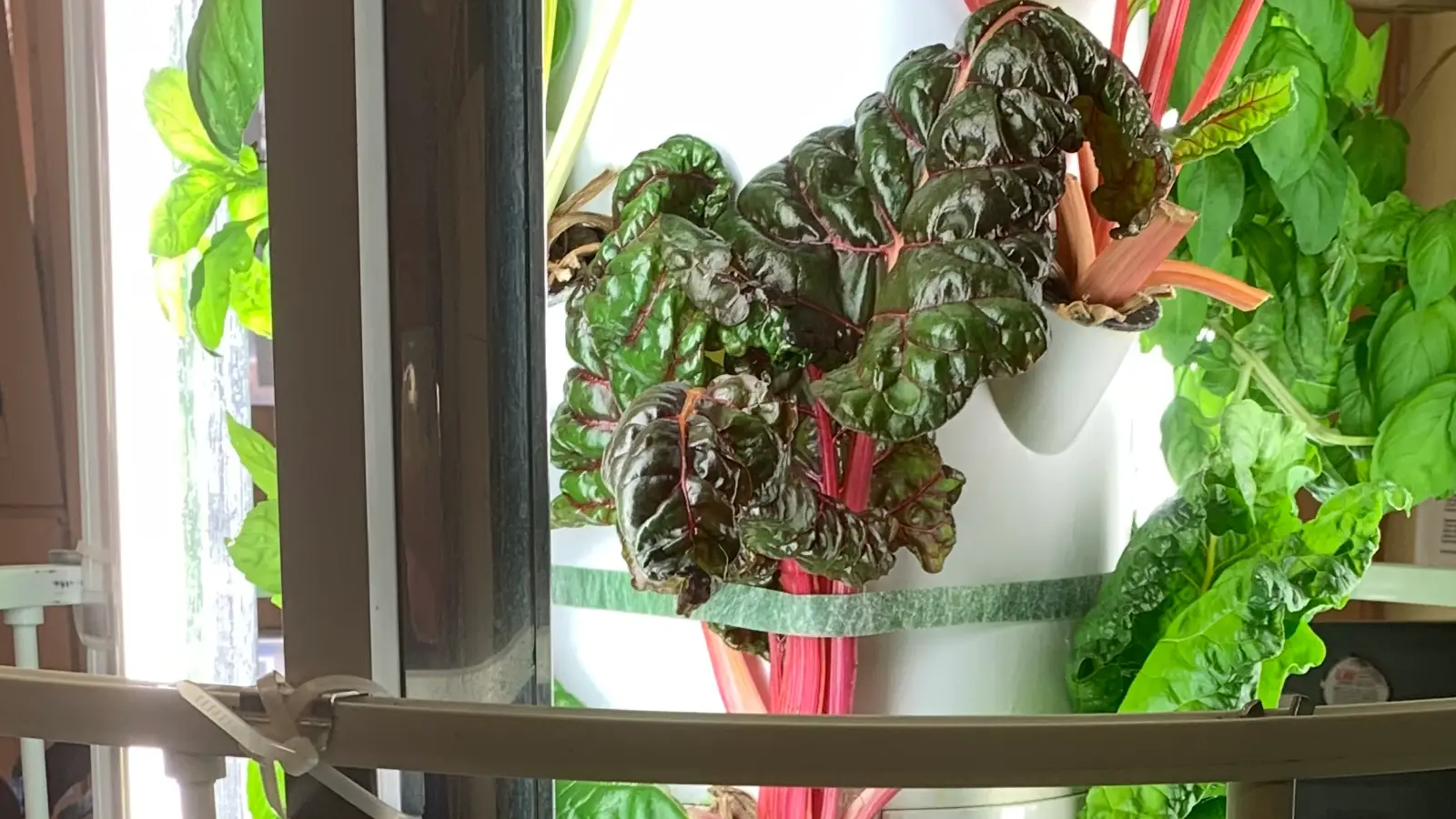
Pick a few crops you will eat and think about how their mature shapes share the tower. A kitchen that uses herbs several times a week has a different goal from one wanting large salad harvests. Tower Garden’s crop guide for indoor and outdoor growing lists lettuce, basil, kale and Swiss chard among its examples. Treat the list as a starting point: a large plant in every port at once will crowd the tower, and a variety has to suit your light.
For a first planting, give most ports to herbs for cooking and leaves for sandwiches and keep a few for an experiment. Support fruiting or spreading crops only with the equipment’s approved accessories, and check the mature size before planting. A harvest notebook is a better judge of value than port count.
The weekly routine
The Tower Garden maintenance guide calls for daily plant and water-level checks, weekly pH checks and a check after each refill, and addresses roots near the pump and keeping the shower-cap openings clear. Those are one maker’s tasks. Mix solution to the nutrient label and your system’s growing guide, and do not carry a dose or pump schedule over from another system.
Tie the checks to something you already do, such as looking at the tower while the kettle boils. A short notebook of refill dates, harvests and solution checks helps you spot a change. Keep nutrients and test equipment together with their labels on, because supplies you cannot find get replaced by guesses.
Before a trip, brief a helper who can follow the instructions and recognize trouble, and show them the reservoir opening and the supplies. A running timer shows power, so the helper should also look at each level to confirm water reaches the plants.
When plants look wrong
Note what changed and which plants are affected. One damaged leaf, every plant at one port and the whole tower wilting are three different problems, so avoid changing several settings at once. The manufacturer’s troubleshooting guide names level placement as one consideration for leaks, lists roots or debris as possible pump obstructions and tells owners to unplug the pump before the filter cleaning it describes, and warns that moving established outdoor plants indoors can bring pests along. Unplug before you put a hand near the pump, whatever the brand.
For nutrient management, University of Minnesota Extension’s small-scale hydroponics guide explains pH and electrical conductivity, which measure different properties of the solution, so both are worth tracking. Use crop-appropriate targets from your system’s guide.
What it costs to run
Count the tower, lights, supports, nutrients, seed-starting supplies, replacement parts and electricity, whichever apply to your setup. For electricity, multiply the equipment’s rated kilowatts by hours of use and your rate. As arithmetic only, a 100-watt light on 12 hours a day uses 1.2 kilowatt-hours daily; that is an example, and the lamp in your bundle has its own rating and schedule.
A tower that supplies herbs you use often can be worth keeping even if it barely dents the grocery bill, and enjoyment and learning are legitimate reasons to garden. A harvest nobody eats saves nothing. If you are unsure, start with a stacked planter or a few pots from our growing guides to learn which crops you actually use before you commit to a pump, a reservoir and weekly solution checks. We would buy the tower only once you are sure you will do the daily look and the weekly pH check.
Written from manufacturer and retailer information and general garden practice. GardenHelm has not physically tested the products discussed here. How we choose products