Small Greenhouses: Choose Usable Growing Space in a Compact Yard
A compact walk-in, a shallow wall unit and a covered rack are very different spaces. Count the useful growing positions, leave room for plants at full size and plan ventilation.
By GardenHelmPublished 5-minute readMore in Greenhouses
In this guide
We may earn a commission from links on this page, at no extra cost to you. How this works
University of Georgia Extension’s greenhouse guide says ridge vents should be about one-fourth of the floor area, with side vents roughly the same. That is a lot of opening for a compact structure, and it points to the main challenge of a small greenhouse. Squeezing one into the yard takes a tape measure; keeping the air inside tolerable in July takes vent area, and a small volume has little air to buffer a sunny afternoon. Plan the bench layout and door position around that.
UGA’s greenhouse heating, ventilation and cooling publication is written for larger houses, so treat its figures as a yardstick. It describes warm air leaving through ridge vents while cooler air enters along the sides, and says houses with only side vents depend on wind and are usually unsatisfactory. It says roof vents should open to about 60 degrees, and that roll-up screens can cut incoming radiation by half, and paint-on shading compounds are another option, at the cost of light the plants also want. Its worked example puts one full air exchange per minute at roughly an 8 degree Fahrenheit rise above outside temperature. Count the vent area of any kit you consider and compare it with the floor area.
What counts as small
| Format | Strength | Limit |
|---|---|---|
| Compact walk-in | Room to stand, bench and move | The aisle eats part of the advertised floor |
| Shallow wall unit | Uses a sunny wall or fence line | You may reach in rather than enter, and door movement matters |
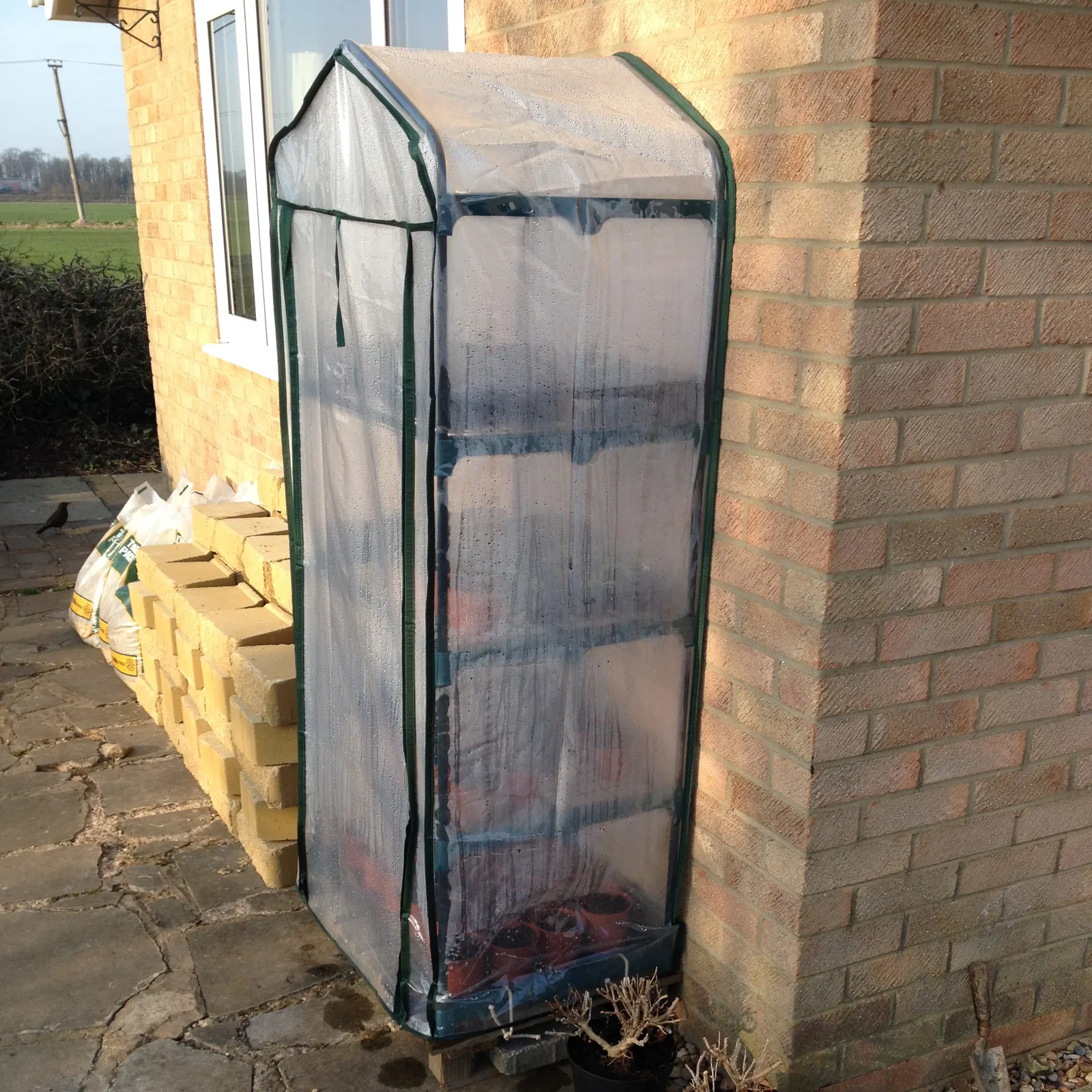
| Covered shelving | Smallest footprint for trays | Shelves cap plant height and block airflow |
| Low cold frame | Cheap protection for low crops | Different working position and a venting routine that depends on you |
The smallest structure that supports a clear plan is usually the right one. A larger format bought without a plan just moves the access problem to a higher price.
Measure the usable space
Draw the actual interior, not the roof overhang or the base label. Mark the opening, any bracing that intrudes, and the path you need to reach plants, then add benches at their actual size with your trays or pots on top. Floor area and tray capacity are different numbers: measure your own trays, lay them out on the drawing and count what fits with room to lift one without moving the rest.
Plan for the plant at the stage you intend to keep it, not its size on delivery day. Seedlings that move outdoors after hardening off need less room than plants kept through the season. For a climbing crop, compare its trellis needs with the structure’s supported accessories and headroom; a roof bar you can tie to is not necessarily rated for a loaded trellis or hanging containers. A removable bench adapts to different seasons more easily than a fixed one that blocks the door or vent.
Light, heat and who is watching
Check the site’s light during the months you will use the greenhouse, since a spot that is sunny in May can be shaded by trees or a roofline later. UGA lists light, existing shade, utilities and suitable environmental controls among site factors.
An automatic vent opener handles one job, opening a vent as the temperature rises. It will not reposition a shade cover or catch every overheating event, so decide who will check conditions when you are away. UGA mentions battery-powered alarms that warn when temperatures leave an acceptable range, and suggests two or more small heating units rather than one large one, so a single failure does not leave plants unprotected.
If you add heat, vent combustion gases outside. A University of Kentucky Extension publication prefers vented heaters for greenhouses, says unvented ones carry a high risk of plant damage from fumes in cold weather, and states that carbon monoxide is always present in flue gases and is very dangerous to people working inside. In a tight little greenhouse that matters.
A wall-format example
Bloomcabin’s aluminum mini wall greenhouse is a shallow format made for wall or fence placement. Its US page describes an aluminum frame, a built-in aluminum base, a sliding door, roof-window ventilation and glazing choices including polycarbonate and 4 mm tempered glass, with a 69.7 inch ridge and a 50 inch door; a double sliding door is offered only on walls at least 89.8 inches wide. We have not tested it. The page gives no depth or floor area and contradicts itself on the number of sizes (14 in the description, 3 in the specifications), so the tray count from the section above cannot be done until you have the footprint of your version in writing. Its year-round growing language is marketing, and no greenhouse holds a set temperature without a heating plan suited to your climate.
The two wall models leave you with opposite gaps. Bloomcabin’s Limited Edition mini wall version publishes three sizes from 8 to 15 sq ft, enough to start a tray layout, but its page does not mention roof vents. The standard model lists roof vents but no size. With UGA’s vent-to-floor ratio in mind, ask for the vent opening dimensions on the standard model, and ask whether vents are fitted or available on the Limited Edition, before either goes on a sunny wall. With a 50 inch door on both, these are shelves you tend from outside, for seedlings, herbs and trays rather than tall crops.
Installation and rules
Ask what base or supporting construction the structure needs, what the package includes and how it is anchored. Add delivery access, assembly space and a way to reach the glazing for cleaning, because a narrow side yard can suit the finished greenhouse yet make installation awkward. Local rules for the location and type of structure apply even to small or portable greenhouses, so ask the local authority before you order.
Before buying, walk through one session in the layout: carry in a tray, set it down, water, reach the far side and leave without moving half the plants. If that works on paper, the space will likely work in the yard. Our greenhouses hub covers frame and placement choices.
Written from manufacturer and retailer information and general garden practice. GardenHelm has not physically tested the products discussed here. How we choose products
Other options to consider
Selected on the points above from retailer specifications. Check the retailer for current details.
We may earn a commission from links on this page, at no extra cost to you. How this works
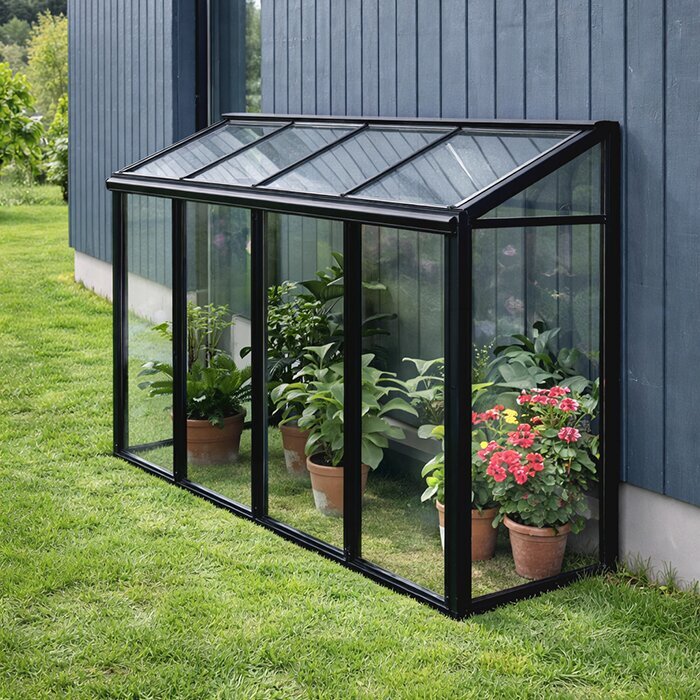
Bloomcabin, Lean-To Greenhouses
Aluminum Mini Wall Greenhouse
From $3,595.93
at Bloomcabin. Retailer feed of