Outdoor Mini Greenhouses: Useful Shelter, With Limits
A clear cover lets the sun in; it does not keep plants at the right temperature. Measure trays and shelves, vent on warm afternoons and do not count on it to stop frost.
By GardenHelmPublished 6-minute readMore in Greenhouses
In this guide
We may earn a commission from links on this page, at no extra cost to you. How this works
An outdoor mini greenhouse is good at three jobs: holding a few trays of seedlings while they get used to outdoor life, keeping a small collection of plants together on a patio, and giving tender plants a little shelter from wind and rain. It is not good at keeping a steady temperature. A clear cover heats up fast in sun, even on a cool day, and without a heat source it offers only modest protection on a frosty night. Buy one if you can open it on sunny mornings and close it in the evening.
Three different things called “mini greenhouse”
| Type | Good for | Look at |
|---|---|---|
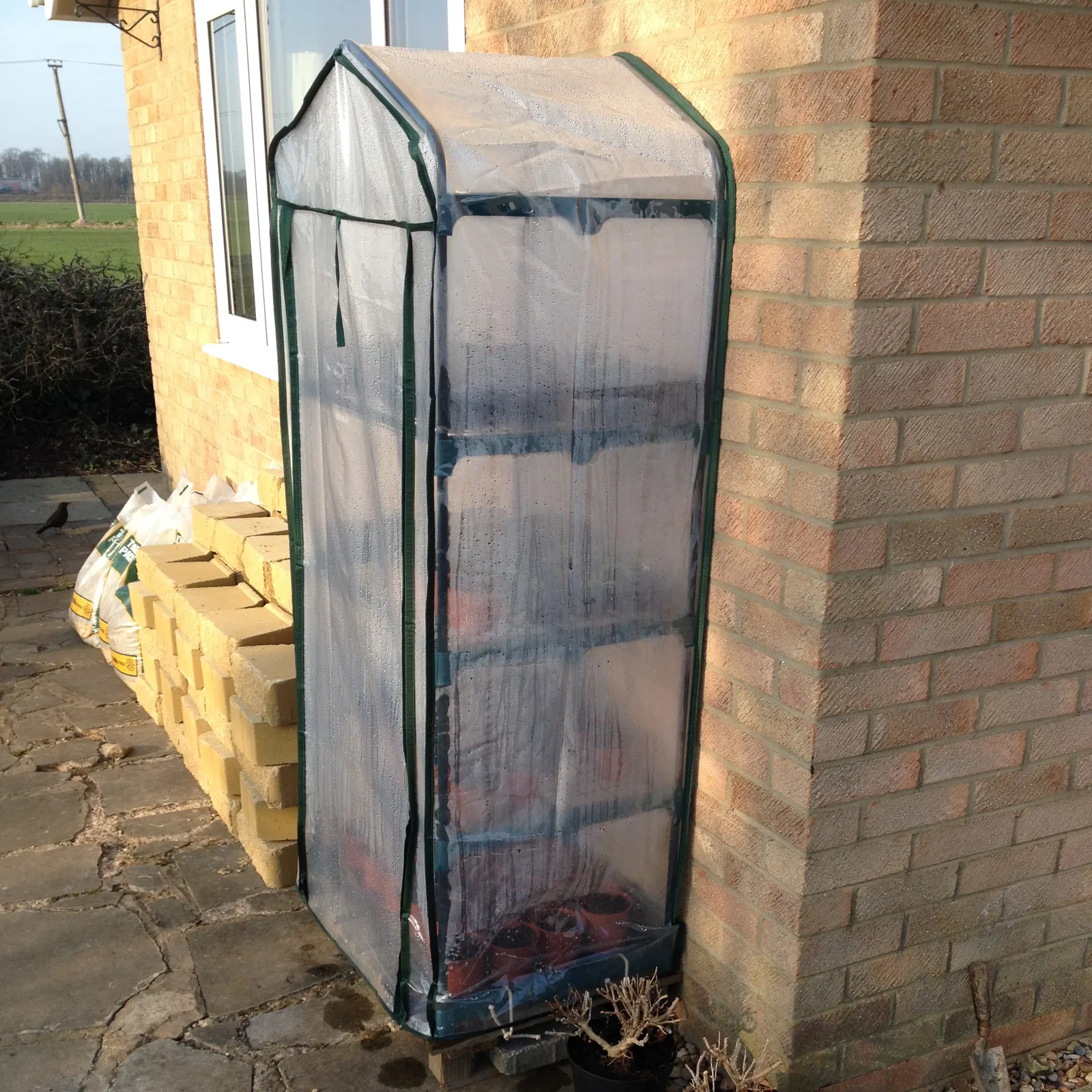
| Shelf frame with a zip-up cover | Seedling trays on a patio | Shelf spacing, shelf weight limits, how the door flap ties open, anchoring, replacement covers |
| Low cold frame with a hinged lid | Hardening off and low crops | Plant height, how far you reach, propping the lid open |
| Compact rigid wall greenhouse | A permanent lean-to feature | Foundation, wall fixing, glazing, vents |
A rigid wall model is a different category, not just a sturdier rack. Bloomcabin’s Aluminum Mini Wall Greenhouse, for example, lists an aluminum frame, glass or polycarbonate glazing, roof windows and a sliding door: an installation project, not a patio accessory.
Here we focus on outdoor covered shelf units and cold frames. Indoor humidity domes and terrariums are another product again.
Size it to your trays, then to grown seedlings
Lay out the trays and pots you will actually use and measure their outside dimensions, rims and handles included. Compare that with the usable shelf size and the door opening, not the advertised footprint.
Then picture the plants a few weeks later. A shelf that clears a freshly sown tray may be too tight once seedlings are several inches tall. If shelves can be removed, check whether the frame still needs them for support.
Wet soil is heavy. Find the stated shelf weight limit and stay under it; laying an extra board across a wire shelf does not make the frame stronger. And leave room in front to unzip the cover, slide out a tray and water without stretching.
Venting is the daily job
The Royal Horticultural Society’s ventilation and shading guidance recommends watching greenhouse temperatures and using ventilation and shade as needed, and notes that small greenhouses often have little ventilation for their area of glazing. A zip-up shelf unit is the extreme case.
Check that the door flap ties back securely without flopping onto the plants and that you can work the zipper easily. Put a maximum-minimum thermometer inside, shaded as its instructions say, and look at both the afternoon high and the overnight low for a week before trusting it with anything valuable. One comfortable morning reading hides both extremes.
Be realistic about your schedule. If you leave at 7 a.m. and get home at 7 p.m., a cover you must open by hand will cook seedlings on a surprise sunny day. Leave it partly open on uncertain days, or choose a different setup.
It will not reliably stop frost
University of Missouri Extension describes a cold frame as an unheated structure and distinguishes it from a heated hotbed. A mini greenhouse without a designed heat source works the same way: it shelters plants without heating them. On nights forecast near or below freezing, move tender plants indoors or into a garage.
Do not improvise heaters, heat lamps or extension cords inside a plastic cover. If you need heated growing space, buy equipment and a structure designed for it and install them as instructed.
Part of hardening off, not all of it
University of Minnesota Extension recommends exposing indoor-raised seedlings gradually to outdoor light, wind and temperature changes, and names cold frames as one tool for the transition. The point is gradual exposure: opening the cover more each day and leaving plants out longer. Moving trays straight from a windowsill into a sealed, sunny cover just swaps one sheltered environment for a hotter one.
Label trays and note which group started when. Seedlings that have just emerged and plants ready to go into the garden need different treatment, even if they share a shelf.
Stake it before the first windy day
Covered shelf units are light and catch the wind like a sail. Follow the maker’s instructions for anchoring and for what to do before strong winds. Heavy pots hung on the frame or a tie to a random railing will not hold it in a gust. If your patio or balcony cannot take the required fixing, pick another spot or product.
Keep it out of walkways and leave room to check the back and sides. Empty it before moving it.
Covers wear out
The cover, zipper and ties do the work, and UV gradually weakens them. Before buying, check whether a replacement cover is sold for that exact model. Two four-tier units can have different shapes and door layouts.
At the end of the season, clear out plant debris, clean and dry the parts as directed, and store them with the manual. During use, ease the zipper rather than forcing it under tension, and check the back corners and lower shelves for pests when you water.
Is it the right size for you?
A mini greenhouse works when the collection is small enough to inspect and move, it can be anchored securely and someone can open and close it every day. It stops working when plants outgrow the shelves or the plan depends on steady conditions it cannot hold. The greenhouse hub covers larger structures.
When it stops working, the fix depends on what failed. If you simply need more shelf height or more trays, a second covered unit, or a cold frame for the last stage of hardening off, is the simpler step and keeps everything movable. If the fabric cover is the problem, and you have a sunny wall or fence that will take a fixed structure, a rigid wall greenhouse is the next format up. Bloomcabin’s Aluminum Mini Wall Greenhouse lists glass or polycarbonate glazing, roof windows, a sliding door and a built-in aluminum base, with a 69.7-inch ridge and a 50-inch door, so you still tend it from outside. Its page gives no depth and names 14 sizes in one place but 3 in its specification, so get the footprint of your version in writing before you lay trays against it. Without a heating plan it is still an unheated structure, so the frost advice above applies to it too.
Can I grow tomatoes in a mini greenhouse?
You can start tomato seedlings in one. Grown plants quickly outgrow the shelf height and root space, so plan to move them to the garden or a larger structure.
Written from manufacturer and retailer information and general garden practice. GardenHelm has not physically tested the products discussed here. How we choose products