Pop-Up Gazebos: Compare Folding Frames, Screen Rooms and Pack-Up
A pop-up is shelter you set up, use and pack away. Compare that whole routine, including takedown and drying, before the roof shape or the advertised setup time.
By GardenHelmPublished 4-minute readMore in Outdoor Structures
In this guide
Most pop-up gazebo shoppers compare setup times. The numbers that matter more are what it takes to hold the shelter down, how much it weighs in its bag, and where it will dry out after use. A pop-up is a temporary shelter by design, and the good ones come with instructions that say so plainly.
Retailers use “pop-up gazebo,” “canopy” and “screen room” for different designs, so read the exact model’s manual. This guide covers portable folding shelters; our outdoor structures hub covers the broader backyard-shelter choice.
Folding frames and hub screen rooms open differently
An accordion-style canopy frame and a hub-style shelter do not unfold or pack the same way. Vantage’s instructions show partner-assisted opening, corner pull pins, adjustable legs and a separately installed top, and list a frame, top, roller bag and spikes (Vantage instructions). Extreme Canopy’s instant canopy manual likewise recommends at least two people for setup and warns to keep clear of overhead power lines, and to keep flame and heat sources away from the fabric (Extreme Canopy Quasar instructions). So plan on a helper, and never set one up under overhead wires.
Gazelle’s Complete G6 Tri-Tech kit is a hub design. The maker describes it as preassembled and lists a gazebo, two three-panel wind-panel packs and a separate footprint, with a stated floor area of 92 square feet. Its listing advertises setup in under 60 seconds, which is the maker’s claim for opening the frame, so allow extra time for unpacking, securing and furnishing it. Contents differ between G6 listings, so confirm what your version includes (Gazelle G6 kit).
Holding it down
This is the part to get right. Extreme Canopy’s manual says its canopy ships with eight steel stakes and four tie-down ropes, that these must always be attached, and that on hard surfaces weight plates, water weights or sandbags must be used and bought separately. It shows 33-pound sandbags, 22- to 33-pound water weights and 33-pound steel plates for the feet. Those figures are that maker’s own accessories, so treat them as one example. The same page says these hold-down methods maximize safety but will not prevent damage given how unpredictable weather is. Vantage requires its specified securing accessories too, and excludes windy or rainy conditions, heavy storms, lightning and unattended use. Neither document supplies a wind speed or ballast weight that carries over to other gazebos. Stakes will not hold in concrete or a deck, so match the hold-down to your surface before you buy.
Both makers treat these shelters as temporary. Extreme Canopy says canopies must be packed down in adverse weather such as storm, rain or wind. Lightning is the other half of that rule. The National Weather Service’s lightning guidance says open-sided picnic shelters and tents are not safe places in a thunderstorm and tells people to get to a safe building or a vehicle instead (NWS lightning safety). Keep a backup plan for the event, because a portable roof should never be the plan for weather its maker excludes.
Mesh, panels and the doorway
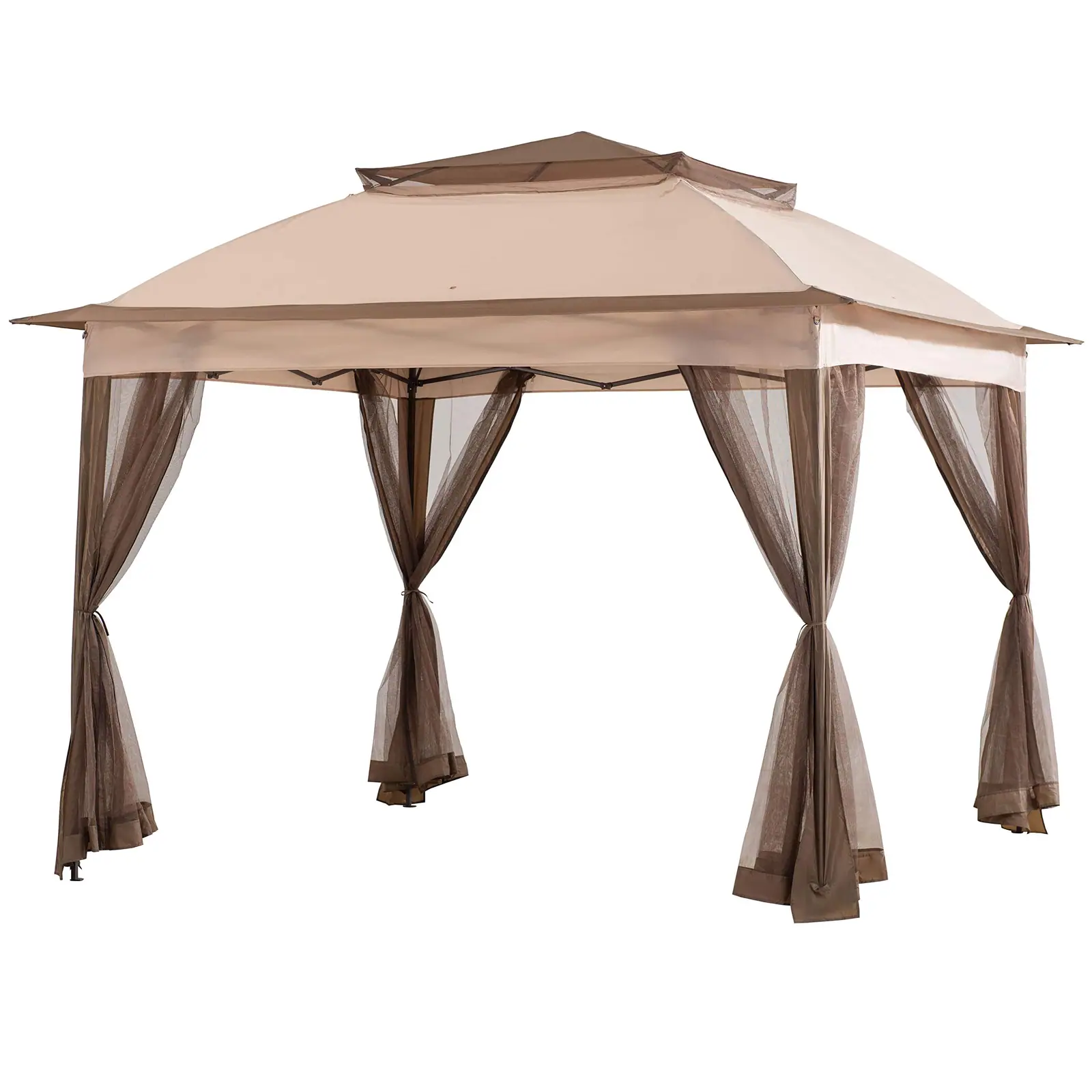
Study the actual panel arrangement, seams, lower edge and door. A photo with the curtains tied back cannot show the closed configuration, so ask which openings remain, how the entrance operates and which replacement panels fit. In the Gazelle kit, the removable wind panels are separate from the mesh structure and the footprint. A roof-only canopy will not keep insects out, and a “wind panel” or a waterproof-fabric claim does not replace the rules for the whole shelter. Skip improvised solid walls meant to make one model look like another in the photo, and add only accessories the maker permits for that frame.
Furniture and entrance
Mark the footprint, supports and door opening on the drawing, then place your furniture in it. A table that fits with the chairs pushed in may block the doorway once people sit. For dining, pull the chairs out and walk the serving route. For reading, try the chair fully reclined. A maker’s occupancy count tells you little about the room left around your table, cooler or mobility equipment, and fewer pieces often make a footprint feel larger than another enclosed section would.
Takedown, drying and the trip home
Measure the storage spot and the route from the car using the packed dimensions, including projections, and work out who carries the bag and any weights, stakes and panels. Wheels help on a workable route and stop helping at stairs.
Extreme Canopy tells you to let the canopy dry completely before it goes into its cover, to prevent mildew, and to keep tape, string and rope off the legs because they can jam the sliding sections. Vantage also requires drying before storage and cautions against pinching fingers when releasing the frame. Decide where the drying will happen before you buy, and keep the manual with the bag so replacement-part information is on hand.
Written from manufacturer and retailer information and general garden practice. GardenHelm has not physically tested the products discussed here. How we choose products