Plastic Planters: Choose the Right Pot for Growing, Display and Reuse
Plastic or clay is not the real question. Check the root space, drainage and whether the pot is made to live outside, and reuse old pots only if you know their history.
By GardenHelmPublished 4-minute readMore in Planters & Containers
In this guide
We may earn a commission from links on this page, at no extra cost to you. How this works
A plastic pot that looks fine in April can be cracking by its second summer if it was made for a nursery bench instead of a sunny patio. Maryland Extension warns that plastic not made for outdoor use can degrade, and its potting guide lists fading and brittleness among the behaviors of plastic and fiberglass containers. What you are buying is what the pot was made to survive, so look for a stated outdoor rating.
Outdoors: sun, heat and wind
The tell is the product description. A pot sold for outdoor use should say so, and “UV resistant” is a stated feature of that product, a delay in fading and embrittlement rather than a guarantee.
Color matters for roots as well. Maryland notes that dark containers raise the temperature of the growing mix and can injure young roots. A pale plastic pot, or one in a spot that gets afternoon shade, keeps things cooler.
Then there is wind. Plastic is light, which is its virtue and its weakness. Maryland points out that tall plants in light containers can be unstable. A wide base and a spot out of the wind help most. A fully planted tall pot on a balcony needs a plan before the first gust, since a falling pot is a hazard to people and property below.
Weight and moving
A big plastic planter is easy to carry empty and awkward once it holds wet mix and a plant. Handles molded into the rim are made for the empty pot, so lift a planted one from underneath or on a rated plant caddy. Our rule is to put it where it will live before filling it. If you want to rotate pots or shelter them in winter, a caddy beats repeated lifting.
“Rated” is the word to check. A caddy should state the pot sizes it fits and the load it carries, and the planted pot has to fall inside both. The Wagner Adjustable Plant Caddy at Plant Addicts publishes both: a base that adjusts to pots from 12.5 to 16.5 inches across, a 220 lb capacity, a rust-proof metal frame described for indoor or outdoor use, and two braked casters. Measure the foot of your planter, not the rim, before ordering; a wider base needs a bigger caddy. The listing also advises locking the brakes once the pot is parked, especially on smooth floors or slight outdoor slopes.
What “resin,” “recycled” and “stone look” actually tell you
Listings say “resin” for polyethylene, polypropylene and other blends alike. If you need a particular property such as cold tolerance, ask the seller for the polymer and its outdoor rating. A stone-look or terracotta-look finish describes the surface only.
“Made from recycled plastic” describes what went in. How long the finished pot lasts in sun and frost is a separate matter. So is disposal: a recycling code does not guarantee that your curbside program takes horticultural plastic, so ask your garden center or local recycler about take-back.
Match the pot to the job
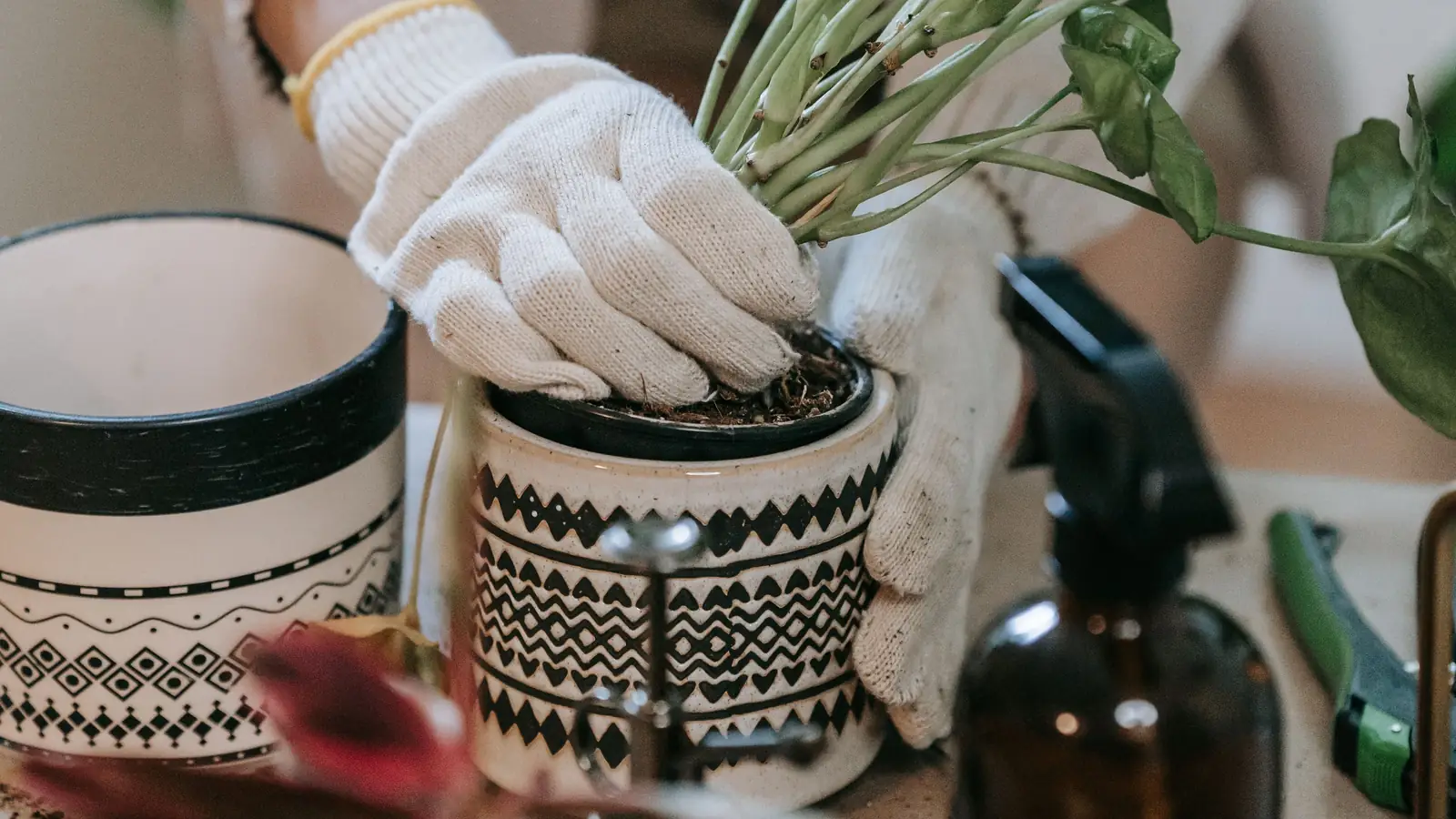
Nursery pots are for holding or transporting a plant, and for sitting inside something more decorative. Decorative planters with holes can be planted directly. Cover pots without holes need a draining pot inside; a sealed pot just holds whatever water goes in. Do not drill into a self-watering reservoir, a double wall or an insert judging by the outside shape; open holes only as the maker’s directions allow. A self-watering planter has its own reservoir and overflow, and its own setup directions.
Two planters with the same stated width can differ greatly in usable soil. A planter with a false bottom, an insert or a strong taper holds far less than its outside suggests. NC State’s container chapter stresses both depth and total volume, so size by what the plant needs.
Drainage works the same way as in any container. NC State advises against a layer of gravel, since it can leave water held in the mix above it. Turn the pot over before you buy and find the holes; if there are none, it is a cover.
Reusing and cleaning old plastic pots
Look over a used pot for cracks at the rim and base, sharp edges and plastic that crumbles when pressed. Cleaning cannot restore degraded plastic. For edible crops, Maryland advises against reusing vessels that once held paint, detergents or other chemicals, and a recycling symbol reveals nothing about a container’s past contents.
For an intact pot, scrub off soil first, because Minnesota Extension explains that remaining dirt weakens disinfectants and that used pots can carry plant pathogens. Then follow the disinfectant label for concentration, contact time and rinsing, and never mix cleaning chemicals. If the last plant had a disease, replace the pot and the mix.
Written from manufacturer and retailer information and general garden practice. GardenHelm has not physically tested the products discussed here. How we choose products