Metal Planters: Materials, Drainage and Heat Before You Buy
Metal can work well for plants if the pot has root space, drainage and suits the spot. Plan for heat on sunny patios, rust runoff from weathering steel and the right liner.
By GardenHelmPublished 5-minute readMore in Planters & Containers
In this guide
We may earn a commission from links on this page, at no extra cost to you. How this works
Extension sources do not agree on how metal pots behave. Rutgers says terra cotta or metal pots dry out very quickly in summer heat, while glazed ceramic, plastic or fiber do not; Maryland Extension groups metal with plastic as containers that dry more slowly than porous clay, wood or concrete. Neither source says why. One plausible factor is that “metal” covers everything from a thin galvanized bucket to a thick steel trough, with wall thickness, color and sun exposure all in play, so judge the specific planter and the spot you will put it in.
Listings also use “metal” loosely for a body, a liner, a stand or decorative bands around another material. Ask for the body material and finish, and for photos of the empty interior and the underside. They show whether there is a solid base, a removable shelf or an inner pot, and a tall outer shell can offer much less planting depth than its height suggests. Check whether the listing says the planter is meant for planting at all, or only as a cachepot for a nursery pot.
Heat, and what to do about it
Illinois Extension says temperatures fluctuate more in metal containers than in non-metal ones, dark colors absorb more heat than light ones, dark containers in intense summer sun can get hot, and small pots swing the most. It suggests lining a pot with foam or other waterproof insulation to protect roots from extremes of heat and cold.
Before buying a row of matching planters, stand where they will go on a hot afternoon and touch the wall briefly. Sun-heated metal can burn bare skin, so keep children and pets away from it, and if it is too hot to hold, the roots feel it too. Your options:
- A lighter finish, or a spot that gets shade after midday.
- A larger planter, so more soil sits between the hot wall and the roots.
- A plastic growing pot set inside the metal shell, which makes the metal a cover and lets the inner pot do the growing.
Keep any added insulation from covering drainage holes or eating into root room.
Galvanized steel, zinc and edible crops
Galvanized steel is steel with a zinc coating. For ornamentals it needs no special thought. For vegetables, University of Minnesota Extension says zinc may leach from the coating into a bed in highly acidic soil, below about pH 5, and that most Minnesota soils are neutral to alkaline and will not break the coating down. If zinc is a concern, it suggests a liner or stainless steel. Iowa State Extension adds that galvanized metal may leach trace amounts of heavy metals such as lead or cadmium, and that a soil test is the best way to find out whether contamination is a concern.
Those pages describe beds, but the soil-contact question is the same for a deep trough. For a salad or herb planter, a food-safe liner or inner pot settles it. A salvaged galvanized tub with an unknown history, or one that once held chemicals, is better kept for flowers.
Veradek’s US care guidance is one maker’s example of the same caution: its products are described as not food-grade certified, so ask any seller what “food safe” actually refers to.
Weathering steel and rust runoff
Corten-style steel is meant to rust, and the rust layer is the finish. The catch is that the first months of weathering can stain whatever sits underneath. Veradek’s guidance says its Corten products can stain the surface below during weathering and discusses sealing options; those directions belong to its products, not every weathering steel planter. Put it on gravel or soil, or in a drip tray, rather than on pale stone, concrete or a finished deck, until the surface has settled.
Treat rust elsewhere differently. Flaking edges, rust at a seam or a hole in a painted or galvanized planter are damage. That is the signal to line the planter, retire it for dry storage, or patch it with a product made for that metal.
Direct planting or a liner
A metal shell with no drainage is a cover. Illinois calls slipping a pot inside another double potting: lift the inner pot out to water, and empty any water that collects in the shell. A metal planter with holes can be planted directly, but a liner bag or plastic insert keeps wet soil off the walls, which also answers the zinc question above. Cut or punch the liner at the drainage holes. Before filling, set the empty planter where it will live and see where the water will come out: onto a wood deck, across a walkway or onto the balcony below. Do not drill a new finished planter automatically, since it may already have removable plugs and drilling can mar the finish or affect the warranty; an inner pot is the easier fix for a shell with no drainage.
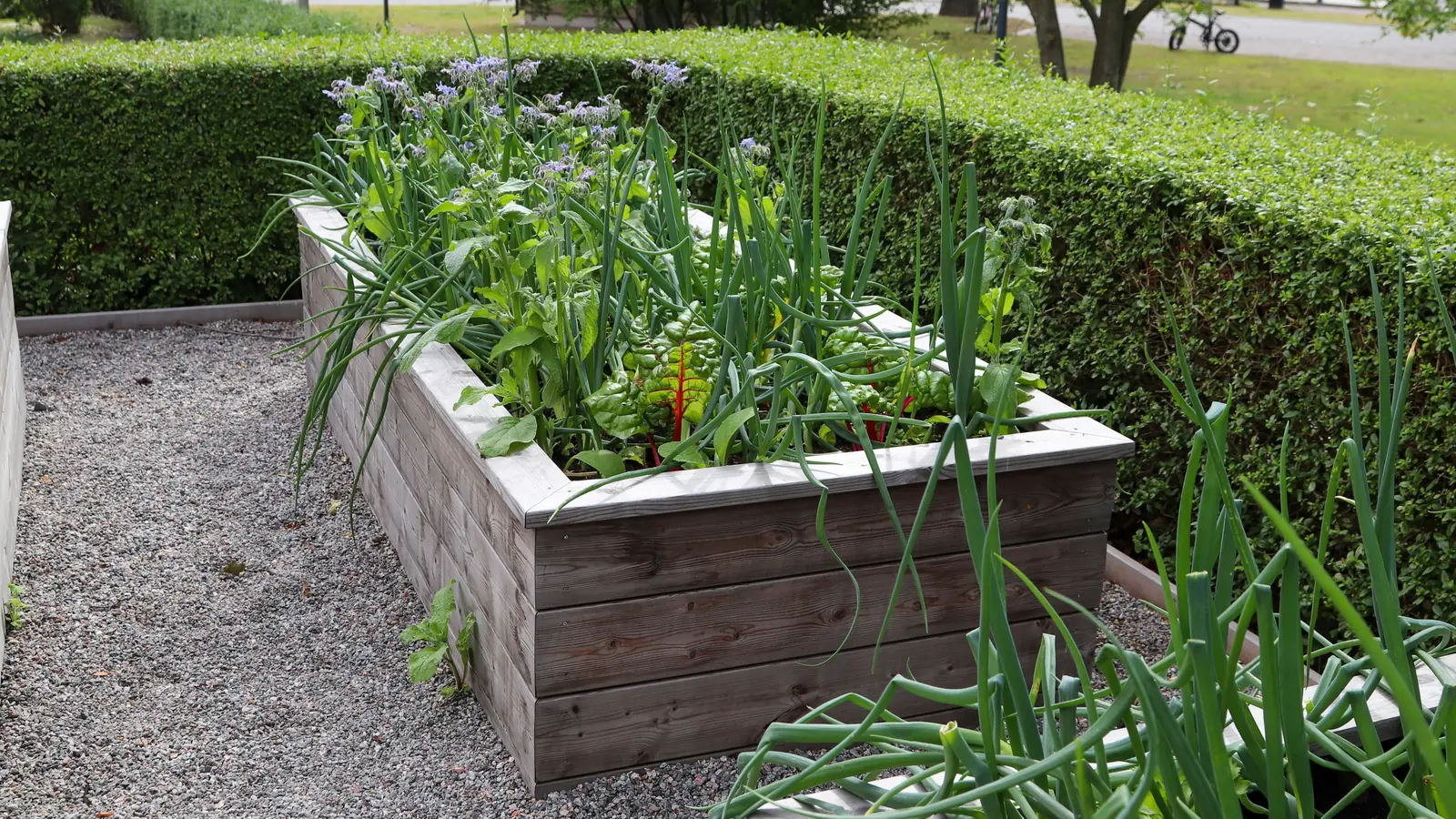
For an edible planting, a trough sold with lining instructions saves guesswork. Plant Addicts’ Galvanized Trough Style Raised Bed Planter on Rustic Stand lists bolted galvanized steel panels, an 18-inch planting depth and a soil capacity of about 7 cubic feet, and its product tips say to line the interior with plastic or landscape fabric, cutting two or three slits in plastic so excess water drains. The listing frames the liner as a way to keep the soil in place. For herbs or salad, choose the plastic option: landscape fabric lets moisture through to the metal, while a plastic liner keeps wet mix off the zinc coating discussed above. The depth matters too: the Maryland Extension page cited at the top puts a full-size tomato, pepper or cucumber at 12 to 16 inches of mix, so measure any decorative tub you are considering against that figure before planting vegetables in it.
Rutgers also advises matching plants with similar light and water needs and giving tall plants a container with a wide base. That matters with metal, which is often sold in tall, narrow, sleek shapes. A tall narrow planter holding a shrub needs weight in the mix and a sheltered spot; anywhere windy, a lower, wider shape is safer.
Weight and the first winter
A metal planter can feel light when empty and is heavy once filled and watered, and decorative handles are not made for lifting a full planter. Set it in place before filling, and on a balcony or elevated deck, find out what the structure can carry before you add several. Seasonal planters can stay out empty, but a planted perennial needs the plant’s own winter plan, because root hardiness in a metal container, with its wide temperature swings, differs from that of the same plant in the ground.
Written from manufacturer and retailer information and general garden practice. GardenHelm has not physically tested the products discussed here. How we choose products