High Tunnel or Glass Greenhouse: What Changes in Practice
A steel-and-polycarbonate high tunnel and an aluminum-and-glass greenhouse solve different problems. Size, headroom, venting, doors and the base compared.
By GardenHelmPublished 6-minute readMore in Greenhouses
What this guide compares
- Growing area for the money
- Width, height and how the length is extended
- Doors and ventilation
- Glazing options
- Base, anchoring and assembly
In this guide
We may earn a commission from links on this page, at no extra cost to you. How this works
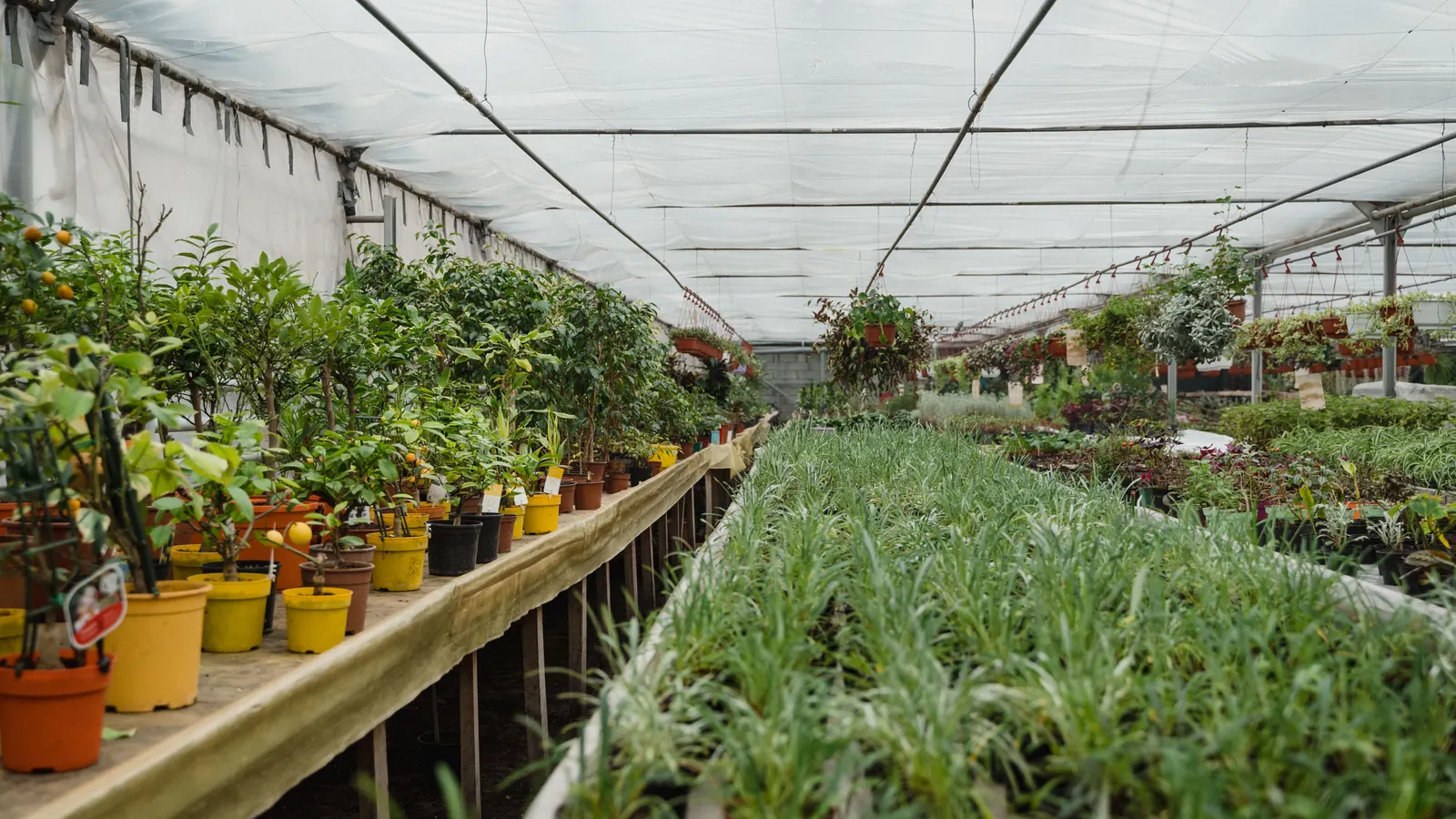
In extension terms, a high tunnel is a walk-in hoop of pipe under a single layer of film that “generally does not have electricity and the only heat is provided by the sun,” as UConn puts it. A glass greenhouse is a different animal: a permanent, controllable room. The tunnels GardenHelm lists are steel-and-polycarbonate versions of the first idea, and the aluminum greenhouses are the second. So the choice is between growing area for the money and a space you can control and spend time in. UConn high-tunnel engineering
How each is built
The listed tunnels use an arched zinc-coated steel frame with polycarbonate cover. Bloomcabin gives the frame strips as 56 mm wide and 1 mm thick, the width as 3 m (about 9 ft 10 in), the height as 2.1 m (about 6 ft 11 in), and the length as growing in 2 m (about 6 ft 7 in) segments. The standard tunnel comes in 5 sizes from 129 to 388 sq ft with one door at one end. A sharp-angled version has a pointed roof but the same frame, width and height.
The aluminum greenhouses use powder-coated aluminum profiles glazed panel by panel. They are wider and much taller at the ridge: the Classic Plus 385 is listed at about 151.6 inches wide with a ridge about 112.2 inches high. We have not tested any of these, so the figures here are the maker’s listings.
Area for the money
The two tunnels carry the lowest starting prices of the greenhouses on GardenHelm, and in this comparison they also give the most floor: the standard tunnel runs to 388 sq ft, more than the largest Classic Plus 385 (about 375 sq ft) or wall-base greenhouse (302 sq ft). A starting price covers the smallest configuration, so compare the price of the size you would actually buy.
Rows of vegetables in the ground, visits to work rather than to sit, and no plan to heat: that is a tunnel’s job. Glass earns its higher price when you want staging along the walls, headroom close to the sides, roof vents as standard rather than as an add-on, or a building that sits near the house and is meant to be looked at.
Headroom and layout
A tunnel is lowest at the sides, so usable height sits in the middle, which suits rows of crops with a central path. A straight-sided aluminum greenhouse keeps height closer to the walls. That matters for staging along the sides, tall crops trained up strings, or a table and chairs. If you plan to stand at a bench near the wall, sketch a cross-section first: the tunnels top out at 2.1 m (about 6 ft 11 in) in the center, while the Classic Plus 385 lists a door height of about 72.8 inches and a ridge near 112.2 inches.
Doors and ventilation
University of New Hampshire Extension warns that small greenhouses can overheat even on cool, sunny spring and fall days. The University of Georgia suggests ridge vents of roughly a quarter of the floor area, and the Royal Horticultural Society’s figure is one fifth. UConn’s film tunnels ventilate by rolling up the sidewalls and opening doors. Both tunnel pages list one door at one end and two side windows as standard, with no roof vents; a sunroof with automatic opening is offered as a separate order. In summer the cooling falls to that door and those windows, so if you plan to grow through hot months, price the sunroof or ask about a second door, and be ready to open what exists early in the day. The RHS also notes that wax-type automatic openers respond slowly, so keep doors available as backup.
The two aluminum models list sliding doors with extra doors on other sides as an option, and roof vents with manual openers as standard. Automatic openers that react to temperature are offered as an upgrade.
Glazing
The tunnels are polycarbonate: both pages give 6 mm panels with a 10-year warranty covering durability and UV protection. The aluminum greenhouses can be ordered with polycarbonate or tempered glass, including self-cleaning, mirror, solar-control and frosted types, and the roof and sides can differ. Glass gives clearer light and needs a solid base; polycarbonate is lighter and tends to diffuse the light. Georgia’s bulletin gives double-layer polycarbonate an insulation value of R-2.0 against 0.91 for single glass, but the listing does not say whether the tunnel panels are single or multi-wall, so ask before assuming a heat advantage.
Snow, wind and anchoring
UConn counts 3 inches of wet snow or 12 inches of dry snow as about 5 pounds per square foot on the roof, and an 80 mph wind as roughly 220 pounds of uplift per foot of tunnel. That is why it recommends a gothic, pointed profile in northern states so snow slides off, and why anchoring matters on open sites: its posts go 24 to 30 inches into the ground, with auger or screw anchors added where it is windy. The sharp-angled tunnel here is the closer match for snow country, because its pointed roof is the profile UConn recommends. Its page rates it for 160 kg/m² of snow (about 33 lb/ft²) and sets each arch about 35 cm (about 14 inches) into the ground, shallower than UConn’s posts, so on an exposed site ask whether extra ground anchors are offered. The standard tunnel’s page gives that same 160 kg/m² in its specifications but 43 lb/ft² and a 67 mph wind rating elsewhere; ask which applies. The sharp-angled tunnel’s specification block repeats the standard tunnel’s word for word, so ask Bloomcabin to confirm the snow rating for the pointed roof specifically. Compare the stated load with your area’s snow and wind, then anchor as the instructions say.
Glass greenhouses need a level, solid base. The Aluminum Greenhouse for a Wall Base is designed for a masonry wall base of 4 to 20 inches that the buyer builds, which raises the glass and adds headroom. It beats a ground-level glass house on height, and on looks where the base can match existing brickwork, provided you are prepared to have the wall built first.
Bloomcabin lists an optional heater with a chimney for that model. A fuel-burning heater has to vent outdoors, installed to the maker’s instructions and local code. The Consumer Product Safety Commission recommends annual inspection of gas and kerosene heaters and a carbon monoxide alarm, and names unvented heaters as the greatest carbon monoxide risk.
Assembly and delivery
The tunnel ships with M5 screws. For the larger aluminum glass models Bloomcabin recommends a professional installation team, though self-assembly is possible. Delivery is curbside, so plan how the parts reach the site; glass panes are heavy and easily broken.
The picks
Chosen from the retailer’s listed specifications. Prices and availability update from the retailer feed.
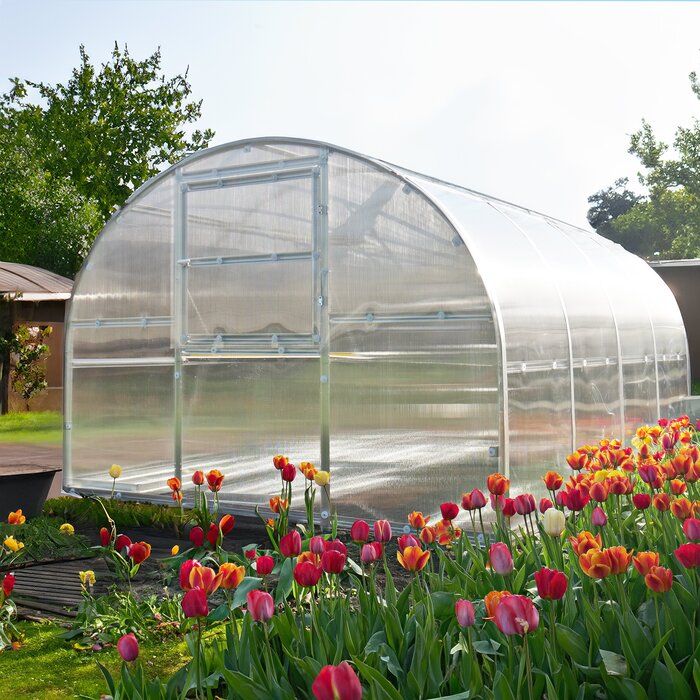
Arched steel tunnel for large crop plots
High Tunnel Greenhouse
An omega-shaped tunnel with a zinc-coated steel frame (56 mm wide, 1 mm thick strips) and polycarbonate cover, in 5 sizes from 129 to 388 sq ft. The listing calls it snow-resistant and budget-friendly, with a single entrance door on one end as standard.
Retailer feed of
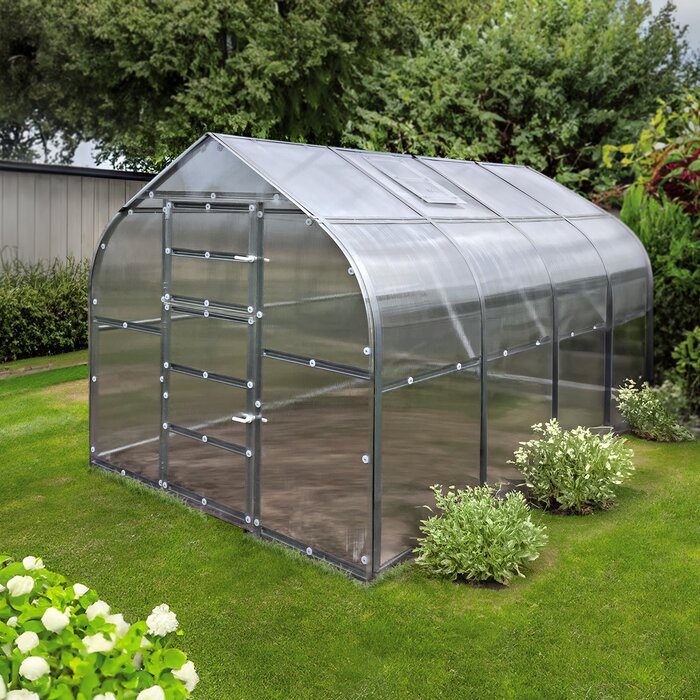
Same tunnel frame with a pointed roof
Sharp Angled High Tunnel Greenhouse
Uses the same 56 mm wide, 1 mm thick zinc-coated steel strips, a 3 m (about 9 ft 10 in) width and 2.1 m height, with length growing in 2 m segments. The product page lists 6 mm polycarbonate and a snow rating of 160 kg/m², with each arch set about 35 cm into the ground.
Retailer feed of
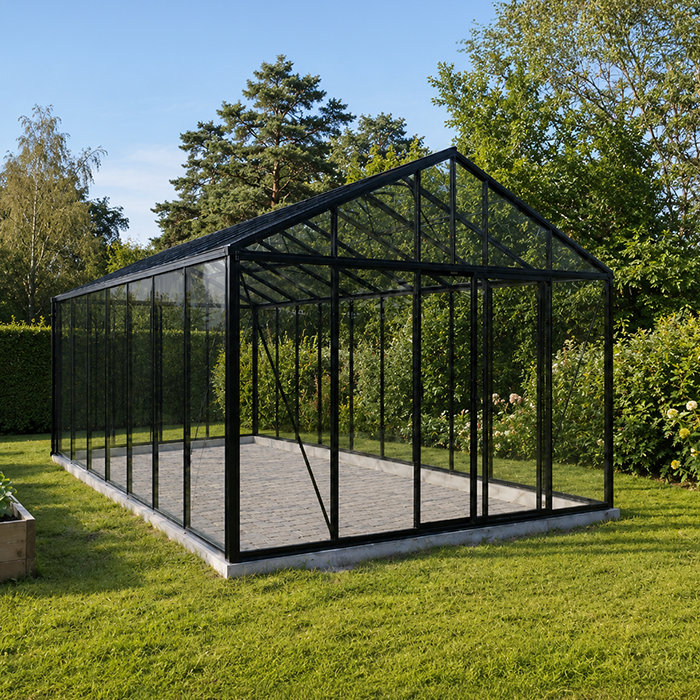
Permanent glass greenhouse with extra width
Classic Plus 385 Greenhouse
Extra-wide at about 151.6 inches, with a load-bearing aluminum frame and sliding doors that the maker suggests adding on more than one side. It suits a permanent growing space with room to move around benches.
Retailer feed of
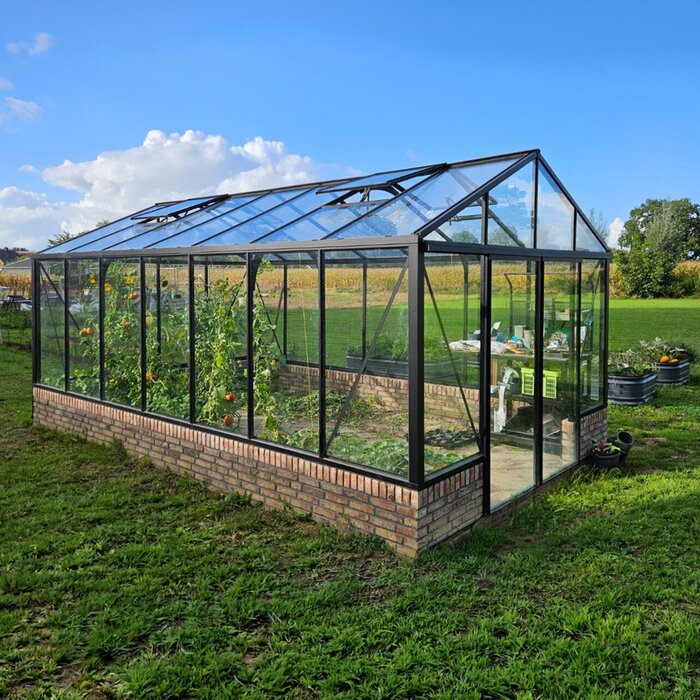
Glass greenhouse on a masonry wall base
Aluminum Greenhouse for a Wall Base
Sits on a wall base 4 to 20 inches high that you build yourself, which the listing says adds vertical space for hanging plants and better temperature control. Sizes run from 41 to 302 sq ft, with a powder-coated aluminum frame in 37 RAL colors.
Retailer feed of
Written from manufacturer and retailer information and general garden practice. GardenHelm has not physically tested the products discussed here. How we choose products