Grub Worms in Lawns: Identify the Damage Before You Treat
Finding one grub is not an infestation, and a brown patch is not proof. Check the roots at the edge of the damage and count before deciding on treatment.
By GardenHelmPublished 5-minute readMore in Lawn Seed & Feed
In this guide
If the brown turf peels back like a loose rug and the roots are gone, grubs are a likely suspect. Grubs are beetle larvae that feed on lawn roots, but one grub is not an infestation and a brown patch has many possible causes. The test is quick: lift a square foot of sod at the edge of the damage, count the grubs and look at the roots. That count, plus your local extension office’s advice, tells you whether treatment makes sense.
What a lawn grub looks like
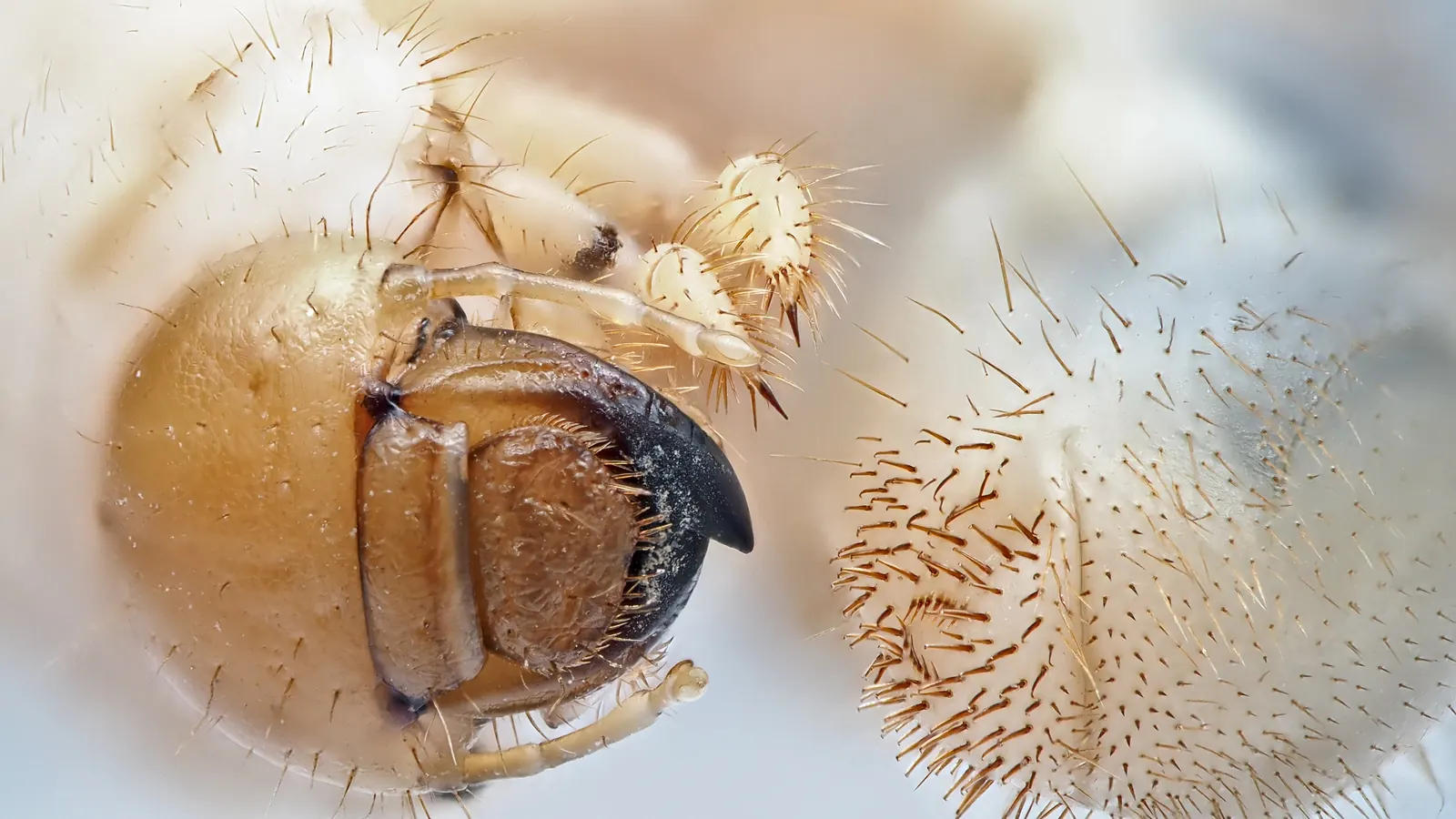
Typical white grubs have a pale, soft body, a brown head and legs near the front. They often curl into a C when disturbed. Several scarab beetles have similar-looking larvae, so the words white grub do not identify a single species.
Penn State’s white grub identification guide explains that species can be separated by features such as the arrangement of hairs beneath the rear of the body, called the raster. That is a magnified identification task, not something most homeowners can reliably settle from body color. The hero photograph shows a Japanese beetle larva; other lawn grubs can differ.
Photograph a sample beside a ruler and ask your county extension office how to submit it, noting where you found it. Grubs from a compost pile or rotting log are often different insects from the ones under your turf.
Check the roots at the edge of the damage
Choose places where damaged turf meets living grass, not just the bare center of an old patch. Compare several locations, including an apparently healthy area. A single test hole can miss a patchy infestation.
Penn State describes lifting a one-square-foot section roughly two to four inches deep and checking the soil, roots and thatch. Count the grubs in each section, then replace the turf, firm it back into contact with the soil and water the sampled area. Keep each count tied to its location rather than combining everything into one unexplained total. (Sampling guidance)
Make a simple record:
| Record | What to write down |
|---|---|
| Location | Front curb, tree edge or other landmark |
| Root condition | Firmly attached or lifting easily |
| Grub count | Number per measured sample |
| Other clues | Dry soil, standing water or animal digging |
| Date | Needed to interpret life stage and timing |
If there are no grubs and the roots remain firmly attached, investigate other explanations before buying grub control. If sampling is inconclusive, save the photos and seek identification rather than treating a guess.
How many grubs justify action?
Penn State notes that five to ten grubs per square foot is often used as a threshold for curative treatment, depending on the species. A healthy, well-watered lawn tolerates more than a drought-stressed or newly seeded one, so read your counts alongside the root condition: a few grubs under firmly rooted turf call for watching, while sod that rolls up with the roots gone calls for a decision. Your local extension office can tell you how the common species in your area change that number.
Before buying anything, answer three questions: which insect is present, whether it is feeding near the roots now, and whether the product can reach that life stage. The same questions separate a sensible preventive plan from treating every year out of habit.
Timing: prevention and rescue are different jobs
For the common annual white grubs, products aimed at young larvae in mid to late summer work far better than waiting until large grubs have already done visible damage. University of Minnesota’s Japanese beetle guidance distinguishes preventive applications from curative ones and notes that late rescue treatments may give only partial control. Exact timing varies by region, so take dates from your own state’s extension service; May and June beetles also run on a longer life cycle than the annual species.
- Healthy lawn, documented damage in past years: consider a preventive treatment timed for next season’s young grubs.
- Small grubs actively feeding now, with fresh damage: ask about a curative product and its application window.
- Old damage, few or no live grubs: skip the insecticide and repair the lawn; a product cannot regrow grass.
A product aimed at next generation’s hatch will not rescue a lawn full of large grubs today. Check the label’s target pest, use site and timing.
Biological controls need specific conditions too
Beneficial nematodes are living organisms. Species, storage, delivery condition, soil moisture and application conditions affect the result. Penn State identifies Heterorhabditis bacteriophora as one option for white grubs and emphasizes moisture and avoiding intense sunlight during use. They should not be treated like a shelf-stable fertilizer that can sit in a hot garage. (Biological control overview)
Milky spore targets Japanese beetle grubs. It targets specific larvae and does little to repair turf that is already damaged. That is another reason identification should precede a purchase.
Buy from a supplier who can tell you the target species, storage needs, expiration date and application instructions; if they cannot, look elsewhere. We have not tested any commercial biological-control product.
If you use an insecticide
Choose a product labeled for the grub and for home lawns, and follow its directions for rate, watering-in, protective equipment and keeping people and pets off the lawn. Brand names cover different active ingredients, so read the active ingredient, not just the name.
The University of New Hampshire’s home-lawn grub advice suggests treating only the affected areas when that is appropriate and protecting pollinators. Mow flowering weeds such as clover before treating, keep the product off flower beds and avoid drift, and follow every pollinator precaution on the label. Mixing rates come from the label of the exact product. If a professional treats the lawn, ask for the label and a written note of the target and timing.
Repair and monitor instead of repeatedly treating
After diagnosis and any necessary control, assess how much living grass remains. Choose seed or sod appropriate to the site and your region’s establishment season. Check the moisture and mowing conditions that weakened the lawn before repeating the same routine. The lawn care hub and lawn seed and feed category are starting points for those decisions.
Keep the damage map for next year. Recheck the problem locations at the locally recommended time, and record whether the roots and cover have recovered. An improving lawn is a more useful result than simply having applied a product.
Will grub treatment stop Japanese beetles eating my plants?
Not reliably. Adult beetles can fly in from elsewhere. Minnesota Extension advises treating grubs to protect turf, not as a dependable way to stop adult feeding on ornamentals. The leaf damage and the root damage need separate decisions.
Do moles prove I need grub control?
No. Moles eat earthworms and other soil creatures as well as grubs, so digging is a reason to inspect. Check for grubs and root damage before treating, and do not expect an insecticide to solve a mole problem.
Written from manufacturer and retailer information and general garden practice. GardenHelm has not physically tested the products discussed here. How we choose products