Greenhouse Shed Combos: Layouts, Light and What to Check Before Buying
A greenhouse shed combo puts growing space and tool storage under one roof. How the layouts work, where to place one, glazing, ventilation, foundations and permits.
By GardenHelmPublished 7-minute readMore in Greenhouses
What this guide compares
- Split between growing and storage space
- Which side faces the sun
- Glazing in the greenhouse section
- Roof vents and a door between the two parts
- Base and foundation
- Permit limits on size and height
In this guide
We may earn a commission from links on this page, at no extra cost to you. How this works
A combo works when the plants get the south wall and the rakes get the north end. Reverse that and you get a bright place to park the mower and a dim one where seedlings stretch. The two halves also live in different climates: the growing side is warm and damp, the storage side needs to stay dry, and most of what separates a good combo from a poor one is how well it keeps them apart.
Layouts
Side by side. Greenhouse and shed sit end to end under a continuous roofline, usually with a door between them. It is the most common layout. Put the greenhouse end toward the sun.
Greenhouse in front, storage behind. Glazing on the sunny long side, a solid wall on the shady side with shelving or a storage bay. It suits a building that runs east to west.
Lean-to on a shed. A small greenhouse attached to the sunny side of an existing shed is often the cheapest way to get both, and you can add it later. Our lean-to greenhouse category covers how these work, and if you only need the storage half, garden sheds are the simpler buy.
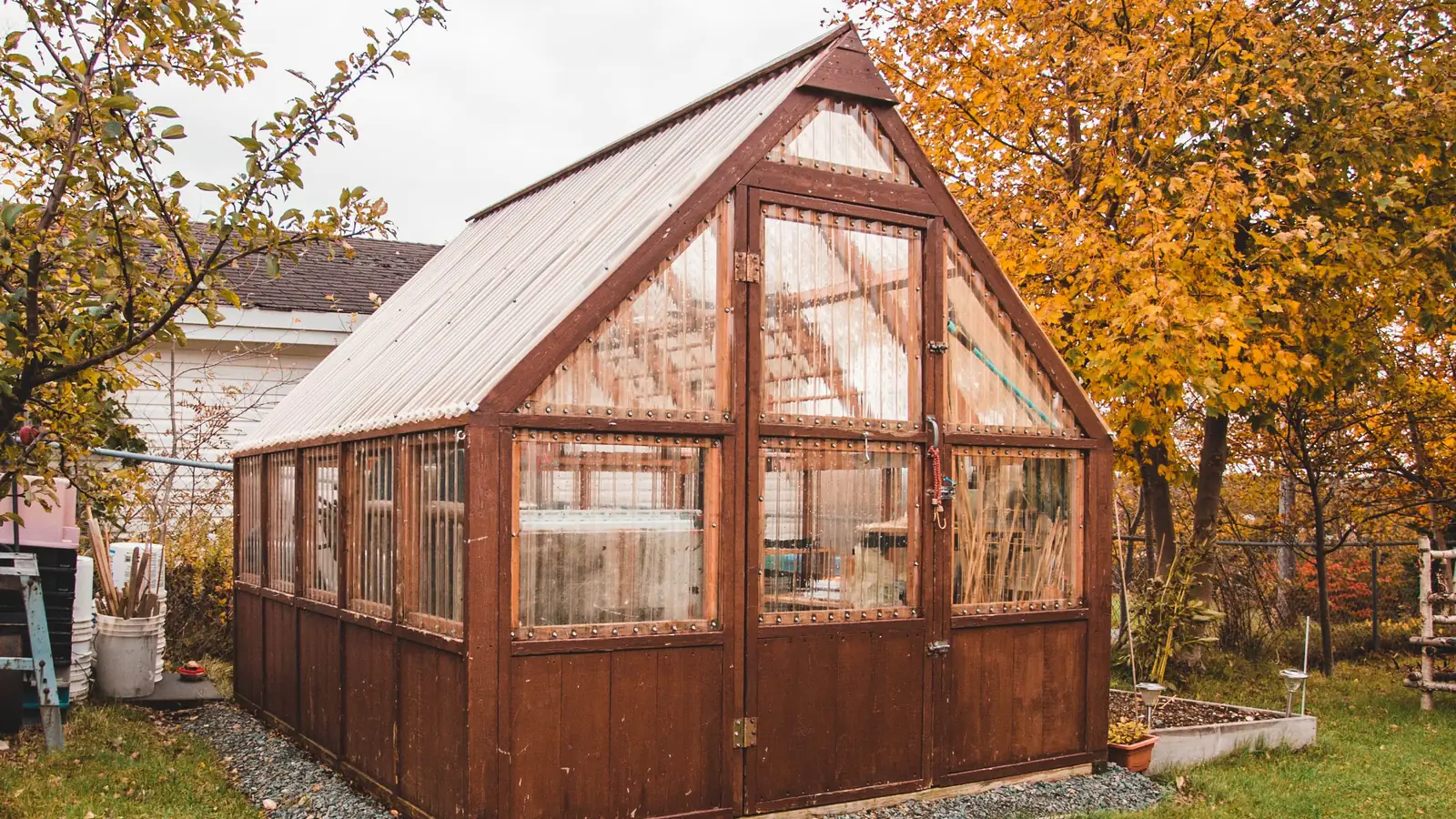
Timber greenhouse with solid lower walls. Glazing above, boards below. The solid base hides pots, bags and tools under the benches, though there is no separate dry room.
Potting shed with large windows. Good for potting and overwintering pots, but seedlings grow leggy without overhead light, so treat it as a potting room.
Light first, storage second
Plants need light from above and from the sunny side. Tools do not. Face the greenhouse part south or as close to it as the site allows, put storage at the north or shadier end, and look at winter shade from trees, fences and the house, because the low winter sun is the one that matters. A tall solid section on the sunny side of the glazing shades the plants it was meant to serve.
Keeping moisture out of the shed half
If the two sections share air, tools rust, paper bags of fertilizer go lumpy and seed packets turn damp. Look for a door or solid partition between them, roof vents in the growing part plus a door or side vent for incoming air, and separate ventilation on the storage side. Automatic vent openers earn their keep in summer. Bloomcabin’s storage combo pages describe a doorway connecting the two rooms; ask whether it closes with a door, because an open doorway lets the growing side’s humidity into the storage room, and the standard model’s page itself warns that persistent condensation can soak stored packaging.
Fuel and a gas mower need the most care. The Consumer Product Safety Commission says to store portable fuel containers in well-ventilated, cool areas only and away from ignition sources, including heaters, pilot lights, open flames and electric mowers, and to keep them capped and out of children’s reach. The glazed, sun-warmed end of a combo is the wrong place for a gas can. Keep it on the solid, shaded wall of the storage half, with its own vent, and do not store it in the same room as a greenhouse heater.
Glazing
Tempered glass gives the clearest light and the look of a traditional glasshouse. Twin-wall polycarbonate insulates better and does not shatter, though it is less clear. Tinted or frosted panels on the storage side keep contents out of sight, but treat that as screening only. Bloomcabin glazes the storage room of its Aluminum Greenhouse with Built-In Storage in tinted panels and states on the page that the tint changes visibility only: it does not control temperature or humidity and is not a security feature. Valuable equipment still needs a lock or a home elsewhere.
A storage room glazed on its walls also takes the sun, so it does not give you the solid, shaded wall the fuel advice above describes. If a gas can or a gas mower has to live in the combo, ask the maker about solid panels for the storage end before you order, or keep the fuel in a separate ventilated shed.
How to split the space
Decide what you will store before you decide on size. A riding mower, wheelbarrow and bikes take far more room than hand tools and bags of compost. An even split suits many gardeners, and if you mainly start seedlings the greenhouse part can be smaller. Wide doors on the storage side make moving equipment far easier.
Both Bloomcabin combos come in two width families, and the width decides the doors. The 92.5-inch models have a 91.3-inch ridge and a 64.9-inch door; the 122-inch models rise to 105.1 inches at the ridge with a 72.8-inch door, and only a wall at least 122 inches wide takes a double sliding door. Hand tools, pots, trays and compost fit the narrower family. A riding mower, bikes or a wheelbarrow you push straight in point to the 122-inch family, and even then ask Bloomcabin for the clear width of the door opening before you count on the mower fitting. A gas mower also brings its fuel into that glazed room, so the solid-panel question above applies to it. Bloomcabin’s own FAQ confirms that the storage room takes floor from the growing area, so mark both zones at full size on the ground before choosing a length.
Base, permits and power
A combo is heavier than a plain shed and has glass in it, so it needs a level, square base that will not shift, usually a slab or footings and sometimes a low wall. Follow the maker’s installation manual for the foundation. A slab also gives the storage side a dry floor.
Many towns let you build small accessory structures without a permit up to a set floor area or height, and require one above it, with separate rules for setbacks from property lines. Combos often exceed a basic shed’s size, so call your building department and any HOA before you buy. Power for lights, a fan or a heater usually calls for an electrical permit and an electrician, particularly in a space where water and outlets share the room.
Ready-made or built in stages
| Ready-made combo | Shed now, greenhouse later | |
|---|---|---|
| Upfront cost | Higher | Lower, spread out |
| Look | Matching materials and roofline | May not match |
| Climate separation | Designed in | Depends on how you attach it |
| Permits | One application | Possibly two |
Buy the ready-made combo when you start from bare ground and want one foundation, one roofline and one permit file; both Bloomcabin pages call for a single level foundation under the whole footprint, built-in aluminum base or not. Building in stages wins when you already own a sound shed with a free sunny wall, or when the budget comes in two parts. For the storage half on its own, Veikous’s storage shed collection opens a collection page of metal and cedar sheds, some of them small lean-to designs; ask the greenhouse maker how its lean-to attaches before you pick the shed it will stand against.
The combos listed here
The picks are aluminum greenhouses with built-in storage from a retailer we work with, described from its published product information; we have not tested them, and the links are affiliate links, so GardenHelm may earn a commission if you buy. Prices shown are starting prices, and size, glazing and color change the final cost.
The two combos are closer than their names suggest. Their spec blocks match line for line: the same two widths, ridge and door heights, polycarbonate or 4 mm tempered glass, roof vents, integrated gutters, built-in aluminum base, and ratings of 67 mph wind and 43 lb/ft² snow that both pages make conditional on a suitable foundation and anchoring. The Limited Edition with Built-In Storage adds untreated Accoya wood elements, which Bloomcabin says can weather to silver-gray. Pay for it only if you want that wood on the outside of the building; it adds nothing to the growing or storage space. Both spec blocks list a 12-year warranty, but both pages also carry a 10-year warranty badge, so get the term for your order in writing.
For greenhouse-only options, how to choose a greenhouse and our greenhouses hub compare structures. If you have a shed already, add a lean-to. If you are building from scratch and the yard is small, buy the combo and put the glazing on the south side.
The picks
Chosen from the retailer’s listed specifications. Prices and availability update from the retailer feed.
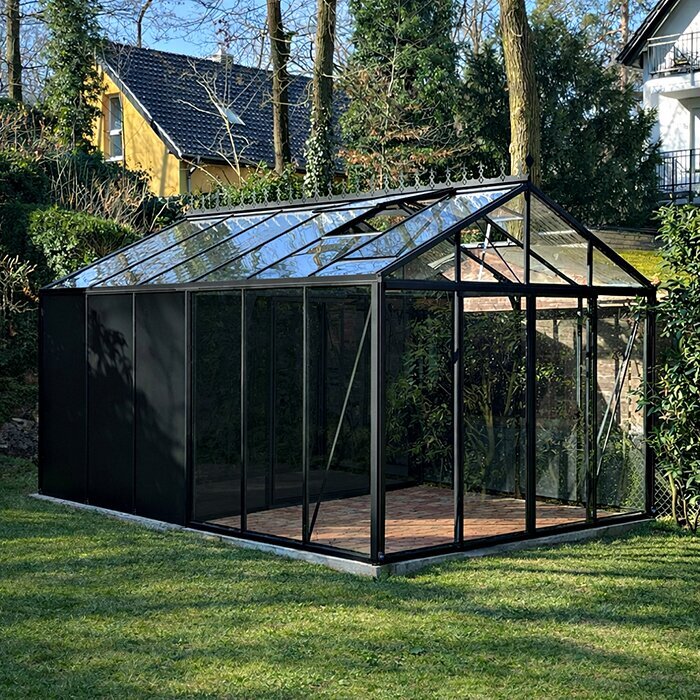
Storage room behind tinted glazing
Aluminum Greenhouse with Built-In Storage
The storage room is glazed with tinted panels that screen its contents from the yard; Bloomcabin notes the tint changes visibility only. The growing side takes polycarbonate or 4 mm tempered glass. Same frame, widths and door heights as the Limited Edition, without the wood trim.
Retailer feed of
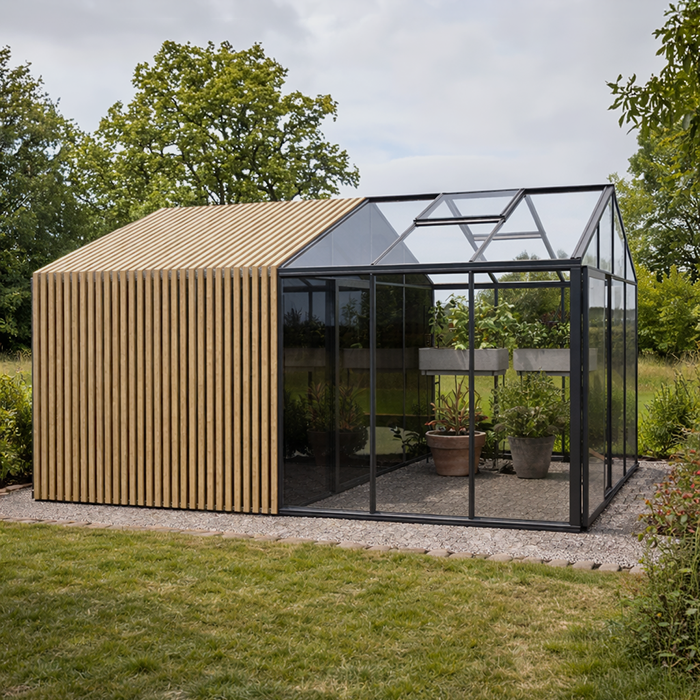
Storage combo with Accoya wood accents
Limited Edition Greenhouse with Built-In Storage
Untreated Accoya wood decorative elements on an aluminum frame, with polycarbonate or tempered safety glass available. The page lists 20 or 22 configurations (it gives both figures), any RAL color and roof vents. The wood detailing is the main difference from the standard storage model.
Retailer feed of
Retailers to browse
Compare sizes, materials and delivery details on each retailer’s current listings.
- Go to Bloomcabin
Bloomcabin
Opens Bloomcabin’s store (greenhouses, garden houses and pergolas).
- Browse storage sheds at Veikous
Veikous
Opens Veikous’s storage sheds collection, not a single product.
Written from manufacturer and retailer information and general garden practice. GardenHelm has not physically tested the products discussed here. How we choose products