7 Greenhouse Ideas for Seedlings, Collections and Seasonal Growing
Explore seven greenhouse concepts with practical tradeoffs: a propagation room, seasonal containers, a wall greenhouse, a plant collection and flexible mixed use.
By GardenHelmPublished 5-minute readMore in Greenhouses
In this guide
We may earn a commission from links on this page, at no extra cost to you. How this works
Spinach is happiest in a greenhouse held around 45 to 50 degrees F, while a tomato wants nights of 55 to 65. Colorado State Extension’s hobby-greenhouse vegetable guide sets those cool-season and warm-season ranges side by side, and the gap between them is the best way to decide what your greenhouse is for. The seven ideas below each pick a job and a trade-off, with the temperature that job needs where CSU gives one, starting with the one that asks the least of the building.
A propagation house for spring
The job is turning seed into transplants a few weeks before the garden is ready. CSU notes that artificial light is generally not cost-effective for winter production, with starting transplants the exception, which is a hint that seedlings are where a small greenhouse and a grow light overlap. Warm-season seeds germinate in a range of 60 to 85 degrees F by CSU’s table, so a heat mat or a cozy corner matters more than the size of the building.
Do the arithmetic before relying on a mat. Botanical Interests says its Epic Seed Starting Heat Mat, which fits a standard 1020 tray, raises soil temperature by 10 to 20°F. If your minimum/maximum thermometer shows the house dropping to 45°F at night, that lift puts warm-season trays somewhere between 55 and 65°F, which may or may not clear the 60-degree bottom of CSU’s range. Nights that stay near 50°F or warmer leave a comfortable margin; colder than that, keep the trays on a shelf indoors until the seeds germinate. The mat warms a tray, not the structure.
A bench at comfortable height, a tray-handling surface and a place for empty pots are all it needs. The trade-off is the long quiet stretch after the trays leave. Plan a second use for the benches rather than buying plants to fill them, or let the house rest until fall.
A winter salad house
Cool-season greens suit a house kept cool rather than warm. CSU lists leaf lettuce as growing well in fall, winter and spring when kept under 70 degrees F, spinach as best around 45 to 50, and chard and kohlrabi as doing exceptionally well. It calls carrots a questionable use of the space. Winter light slows everything, so CSU’s advice is to plant so crops are near harvestable size by mid-October, and it points out that warm-season crops cannot be grown cost-effectively in a hobby greenhouse in winter without solar heat collection or added heat.
Minimum plant spacing in CSU’s table is about 9 inches for lettuce, 9 to 12 for chard and 6 for spinach, which tells you how few plants a bench holds. Treat it as a cut-and-come-again kitchen supply and leave aisle room for picking without stepping on neighbors.
A shelter for potted citrus
A lemon or lime in a big pot can summer on the patio and winter under glass. Two replies on Ask Extension stress different things: one says to pull the tree into shelter only when temperatures are predicted to fall below 32 degrees F, the other that indoor winter light is the biggest challenge, with sun-adapted leaves dropping when light is low. A greenhouse gets around the light problem, since the roof does the work, but it must hold above freezing on the coldest nights. That is a heater and a thermometer question, and the University of Georgia guide treats heating and ventilation as central to greenhouse management.
Pot, soil and tree can be heavy to move. Put the trolley or the wheeled base in the plan, and keep the aisle wide enough to wheel it through. One of those replies recommended bringing a tree in and out gradually, as sun and light levels change, rather than in one jolt.
A potting retreat against a wall
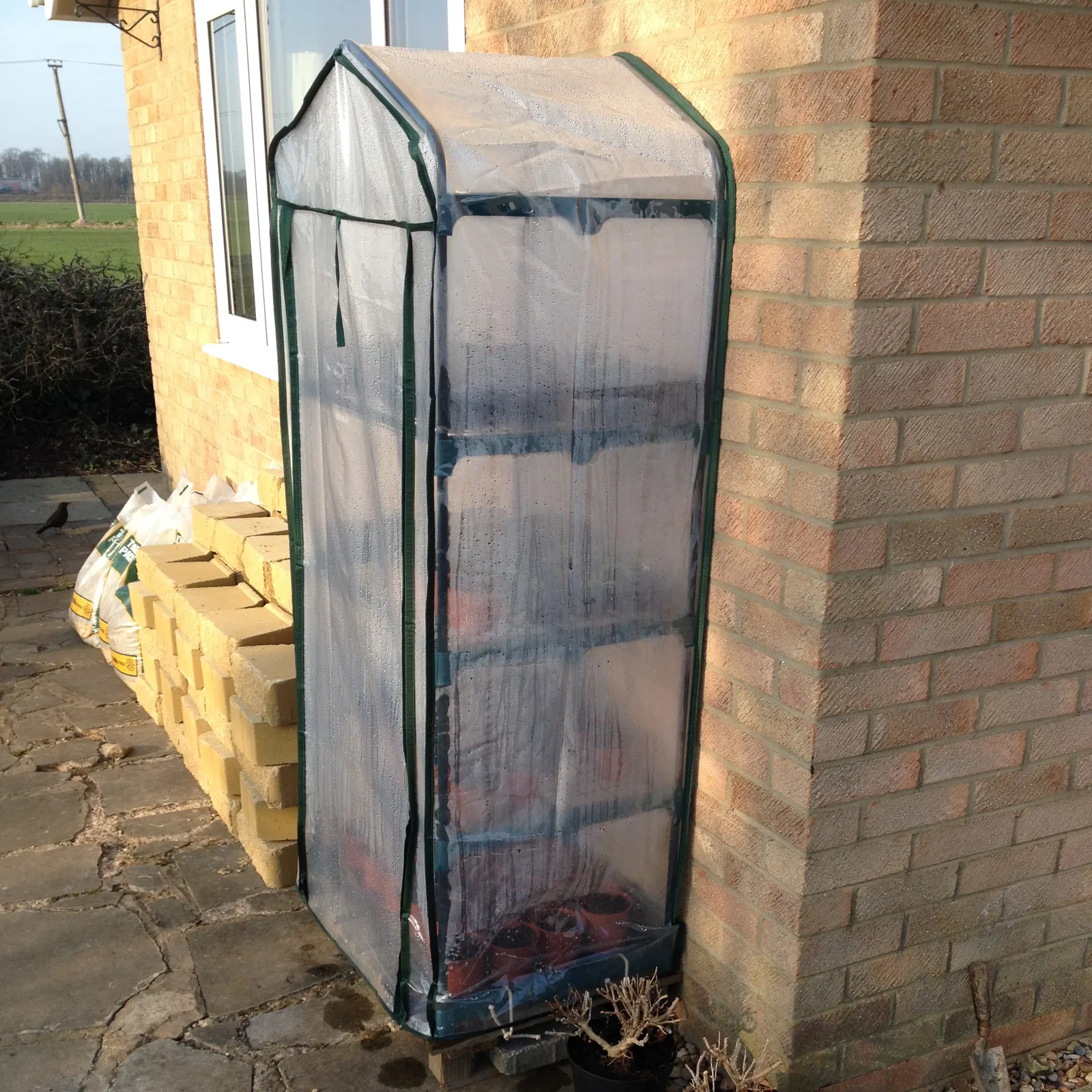
For many gardeners the most-used greenhouse is a place to repot, label, sort bulbs and wash trays, with plants as a bonus. A narrow wall-mounted house suits that job because it sits where you walk anyway. The Bloomcabin aluminum mini wall greenhouse shows the format; we have not tested the model.
Keep a modest working surface, supplies within reach and dry storage out of the growing area. A decorative kitchen cabinet may not survive greenhouse humidity as a workbench, so pick surfaces by their stated exposure ratings. Judge the wall by the light it gets, and look at how the frame fixes to the house, how you reach the glazing for maintenance and whether the wall material takes the fixings. An attached greenhouse needs approval before anyone treats it as living space.
A greenhouse with a seat
Some people want mostly a pleasant place in the garden. The doorway view helps: a line of benches, a few large containers, a clear sightline to planting beyond. Glazed space swings far hotter and colder than the adjacent patio, so it is a seat for spring and fall mornings and little else, and the chair needs room to move without blocking vents or the aisle.
A greenhouse that changes with the season
Use a removable bench section where spring trays later give way to larger seasonal plants. Draw both arrangements before buying furniture, because a bench is only removable if it fits through the door and has somewhere to be stored. Mature foliage and supports change the whole aisle, so keep vents and controls reachable in both layouts. The cost is handling and storage work at each changeover.
A small first-season project
Pick one growing goal and leave capacity uncommitted. A free corner is useful for turning a cart, sorting a delivery or moving a plant for inspection, and a full growing cycle tells you more about light, access and watering than any product photograph. Keep heavier collections on supports rated for the load before you add permanent shelves.
Matching the idea to the building
Our greenhouse buying guide compares the structures that can carry these jobs. A building that only barely clears freezing suits the salad house and the propagation house. Holding nights at 55 to 65 degrees F, the range CSU gives for warm-season crops, is what opens the door to tomatoes, and that is a heating decision to price before you buy the building.
Written from manufacturer and retailer information and general garden practice. GardenHelm has not physically tested the products discussed here. How we choose products