When to Fertilize Your Lawn: A Season-by-Season Schedule
When to fertilize your lawn: feed cool-season grass mostly in late summer and fall, warm-season grass only after spring green-up. Calendar and rates.
By GardenHelmPublished 6-minute readMore in Lawn Seed & Feed
In this guide
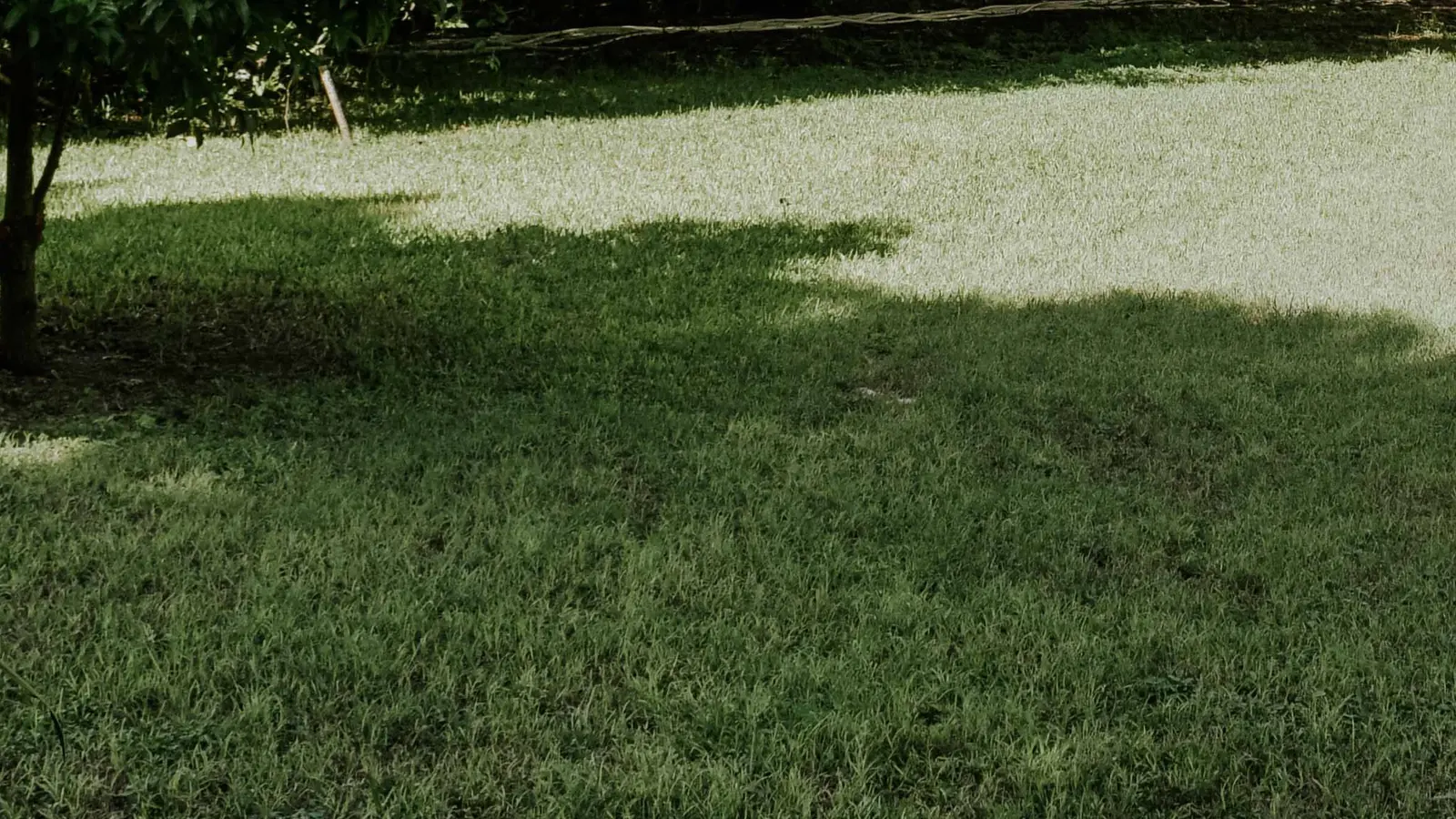
Illustrative lawn photograph; the grass species and fertilizer history are not identified.
It depends first on your grass. Cool-season lawns (Kentucky bluegrass, fescues, perennial ryegrass) get their most valuable feeding in late summer and fall. Minnesota Extension’s calendar prefers early August through mid-October, accepts May through late June, and warns against feeding in hot midsummer. Warm-season lawns (bermudagrass, centipedegrass and others) are fed while they are actively growing, after spring green-up, and their nitrogen stops at a species- and region-specific point; Clemson’s South Carolina bermudagrass program, for example, has no nitrogen from September through December.
Those two examples point in opposite directions in the same months, which is why a single national calendar misleads. Use the local program for your grass, then check what has already been applied this year before adding anything. Our lawn-care hub covers equipment and other maintenance.
Know your lawn first
Find out which grass or mix you have, from seeding or sod records or with help from your local extension office. Color alone makes a poor fertilizer prescription.
Note three more things: where you live, whether the lawn is established or newly planted, and what it has been fed recently. An established lawn with several applications already this year is a very different case from new grass on a starter program. If the front and back lawns are different grasses, or managed differently, plan them separately.
Regional calendars, side by side
| Program | What it says | What not to take from it |
|---|---|---|
| Minnesota cool-season lawns | Late summer and fall preferred; avoid hot midsummer feeding | That the same dates suit every state or a stressed lawn |
| South Carolina bermudagrass | Nitrogen during the growing season; none September through December | That all Southern grasses need the same amount |
| South Carolina centipedegrass | A comparatively limited nitrogen program, with the last application timed by region | That a bermudagrass program can be copied |
Read the original program for your region and species; the qualifications matter as much as the dates.
Spring
Gather last season’s records and any soil-test recommendation, and write down what you plan to apply and why. If a lawn service has been treating the yard, ask for its records before adding your own.
For cool-season grass, Minnesota Extension advises against fertilizing too early in spring and lists May through late June as acceptable, with early August through mid-October preferred (Minnesota lawn-care calendar).
For warm-season grass, wait for real green-up rather than a nationally advertised spring weekend. Clemson’s bermudagrass guidance explains that pushing new growth before a late frost can damage the lawn, and its South Carolina program adjusts for regional and yearly climate differences (bermudagrass program).
Summer: decide whether to feed at all
Summer is where using the wrong calendar does the most harm. Before picking a product, run through these questions:
- Does your grass’s local program call for feeding now?
- Is the lawn in a condition to benefit, rather than heat-stressed or dormant?
- What has already gone on this year, including weed-and-feed products?
- What nutrient and amount does the recommendation specify?
- Can you water it in as the label requires?
If the answer to the first question is no, a different brand will not fix the timing. If the lawn has an unexplained problem, find the cause before assuming it needs nitrogen.
Two neighbors can buy the same summer product and reach opposite decisions. One has bermudagrass with a planned feeding still due; the other has fescue and no idea what the lawn service applied last month. The first can follow its program; the second should find out what was applied and skip summer feeding for the fescue.
Centipedegrass shows that warm-season programs vary too. Clemson describes it as a low-fertilizer grass, recommends basing feeding on soil tests and sets a limited annual nitrogen amount, with late-summer timing that differs between the Upstate and the coast (centipedegrass program).
Fall
For cool-season lawns, this is the main event. Check your remaining annual amount against your records first; a missed spring feeding does not become a double fall feeding.
For South Carolina bermudagrass, Clemson’s September-through-December section specifies no nitrogen. Keep any other soil-test needs, such as potassium, separate from the nitrogen calendar. Record the final application of the year and why you made it.
“Winterizer” products
A winterizer is not a separate requirement. Read its analysis and directions and compare them with your grass’s program. For many cool-season lawns, a product sold as a winterizer belongs in the fall feeding window, not on a dormant lawn in December. Minnesota’s preferred window ends in mid-October, and Clemson’s bermudagrass program excludes nitrogen from September through December, so neither supports feeding on a mild winter afternoon.
Clemson does discuss applying potassium before the first expected frost when a soil test shows a deficiency. That is a specific, test-based decision, not a reason for every lawn to get a high-potassium winter bag.
| Winter situation | Next step |
|---|---|
| The fall window has passed | Wait for the next appropriate application; do not invent a late catch-up |
| A brown warm-season lawn | Find out whether it is dormant or has a problem before treating color as hunger |
| A leftover bag from fall | Store it as the label says; owning it does not create a need |
| A lawn service has already treated it | Get the product, amount and date first |
If your grass keeps growing through a mild local winter, get a program written for your species and area. Winter is also a good time to identify the lawn, measure it and tidy up your records without spreading anything.
From nutrients to pounds of product
Recommendations are written in pounds of actual nitrogen, not pounds of product. Clemson’s centipedegrass guide includes the conversion. Here is the arithmetic, using an example rate rather than a recommendation:
If the recommendation is 0.5 pound of nitrogen per 1,000 square feet and the product is 20% nitrogen: 0.5 ÷ 0.20 = 2.5 pounds of product per 1,000 square feet. For a measured 2,400-square-foot lawn, that is 2.5 × 2.4 = 6 pounds of product.
| Record | Example |
|---|---|
| Area treated | 2,400 square feet |
| Nitrogen rate (example only) | 0.5 pound per 1,000 square feet |
| Product nitrogen | 20% (0.20) |
| Product needed | 6 pounds |
A different nitrogen percentage changes the bag weight, not the nutrient amount. Use your real recommendation, measured area and product analysis, and keep the label directions and any local restrictions with the calculation.
Keep one record
Keep one table for everything that goes on the lawn: date, area, product, amount and reason, including what a lawn service applied and any fertilizer in a weed-and-feed. Without it, two people can each follow a sensible plan and double the feeding between them.
Treat weed control as its own decision; a herbicide’s timing comes from its label, not from a fertilizer calendar, even when both are in the same bag. At season’s end, note what worked and what problems remain. That record is more useful at an extension consultation than adding another feeding next year.
Midsummer and how often
Can I fertilize in July?
Minnesota’s cool-season calendar advises against feeding in hot midsummer; other states publish their own windows, so look up yours. Warm-season grass may be due a planned feeding. Check your grass’s program and what has already been applied.
How many times a year should I feed?
Follow the annual amount in your grass’s local program, split as it directs. Low-input grasses such as centipedegrass need much less than bermudagrass.
Written from manufacturer and retailer information and general garden practice. GardenHelm has not physically tested the products discussed here. How we choose products