Rain Chains for Gutters: Choosing a Style and Planning the Drainage
Rain chains look lovely in light rain and splash in heavy rain and wind. Check the location, measure the drop and plan where the water lands before replacing a downspout.
By GardenHelmPublished 5-minute readMore in Rainwater Collection
In this guide
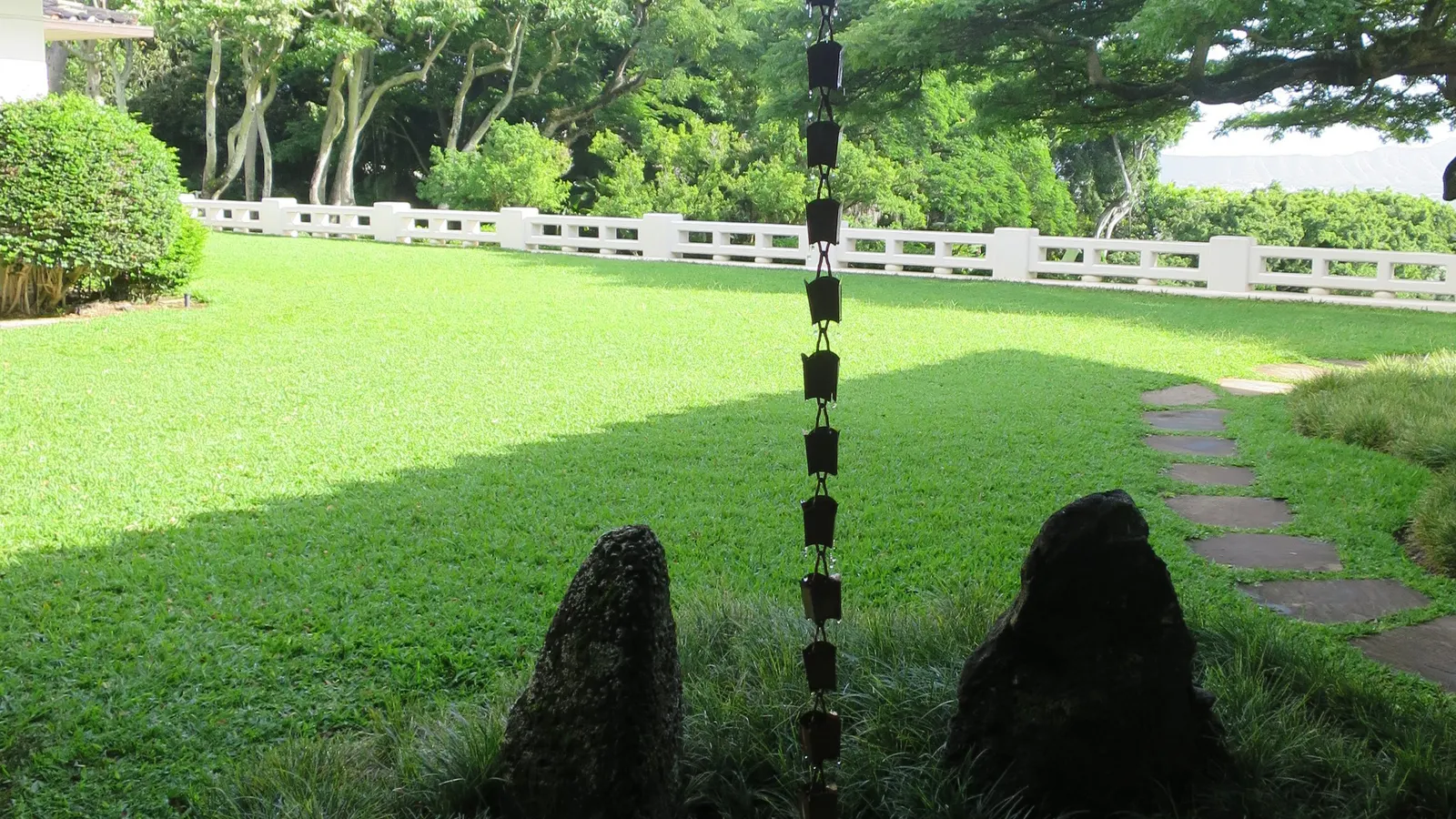
A downspout contains water, and a rain chain only guides it. That difference explains both the charm and the limits. The West Virginia Conservation Agency describes rain chains as a series of metal cups with a hole in the bottom of each, or vertical chain links, that funnel water from a gutter to a collection system or the ground (WVCA rain chain fact sheet). Because the sides are open, the water is visible and noisy in a light rain, and in a downpour some of it leaves the chain. Whether a chain suits your house depends on how much roof drains to that outlet, what sits within splashing distance, and where the water goes once it reaches the ground.
Watch the outlet in a storm first
Stand safely on the ground during ordinary rain and watch the spot you would replace. Does the gutter overflow there? Does water land near a door? Does the ground stay wet afterward? Photograph the outlet and its drainage path for whoever helps you.
A good spot gives an open chain room to splash without wetting siding, steps or a path people use daily, and a corner sheltered from crosswinds is easier to live with than an exposed one. Rain Chains in a Nutshell, a vendor, says it rarely hears of wind problems, since the open design only sways in very strong gusts, and that many customers set river rocks in the basin to steady it (Rain Chain FAQs).
Check local stormwater rules before you disconnect anything. If the downspout feeds a required system, find out what changes are allowed. Snohomish County’s gutter guidance treats rain chains as an option in some situations while keeping the same need for protected outlets and flow directed away from the house. A narrow strip between wall and sidewalk is a poor place to drop roof runoff, and a conventional downspout may be the better choice where the roof is large or the rain heavy.
Cups or links
The same vendor says cup styles concentrate the flow and contain water better in heavy rain than link styles, that link styles handle a more limited amount of rain and send some water splashing out in a downpour, and that cups are easier to shorten or lengthen since you remove or add cups. Those are one seller’s observations, though they match what the open geometry suggests. Cups can trap debris, so plan to clear them.
Decorative pieces vary a great deal, and a pretty shape says little about capacity. Ask for the maker’s installation and flow guidance. A chain sold as a garden ornament may not suit a downspout job, and you will need to match the hanging hardware, any extension method and the bottom attachment.
Copper, aluminum and what washes off
Copper is the usual choice for its changing patina, and a copper-colored chain may be coated rather than solid copper. Snohomish County’s guidance advises avoiding copper and galvanized zinc because of metal leaching, so ask your local stormwater office what is appropriate, especially if runoff enters a planted treatment area or sensitive water. Where copper meets an aluminum gutter, the vendor says it has seen no noticeable corrosion at contact points in nearly ten years and suggests clear lacquer or a plastic spacer to limit contact.
Measure the drop and fit the top
Measure from the underside of the gutter to the ground. The same vendor’s measuring advice is to subtract 2 inches for a V-hook or 3 inches for an installation kit, then subtract for whatever sits below, such as a stone or basin, plus some clearance (Rain Chain FAQs). RainChains.com’s installation guide separates a V-hook set into the outlet from a separate outlet kit that passes through the gutter opening. For its current RCR-COP kit, the maker says the kit replaces the V-hook: the outlet drops through the opening, and the chain hangs from the D-clip or its pin below. Use the hardware that came with your kit and never mix attachment methods from different versions of the instructions.
If the outlet is damaged, poorly placed or surrounded by failing gutter, repair it before adding a hanging load. The top connection carries the chain’s weight plus water and, in winter, ice, so do not hang it from a stray fascia screw or bend the gutter edge to improvise a support. A gutter professional can check the outlet and support, and gutter-height work is a job for a competent installer unless you have safe access. Keep your old downspout parts until the new setup has proved itself.
At the bottom, limit swinging with the specified restraint, such as a ground anchor stake, while keeping the water path open. WVCA’s DIY version hangs the chain from a gutter strap and anchors it with a small U-shaped garden stake, then lines a depression at the base with rocks or gravel to slow the water and let it soak in. Leave the movement and drainage the instructions call for.
Where the water lands
A basin, rock bed or drainage inlet can take falling water, but overflow decides the design. A small ornamental bowl fills fast and spills over the rim. Mark where overflow goes so it avoids the foundation and the neighbor’s yard. The USDA-hosted Home Drainage Guide advises protecting outlets, avoiding bare-soil discharge and keeping runoff away from foundations and steep slopes. Apply those principles when you plan a rain garden, swale or collection system, and keep infiltration away from basement walls.
A chain hanging over an open barrel gives no screened, secure collection. Barrels have their own inlet, screening and overflow requirements, covered in our rainwater collection category.
The first storm and the first winter
Watch the first heavy rain from the ground. Follow the water from outlet through the chain to the landing area and its overflow route, and look for escape toward the wall, movement, wet siding or erosion. A garden hose cannot reproduce wind-driven rain. If water heads for the building or the receiving area cannot cope, fix the design or put a downspout back, since more decorative stone around a growing puddle will not help.
WVCA recommends taking the chain down in winter and putting the regular downspout back where you get high winds or heavy ice, noting that heavy ice buildup can weigh on the gutter and damage it, and that most people elsewhere can leave the chain up all year. The vendor adds that frozen water on a chain is extra weight, recommends its installation kit over the V-hook for longer lengths, and suggests knocking off excess ice. Ice can also form a hazard beneath the outlet, so stay out from under it and keep a drainage route working during any changeover.
Through the year, keep the outlet, cups and landing area free of debris. After storms, look for newly wet siding, displaced stones, standing water and a loosening support, and repair a sagging gutter promptly. A basin that holds water can breed mosquitoes, so make sure it drains.
Written from manufacturer and retailer information and general garden practice. GardenHelm has not physically tested the products discussed here. How we choose products