Large Outdoor Planters: Compare Root Space, Filled Weight and Placement
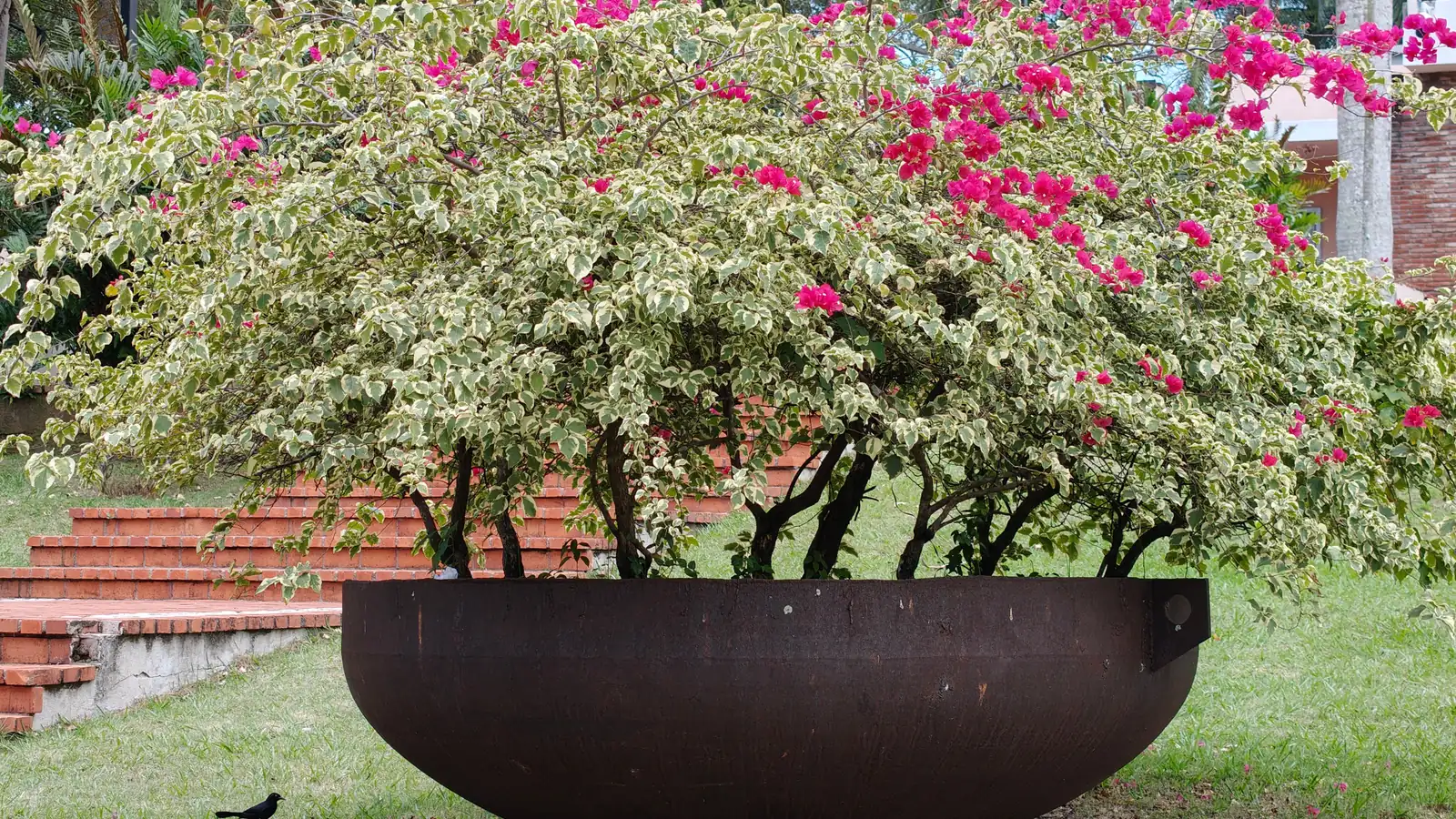
Exterior height and a dramatic photo say little about root space. Compare the usable interior, plan for the filled weight and give the water somewhere to go.
By GardenHelmPublished 4-minute readMore in Growing & Soil
In this guide
We may earn a commission from links on this page, at no extra cost to you. How this works
The size that matters in a large planter is the one inside: the depth and width of soil the plant actually gets. The second number to know is the filled weight, because once a big container holds wet soil and a plant, it effectively stays where you first put it. Choose the plant first, then a planter with enough real root space, a drainage route that does not end at your door and a spot that can carry the weight.
Outside size versus root space
Listings lead with exterior dimensions. Inside, a liner, a water reservoir or a raised false bottom can take up a lot of that space. For a seasonal display of annuals that can be fine, and it saves on soil. For a shrub or small tree that will live in the pot for years, you want the full depth.
To estimate how much potting mix you need, multiply the interior length by the width by the filled depth. An open 24-by-24-inch box filled 18 inches deep holds 10,368 cubic inches, which is 6 cubic feet. Since a cubic foot is roughly 26 dry quarts, that is about six of the common 1-cubic-foot bags. Tapered sides and internal parts reduce the real number, so measure your actual planter.
For a permanent woody plant, ask the nursery how large a container that plant needs at maturity, not just for the size it is today.
Plan for the filled weight
An empty fiberglass or resin shell is easy to carry. Filled with damp soil and a plant, the same planter can take several people or a dolly to move. Set it in its final position before filling, and plan any later moves as a real job.
| Location | Settle this first |
|---|---|
| Patio at ground level | Delivery route, and whether it blocks the walk or a door |
| Deck or balcony | Whether the structure can carry the filled weight; ask a qualified professional if unsure |
| Entry or path | That the plant and pot still leave a clear route |
| Seasonal display | How you will empty, move or store it in the off-season |
We cannot tell you what a particular deck or balcony can hold. For anything heavy on a raised structure, get the answer from the building’s manager or a structural professional.
Casters and self-watering designs
Crescent Garden’s Pinch TruDrop planter shows two features worth looking at: a built-in water reservoir and, per the maker, recessed rotating casters, with an anchoring option for fixed placement. Casters help for sweeping underneath or turning a plant toward the light on a smooth, level surface. They do not make a full planter easy to roll over thresholds, gravel or slopes. We have not tested this planter or how long its reservoir lasts.
If that combination fits your spot, Plant Addicts carries the Pinch Self-Watering Planter in three sizes, from 22.5 inches square and 20.3 inches high up to 36.9 inches square and 33.3 inches high, with a water level indicator and a double-walled body. Those are outside dimensions. The Crescent Garden spec sheet linked from the listing gives the soil compartment separately: about 10 inches deep in the smallest size, 12.6 in the middle one and 15.75 in the largest, a little under half the outside height in each case. For a summer display of annuals that is a fair trade; for a shrub meant to stay for years, check that depth against what the plant needs, or compare with an open planter that gives the roots the full height. The same sheet presents the caster base and the anchoring brackets as add-on systems sized to each planter, so confirm with the seller what comes in the box before counting on wheels.
“Self-watering” means a reservoir you fill and check, not a pot you can forget. How long it goes between fillings depends on the plant, the weather and the size of the reservoir.
Give the water somewhere to go
Maryland Extension calls drainage essential for container growing. Look at how each planter drains: open holes, an overflow outlet or a reservoir with an overflow. Then look at where that water will land. An outlet that empties onto your front step or stains a deck board needs a saucer, feet or a different spot. Keep drainage holes clear and do not seal them with a liner.
Weather and upkeep
Check whether the planter is rated for outdoor use year-round and what the maker says about freezing weather. Unglazed terra-cotta and some ceramics can crack when wet soil freezes, while fiberglass, resin and metal generally cope better. Look at the care needs of the shell, the liner and the casters separately.
Leave yourself room to work. If the reservoir inlet faces a wall or the planter sits tight in a corner, refilling and cleaning become chores you will put off.
Using size well
A matching pair of large planters frames an entrance; one wide planter anchors a seating area. Test the footprint with the furniture in use and people moving through, and look at it from inside the house too. When the plant is the star, a plain container in a color that relates to the building usually looks better than a bold pattern competing with it.
Before ordering, write down the interior dimensions, what parts are included, the delivered box size and the return process. The growing hub has more on containers and planting.
Written from manufacturer and retailer information and general garden practice. GardenHelm has not physically tested the products discussed here. How we choose products