How to Turn On a Sprinkler System After Winter
Restart a winterized sprinkler system with a clear inspection, supply, backflow, zone-testing and scheduling workflow suited to the actual equipment.
By GardenHelmPublished 6-minute readMore in Sprinklers

In this guide
Rain Bird’s spring checklist starts with a shovel, not the controller. Dig down and make sure the soil is frost-free 12 inches deep; if it is still frozen, Rain Bird says to wait a week and test again. Water pushed into pipes that sit in frozen ground can split them, and the damage hides underground until the bill arrives. Once the ground has thawed, the restart is a sequence: close the drains, open the main valve slowly, bring the backflow preventer online the way its manual describes, then run and inspect one zone at a time before letting the schedule take over.
The steps below draw on Rain Bird’s spring tune-up checklist, Hunter’s guidance and one backflow maker’s manual. Systems differ. A pump, a dedicated irrigation meter or a backflow assembly you cannot identify are all good reasons to book a professional startup, which Hunter recommends in any case.
Before any water moves
Pick the right week
Beyond the 12-inch frost test, Hunter advises waiting until freezing conditions have passed. Testing the system and starting routine watering are separate decisions. A short supervised test in early spring can find damage while rain is still doing the watering; it does not mean last July’s program should start running.
Find out how it was shut down
Look for last fall’s service invoice, photos or labels. You want to know whether the system was blown out with air or drained, and which valves were left open. Then locate:
| Item | Why you need it |
|---|---|
| Irrigation shutoff valve | Your way to stop all flow if something breaks |
| Manual drain valves | They must be closed before water goes back in |
| Backflow assembly and its model | Its startup steps and testing rules come from the model |
| Controller and zone map | You will run zones one by one |
| Pump, if any | It has its own startup procedure |
| Last backflow test report | Shows whether a test is due |
If you have just moved in and cannot find these, a startup visit pays for itself: ask the technician to label the shutoff, drains and zones as they go.
Walk the yard with the water off
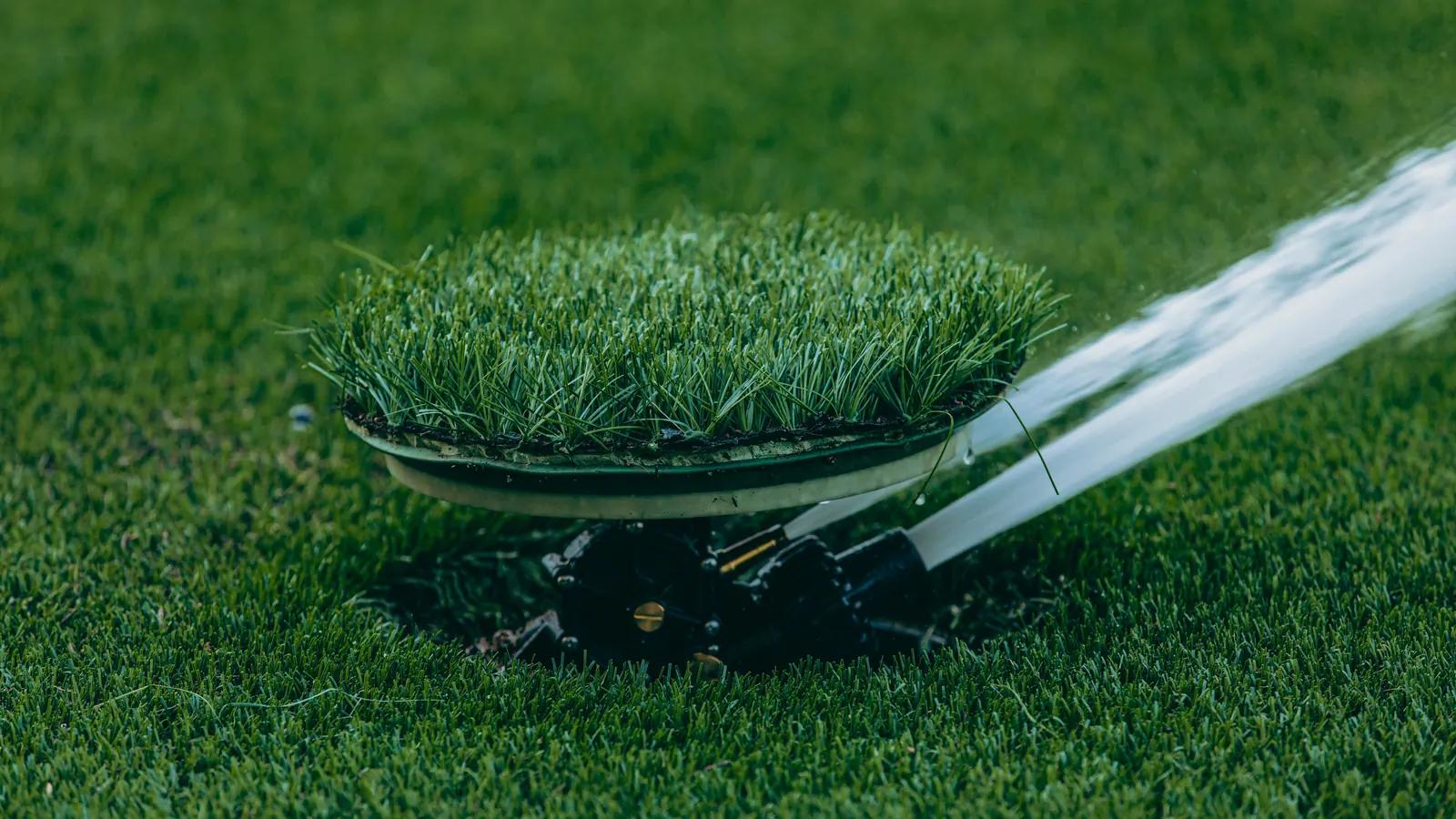
Clear rocks, soil and mulch from around each head, and look for heads that are cracked, chipped or buried. Rain Bird’s list includes replacing damaged heads, nozzles, valves and pipe before startup. Note anything new since last season: a bed that now covers a head, a shrub in the spray path, fresh paving inside the coverage.
Look over each valve box too. Rain Bird notes that overly wet, muddy or barren patches in the lawn can come from a leaky valve. Do not dig around unknown utilities or force a seized valve; that is repair work, not startup.
Wake the controller, but keep it off
Clean the controller, set the date and time, and review the schedule. Rain Bird suggests replacing the backup battery every six months and keeping a copy of the program nearby. Write down the existing station names and run times before changing anything, and leave the controller in off or rain-delay mode until the checks are done.
The controller’s transformer plugs into household current. If the station wiring or controller itself needs work, unplug it first, and leave mains-side electrical work to a qualified electrician.
Bring the water back
Close the drains, then open the main valve slowly
Make sure every manual drain valve is closed. Then open the irrigation shutoff gradually. Rain Bird and Hunter’s startup checklist both give the same reason: opening the valve fast sends a pressure surge, called water hammer, through the empty pipe, and that surge can burst pipe and damage valves. Open a little, listen to the line fill, and only open fully once the rush has settled.
Start the backflow preventer by its own manual
The backflow assembly is the part that keeps lawn water out of your drinking water, and its startup can contradict the “go slowly” rule. The Watts 800M4/LF800M4 pressure vacuum breaker manual gives this sequence:
- Close the outlet shutoff (No. 2).
- Open the inlet shutoff (No. 1) until water discharges from the bonnet, then open it quickly to pressurize the valve.
- Open the outlet shutoff.
Watts explains that the vent stays open until body pressure exceeds 1 pound, so a brief spill at startup is expected; opening the inlet quickly keeps it short. That sequence belongs to this model. Another assembly may need different steps, so find yours on its tag and follow its instructions. Do not open test cocks or force handles past their stops. Watts also says this product must be installed by a licensed contractor in line with local codes, so moving or replumbing the assembly is not a DIY job. Continuous discharge after startup is not normal for this unit and needs a technician.
The same manual says the assembly must sit 12 inches above the highest point of downstream piping and be protected from freezing. If yours was moved or buried under a new bed, treat that as a problem to fix before startup.
Check the pressure
Rain Bird suggests putting a pressure gauge on a hose faucet. It gives typical operating pressure as 40 to 65 PSI. Above that, it recommends a pressure regulator; heads that mist instead of spraying are a sign of excess pressure.
Run each zone and inspect it
Use the controller’s manual mode to start one station at a time, and walk that zone while it runs. EPA WaterSense’s Sprinkler Spruce-Up gives a good inspection list:
- heads that do not pop up fully, sit tilted or are broken;
- leaks at the joints between heads and pipe, which can signal too much pressure or debris;
- water pooling between cycles, or a valve that seeps when the zone is off;
- spray landing on the driveway, sidewalk or house wall.
Note each problem by location (“third head from the front walk, zone 2”) before moving on. Confirm that the water stops when you switch the station off. If several zones misbehave, stop and fix the fault before going further. Longer run times will not cure a broken head or a leak, and EPA says a system with leaks and broken heads can lose up to 25,000 gallons of water and $280 over a six-month irrigation season.
Book the backflow test if your area requires one
Water reaching the sprinklers says nothing about whether the backflow assembly protects the supply. Watts says its assemblies must be tested periodically under local codes, and at least once a year. Rules come from your water supplier or local authority. In Denver, for example, the utility requires irrigation backflow assemblies to be tested by a certified tester as the water is turned on each year. Denver Water backflow prevention program Ask your own supplier what applies and who may perform the test. File the report with the system records; a startup visit and a backflow test are often billed separately.
Set a spring schedule
Start from current conditions, not last summer’s program. Check every program on the controller so an old one does not double up. EPA WaterSense suggests getting local guidance on how much to water, avoiding midday runs, and turning sprinklers off when water starts pooling. For clay soils or slopes that pool quickly, it recommends cycle-and-soak: several short runs with breaks so water can soak in.
Lawn zones and bed or drip zones apply water at very different rates, so do not give every station the same minutes. Test any rain sensor according to its instructions, then watch the first automatic cycle. Manual tests can pass while the program itself is set wrong.
When to call a professional
Book service if you cannot find the shutoff or drains, the winterization history is unknown, the backflow assembly is damaged or discharges continuously, a pump needs commissioning, a zone will not shut off, or your water supplier requires a qualified tester. Tell the company exactly what you need, whether startup, backflow testing, repairs or controller programming, and ask for a written note of any fault left unresolved.
Written from manufacturer and retailer information and general garden practice. GardenHelm has not physically tested the products discussed here. How we choose products