Gothic Arch Greenhouses: Roof Shape, Growing Space and Kit Choices
The pointed roof gives more headroom and sheds snow differently than a round hoop, but shape alone proves nothing about strength. Compare structure, ventilation and installation.
By GardenHelmPublished 5-minute readMore in Greenhouses
What this guide compares
- Roof profile and usable growing height
- Documented site-specific structural suitability
- Covering and ventilation system
- Included components and foundation scope
- Crop and seasonal operating plan
In this guide
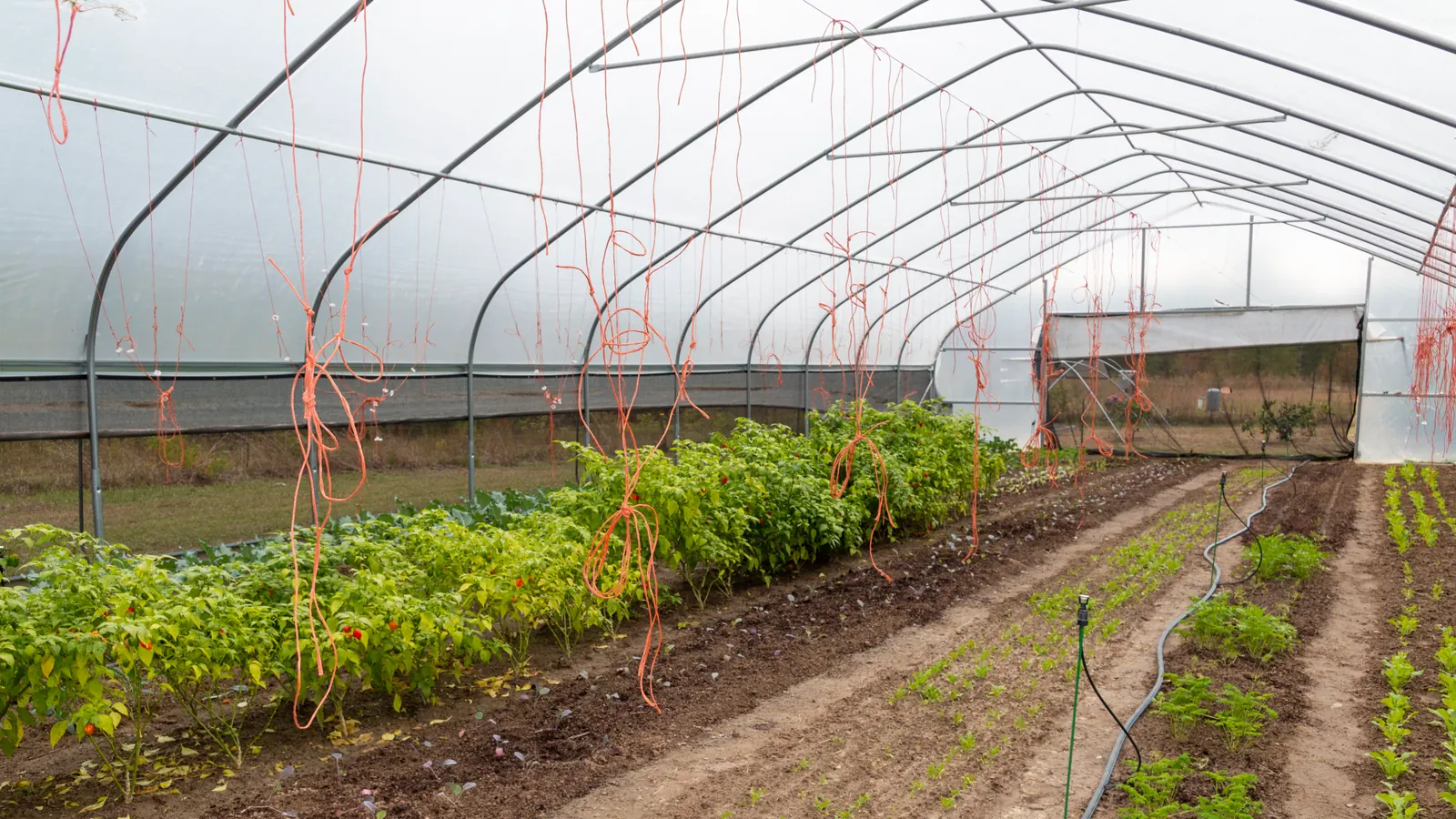
The point at the top is the whole idea. In a gothic arch greenhouse, the curved sides rise to a peak instead of forming one continuous round hoop. That gives more headroom near the sides than a round hoop of the same width and a steeper roof near the ridge, which helps snow slide off. What the shape cannot tell you is how much snow or wind a particular kit can take; that depends on the frame spacing, bracing, covering and anchoring, and only the manufacturer’s documentation answers it.
One naming note: there is also a US company called Gothic Arch Greenhouses. If you were looking for it, its official website sells several greenhouse types, including cypress-frame gothic kits. Not every gothic-profile greenhouse comes from that company, so keep the roof shape and the brand separate when comparing listings. We cover the company’s kits further down.
What the pointed profile changes
Look at the end view or cross-section for each model, not just the overall width and peak height. The roof line decides how quickly headroom drops toward the sides, which matters for tall crops, benches and anything you place along the walls.
| Profile | Shape | Planning question |
|---|---|---|
| Round hoop (Quonset) | One continuous curve | Where does the curve cut into working height? |
| Gothic arch | Curved sides meeting at a peak | How much height is there over the beds and aisles? |
| Straight-sided gable | Vertical walls, sloped roof | How do benches and tall plants fit along the walls? |
Proportions vary by maker. Two “gothic” greenhouses can have different sidewall heights, peak angles and bracing, so ask for the drawing of the exact model and size.
Penn State Extension’s high-tunnel production guide compares Quonset and gothic-style structures and discusses how peaked roofs shed snow. It also stresses following each manufacturer’s wind procedures. In other words, the peak helps; the rest of the structure still has to be right.
Ask for the structural numbers
Ask the supplier for the load information that applies to your exact configuration: width, frame spacing, bracing, covering, doors and anchors. A rating for a different width or product family does not describe the kit in your cart. Ask what you are expected to do to keep that rating, such as closing doors and vents in high wind or clearing snow.
Give the supplier accurate site details, such as exposure, nearby trees and buildings and drainage, and check with your local building department about permits. In snowy regions, get the winter operation and snow-management instructions before buying; even a steep peak needs watching after a heavy storm.
Never remove a brace to gain growing space or add improvised supports. If a structural part gets in the way of your plan, ask the supplier before assembly.
Plan the growing space
The roof shape says little about the conditions inside. Decide first what the greenhouse is for: stretching the season for garden crops, starting seedlings, overwintering plants or keeping crops actively growing through winter. Each needs different ventilation, heat and attention.
Draw the beds or benches, aisles and door on a plan, with mature crop heights and their supports. Ask whether the frame is rated for hanging baskets, irrigation lines or trellis wires; a handy crossbar is not automatically a load-bearing one. Measure the door against the widest thing you will bring in, such as a cart, tray rack or tiller, and leave enough room along the sides to reach fasteners, vents and panel edges for repairs.
The covering is its own decision
Gothic frames can carry polyethylene film or rigid panels, and each has its own fastening, replacement and upkeep. Ask what the quoted kit includes and whether a different covering changes the frame or accessories. If light transmission or insulation matters for your crops, ask for those figures for the supplied covering.
Think about replacement too. Greenhouse-grade film is typically rated for about four years, so check you can buy the right size and reach the attachment points. Ask how condensation is handled; a steep roof pitch helps condensation run off instead of dripping on plants, but ventilation is what keeps humidity around the plants in check.
Ventilation before heat
List every opening: doors, roll-up or louvered sides, roof vents and fans. Note which are included, which are optional and who will open and close them during the day. A greenhouse that needs adjusting at noon does not suit a household that is out all day, unless the vents are automatic.
If you plan to heat, start from the temperature your plants need and a heat-loss estimate, not from floor area. An unheated structure gives only limited frost protection. Ask how fans, controls or heaters behave in a power cut, and decide in advance what you will do on the coldest nights. The greenhouse hub covers equipment choices.
If you mean the Gothic Arch Greenhouses company
The company’s cypress-frame kit page describes prefabricated cypress arches with several polycarbonate covering choices, and lists climate-control equipment separately. The page also says the base unit ships without a door, while other package listings include more equipment.
So compare exact packages. Ask for a written parts list for your size, covering and equipment package, and get the foundation requirements, door, ventilation and any installation service in writing. We have not tested these kits; the page is here to identify the company and show what to ask.
Comparing listings fairly
One offer may be a frame with film, another a rigid-panel structure and a third a package with fans and heat. Compare the same growing area, covering, access and climate equipment, and price site preparation, the base, delivery, assembly, utilities and future recovering separately. If you might extend later, ask what adding a bay involves; end walls and the site may need changes.
Read the product page behind every link. If it describes a general family rather than the exact peaked model, ask the seller to confirm which frame will arrive.
Writing the brief
Put the crops and season, the internal layout, your local conditions, the covering, ventilation and installation scope on one page, and send the same page to each supplier. Choose a gothic arch because its documented design fits that brief. If a round tunnel or straight-sided greenhouse gives you a better layout, go with it. Our guide to choosing a greenhouse covers the wider decision.
Written from manufacturer and retailer information and general garden practice. GardenHelm has not physically tested the products discussed here. How we choose products