Flower Pots: Choose the Container Before You Choose the Color
Will you plant straight into the pot or slip a growing pot inside? That decides drainage, how you move the plant and which measurements matter. Color comes after.
By GardenHelmPublished 4-minute readMore in Growing & Soil
In this guide
We may earn a commission from links on this page, at no extra cost to you. How this works
Ask what the plant wants from its water, and the pot mostly chooses itself. A succulent that sulks in wet mix, a fern that sulks in dry mix and a geranium that wants to be moved indoors in October need three different pots, even if all three end up the same shade of gray.
Material is the lever. Illinois Extension explains that clay is porous, soaks up water and loses it through its walls, so plants in it dry out faster. Maryland Extension groups clay, ceramic, concrete and wood together as porous containers that dry faster than plastic or metal. That gives you a simple sorting rule:
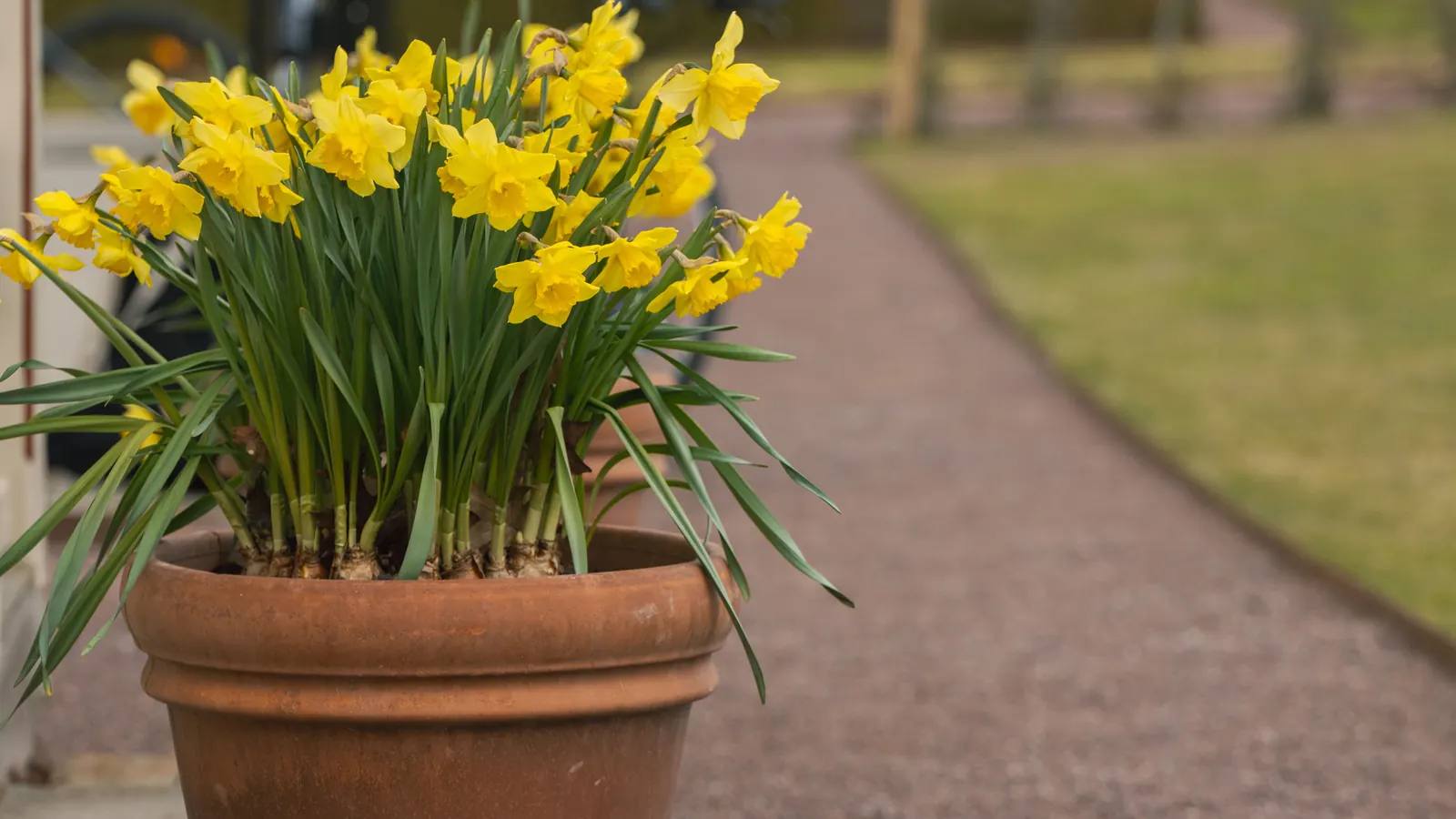
- Plants that like to dry between drinks (succulents, cacti, many herbs and Mediterranean shrubs) suit bare terracotta, which lets the mix dry from the sides as well as the top.
- Plants that want steady moisture (ferns, tropical foliage, thirsty annuals such as petunias) are easier in glazed ceramic or plastic. Illinois points out that self-watering pots suit steady-moisture plants such as tropical houseplants, and that succulents and cacti generally do not need them.
- Anything you cannot water daily belongs in a bigger pot of a less porous material, or in a clay pot lined with plastic, which Illinois notes slows water loss.
If most of your plants sit in the steady-moisture group, Plant Addicts’ self-watering planter collection gathers reservoir pots from Crescent Garden, LECHUZA and other makers. Read the setup notes before planting: the LECHUZA CUBICO and BALCONERA listings there, for example, say to water from above for roughly the first two to three weeks while roots establish, and to remove a drainage screw outdoors so rainwater can escape. The succulents stay in bare terracotta.
Placement changes the answer
A pot by a south-facing wall in July is a different environment from the same pot under a porch roof. Illinois says dark containers absorb more heat in intense sun and pass it to the soil, which can injure roots. Pale pots, or a dark cover with a lighter growing pot inside, give roots an easier summer. In shade, color hardly matters for the roots, so you can pick on looks.
Think about wind, too. A tall plant in a narrow, light pot becomes a sail on a balcony or open patio. Pick a pot with a broad base and a heavy fill, or tuck it against a wall or into a corner. Where children or pets pass, a top-heavy planting is a tip-over risk, so give it a stable footing before you worry about style.
For pots you will carry in each autumn, weight is a design factor. Illinois suggests a dolly with casters for a large pot you want to rotate toward the light, or a permanent spot for one that is too heavy to move. Handles and thin rims are for decoration; lift from the base.
Measure before you buy. Listings may give the outer diameter, the mouth opening or the height, and a wide shell with a narrow neck may not let you lift out the growing pot you own. For a pot-in-a-pot arrangement, measure the inner pot including its rim and check that it lifts out without pulling on the plant. For direct planting, tapered walls mean a volume worked out from the top diameter alone will overstate the root space, and a tall pedestal adds height without adding soil.
Winter needs a plan too. A thick wall does not make a pot frost-proof; follow the maker’s instructions for freezing weather and storage, and empty and store pots that are not rated for it.
Scale and shape at the entry, the table and the patio
At a front door, the pot works as a pair of columns or a single anchor. Two matching pots flank a door formally, while one large pot on the hinge side suits a narrow porch without crowding the swing. Keep the visitor’s path clear of rims and stands.
On a table, think of the pot as part of the sightline. A low, wide bowl keeps people talking across the table; a tall urn blocks faces. Cut a cardboard outline of a big pot and set it in place for a day before buying.
On a patio, a few pots of different heights in one material read as a group. Varied heights look natural, and the same color repeated holds the group together while the shapes vary. A quiet glaze lets foliage lead; a patterned pot is better with plain, bold leaves.
When the pot you love is the wrong pot
Some pots are better as covers. If a decorative pot has no drainage hole, slip a plain plastic pot inside it, which Illinois calls double potting, and lift the inner pot out to water. If a pot is too small for the plant you want, buying a larger plain pot and hiding it is cheaper than repotting a stressed plant twice.
Plastic pots are the practical choice for big, lightweight plantings, though Maryland notes that plastic not made for outdoor use can become brittle outside. For the plant care that follows, see the growing hub.
Written from manufacturer and retailer information and general garden practice. GardenHelm has not physically tested the products discussed here. How we choose products